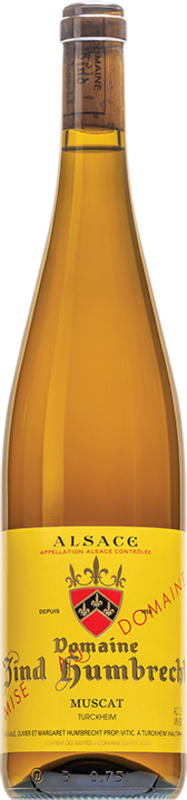


Winemaker Notes
The nose is very intense and refined with floral and fruity aromas. The palate is delicate and the dry finish makes a very interesting wine. The perfect summer wine.
Enjoy as an Aperitif or with shellfish or asparagus.
Professional Ratings
-
Robert Parker's Wine Advocate
From a richer part of the valley floor (with more loess) and a younger and a very old vineyard planted in the 1950s, the 2016 Muscat Turckheim is a 100% Muscat d'Alsace (or à petits grains) and opens with a clear, fresh and beautifully aromatic Muscat grape bouquet. On the palate, this is a dry, full-bodied, well-structured, perfectly balanced Muscat with good grip and mineral tension and even a slightly salty finish where some stimulating citrus flavors show up. It's a great pleasure to drink right now. Tasted June 2018.
-
Wine Enthusiast
An earthy and very ripe notion of yellow plum and pear on the nose carry a hint of reduction. The palate follows this with zesty lemon notes on a dry but concentrated body. Honeysuckle carries on the clean, long finish
-
Wine Spectator
Fresh basil, mint and orange peel aromas leap from the glass of this zesty, light-bodied white, accenting notes of blood orange granita, mineral and grated ginger on the well-knit palate. A bright lip-smacker.


While Muscat comes in a wide range of styles from dry to sweet, still to sparkling and even fortified, it's safe to say it is always alluringly aromatic and delightful. The two most important versions are the noble, Muscat Blanc à Petits Grains, making wines of considerable quality and Muscat of Alexandria, thought to be a progeny of the former. Somm Secret—Pliny the Elder wrote in the 13th century of a sweet, perfumed grape variety so attractive to bees that he referred to it as uva apiana, or “grape of the bees.” Most likely, he was describing Muscat.

Small but mighty, this picturesque region in northeastern France is renowned for its white wines produced by passionate families whose winemaking roots span generations and even centuries. Nestled between the Vosges Mountains and the Rhine River, Alsace benefits from a sunny, dry climate and a long growing season. It is one of the most geologically diverse regions in the world — one of the many reasons why Alsace rocks!
Alsace wines include dry, mineral-driven Riesling, earthy Pinot Gris, refreshing Pinot Blanc, exuberant Gewurztraminer, elegant Pinot Noir, and more. From traditional-method sparkling wines to easy-drinking AOC Alsace, to complex Grand Cru bottlings from 51 distinct sites, and rich, late harvest wines, Alsace produces a wine for every occasion. Most Alsace wines are single-varietal bottlings and are labeled with the grape name. The region is also one of the greenest wine-producing areas in France, with 36% of its vineyard area certified organic.
Riesling, the region’s calling card, is dry, fresh and floral in its youth, developing complex mineral and flint character with age. Gewurztraminer is known for its signature spice and lychee aromatics. Pinot Gris is prized for its combination of crisp acidity and savory spice as well as ripe stone fruit flavors. Pinot Blanc is an affable food partner or porch sipper. Pinot Noir, the only red grape in AOC Alsace, is now authorized in three Grand Cru areas and is also used for Crémant d’Alsace sparkling rosé. Any bottle you choose will offer deliciousness, pleasure and value that is unprecedented in other wine regions.