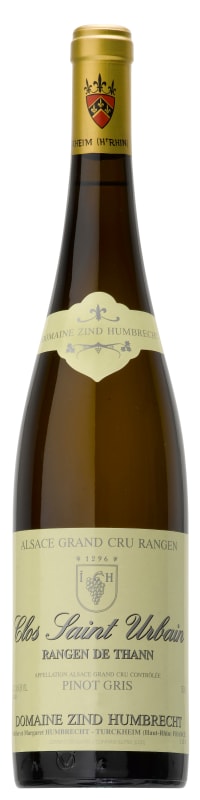


Winemaker Notes
#16 James Suckling Top 100 Wines of the World 2025
This wine develops huge Rangen aromatics: flint, smoke, minerals, with more classic ripe white fruits. The mouthfeel is dense, long lasting and full of mineral flavors.
Savor as an aperitif or with poultry in cream or mushroom sauce.
Professional Ratings
-
James Suckling
The brain-rattling concentration, smokiness and flinty energy of this unique dry pinot gris don’t fit in any box on this planet. Definitely not full-bodied, but how could you say it is medium-bodied with this intensity of expression? In spite of the power, it shoots almost weightlessly up into the heavens and pulls you with it. From biodynamically grown grapes. Drinkable now, but best from 2027.
-
Vinous
The 2023 Pinot Gris Rangen de Thann Clos Saint Urbain Grand Cru has a vibrantly reduced nose holding a delicious, rocky scent of nettle. This is gorgeous. More air reveals a ripe pear aroma, but everything is still imbued with that vivid freshness. The palate is pervasive, bright, streamlined and incisive, wholly unlike any other Pinot Gris. This has cut, stone, verve and immense energy with a long, absolutely citric finish. The 2023 is incredible. (Bone-dry)


Showing a unique rosy, purplish hue upon full ripeness, this “white” variety is actually born out of a mutation of Pinot Noir. The grape boasts two versions of its name, as well as two generally distinct styles. In Italy, Pinot Grigio achieves most success in the mountainous regions of Trentino and Alto Adige as well as in the neighboring Friuli—all in Italy’s northeast. France's Alsace and Oregon's Willamette Valley produce some of the world's most well-regarded Pinot Gris wine. California produces both styles with success.
Where Does Pinot Gris / Pinot Grigio Come From?
Pinot Gris is originally from France, and it is technically not a variety but a clone of Pinot Noir. In Italy it’s called Pinot Grigio (Italian for gray), and it is widely planted in northern and NE Italy. Pinot Gris is also grown around the globe, most notably in Oregon, California, and New Zealand. No matter where it’s made or what it’s called, Pinot Gris/Pinot Grigio produces many exciting styles.
Tasting Notes for Pinot Grigio
Pinot Grigio is a dry, white wine naturally low in acidity. Pinot Grigio wines showcase signature flavors and aromas of stone fruit, citrus, honeysuckle, pear and almond. Alsatian styles are refreshing, expressive, aromatic (think rose and honey), smooth, full-bodied and richly textured and sometimes relatively higher in alcohol compared to their Italian counterpart. As Pinot Grigio in Italy, the style is often light and charming. The focus here is usually to produce a crisp, refreshing, lighter style of wine. While there are regional differences of Pinot Grigio, the typical profile includes lemon, lime and subtle minerality.
Pinot Grigio Food Pairings
The viscosity of a typical Alsatian Pinot Gris allows it to fit in harmoniously with the region's rich foods like pork, charcuterie and foie gras. Pinot Grigio, on the other hand, with its citrusy freshness, works well as an aperitif wine or with seafood and subtle chicken dishes.
Sommelier Secrets
Given the pinkish color of its berries and aromatic potential if cared for to fully ripen, the Pinot Grigio variety is actually one that is commonly used to make "orange wines." An orange wine is a white wine made in the red wine method, i.e. with fermentation on its skins. This process leads to a wine with more ephemeral aromas, complexity on the palate and a pleasant, light orange hue.
To learn more, see our Essential Pinot Grigio Guide.

Small but mighty, this picturesque region in northeastern France is renowned for its white wines produced by passionate families whose winemaking roots span generations and even centuries. Nestled between the Vosges Mountains and the Rhine River, Alsace benefits from a sunny, dry climate and a long growing season. It is one of the most geologically diverse regions in the world — one of the many reasons why Alsace rocks!
Alsace wines include dry, mineral-driven Riesling, earthy Pinot Gris, refreshing Pinot Blanc, exuberant Gewurztraminer, elegant Pinot Noir, and more. From traditional-method sparkling wines to easy-drinking AOC Alsace, to complex Grand Cru bottlings from 51 distinct sites, and rich, late harvest wines, Alsace produces a wine for every occasion. Most Alsace wines are single-varietal bottlings and are labeled with the grape name. The region is also one of the greenest wine-producing areas in France, with 36% of its vineyard area certified organic.
Riesling, the region’s calling card, is dry, fresh and floral in its youth, developing complex mineral and flint character with age. Gewurztraminer is known for its signature spice and lychee aromatics. Pinot Gris is prized for its combination of crisp acidity and savory spice as well as ripe stone fruit flavors. Pinot Blanc is an affable food partner or porch sipper. Pinot Noir, the only red grape in AOC Alsace, is now authorized in three Grand Cru areas and is also used for Crémant d’Alsace sparkling rosé. Any bottle you choose will offer deliciousness, pleasure and value that is unprecedented in other wine regions.