
Winemaker Notes
Professional Ratings
-
Wine Spectator
Piercing mesquite and black tea aromas lead the way, with a dense but silky structure framing the core of lightly mulled boysenberry, blackberry and black currant fruit. A mesquite edge lingers through the fine-grained finish. Very suave.


Marked by an unmistakable deep purple hue and savory aromatics, Syrah makes an intense, powerful and often age-worthy red. Native to the Northern Rhône, Syrah achieves its maximum potential in the steep village of Hermitage and plays an important component in the Red Rhône Blends of the south, adding color and structure to Grenache and Mourvèdre. Syrah is the most widely planted grape of Australia and is important in California and Washington. Sommelier Secret—Such a synergy these three create together, the Grenache, Syrah, Mourvedre trio often takes on the shorthand term, “GSM.”

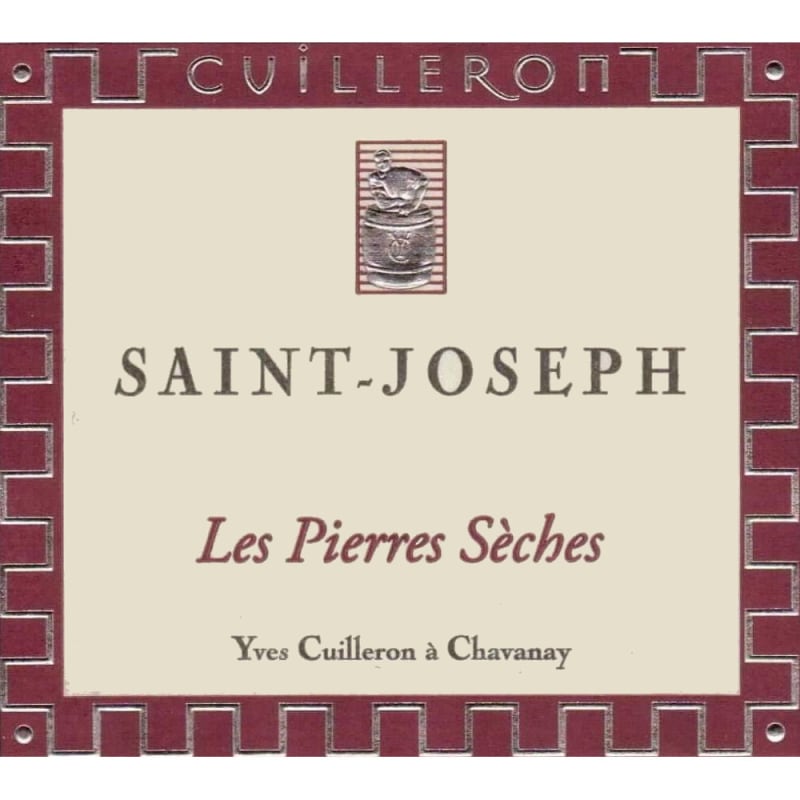
Spanning the longest stretch of river in the northern Rhône—from Condrieu in the north, to Cornas in the south—the heart of St.-Joseph lies directly across the Rhône River from Hermitage. While its soils are basically the same as Hermitage: granite, supplemented by sand and gravel, its east facing slope receives less sunlight than Hermitage, which causes less overall berry ripening on its Syrah vines. However, some of the best of them can rival any fine expression of Hermitage, Cote-Rotie or Cornas with concentrated black fruits, dark spices, crushed rock and violets. A general advantage of the region is that its Syrahs typically don’t need as much time in the bottle compared to a Cote-Rotie or Hermitage and are much easier on the bank account!
A textbook St.-Joseph red is firm with a core of minerality that is enhanced by savory and peppery qualities. Aromas and flavors of smoke, olives, herbs, and violets are common; its wines are dense in red and black fruit.
St.-Joseph is also a source of fine northern Rhône white wine. Viognier, Marsanne and Roussanne grow well here and can be blended or made into single varietal wines. St.-Joseph whites are full and silky with citrus, pear and pineapple flavors and a rich bouquet reminiscent of honeysuckle, toasted nuts, spice and caramel.