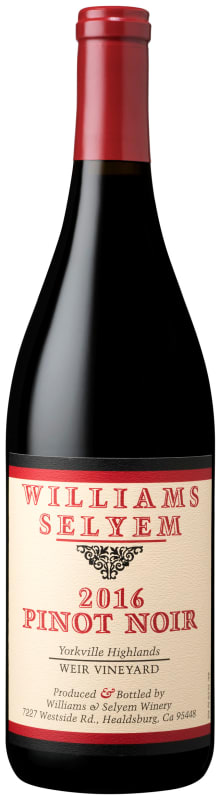


Winemaker Notes
Professional Ratings
-
Wine Enthusiast
Great ripeness comes with great balance in this fruity, expressive and firm-textured wine. It is full in body but not flabby due to sinewy tannins and persistent acidity. Aromas and flavors run from cinnamon to black cherry to rhubarb, as hints of nutmeg and vanilla show a deft touch of oak. Best from 2022.
Cellar Selection -
Wine & Spirits
The Williams Selyem team farms 6.5 acres at Bill and Suki Weir’s vineyard in the Yorkville Highlands. Most of it is the original planting, dating to 1991, including plant material sourced from Domaine de la Romanée Conti as well as Wadenswil 2A; the newer planting, from 2000, includes Pommard and Rochioli selections. The vines rise from 850 to 1,000 feet in altitude, and some combination of that elevation, plant material and the rocky soils create a fruit character that’s recognizable in most vintages. It’s muscular and compressed into layers of dark, precise tannic detail, the flavor hinting at the skins of black cherries and the juice of small, red forest berries. The flavors are dynamic, spreading to include herbal notes of raspberry leaf and tobacco, always coming back to that earthy, compellingly drinkable fruit. While the complexity is already apparent, the wine will benefit from four or five years in the cellar; at that point, opening it will generate a quieter explosion.
-
Robert Parker's Wine Advocate
Pale to medium ruby-purple, the 2016 Pinot Noir Weir Vineyard has a nose of saline, nori, warm earth, wet bark, cranberry and crushed cherry with notes of rhubarb, black tea leaves, charcuterie and dried flowers. The palate is light to medium-bodied and silky with bright red fruits and earthy accents knit by grainy tannins and juicy acidity, finishing long and spicy. This walks a lovely line between fresh fruit and savory character. 843 cases produced.


Thin-skinned, finicky and temperamental, Pinot Noir is also one of the most rewarding grapes to grow and remains a labor of love for some of the greatest vignerons in Burgundy. Fairly adaptable but highly reflective of the environment in which it is grown, Pinot Noir prefers a cool climate and requires low yields to achieve high quality. Outside of France, outstanding examples come from in Oregon, California and throughout specific locations in wine-producing world. Somm Secret—André Tchelistcheff, California’s most influential post-Prohibition winemaker decidedly stayed away from the grape, claiming “God made Cabernet. The Devil made Pinot Noir.”

A unique appellation placed in between the warm, Sonoma County Alexander Valley and the cooler Mendocino County's Anderson Valley, the Yorkville Highlands’ gravel soils are ideal for Bordeaux varieties and other full-bodied reds.