

Winemaker Notes
Professional Ratings
-
Wine Enthusiast
This is a juicy full-bodied white that is well balanced by crisp apple and orange flavors. Integrated tones of nutmeg and ginger offer support, while a lasting note of wet stone underlines a mineral component.
-
Wine & Spirits
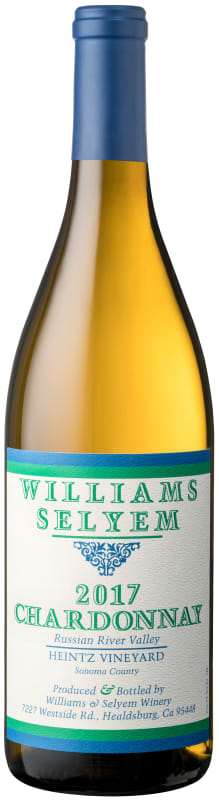
Charles Heintz farms two acres of chardonnay at his family’s ranch in Occidental, planted to Clone 4 in 1980. The old vines make the most of the coastal fog and Goldridge sandy loam soils, producing a concentrated wine that tastes like a food, nourishing in its vinous power. It’s luscious and substantial, a chardonnay that tastes like something you might describe as sweet pineapple roasted over a fire, or a fire-roasted apple pie, but better to taste it yourself and get closer to the complex richness and coastal freshness. Decant it first if you open this now; it will only gain complexity with four or five years in the bottle.
-
Connoisseurs' Guide
A tad less than fully expressed in its still youthfully nascent aromas, yet smelling of wild flowers, Meyer lemons and fresh apples with a creme brulee overlay, this wine is on the firm, tight side across the palate and repeats its bright, lively approach from front to back. Suggestions of layering are held in the background but do exist, and between the energetic balance and nuanced notions of complexity to come with age, this is one to set aside for a few years.


One of the most popular and versatile white wine grapes, Chardonnay offers a wide range of flavors and styles depending on where it is grown and how it is made. While it tends to flourish in most environments, Chardonnay from its Burgundian homeland produces some of the most remarkable and longest lived examples. California produces both oaky, buttery styles and leaner, European-inspired wines. Somm Secret—The Burgundian subregion of Chablis, while typically using older oak barrels, produces a bright style similar to the unoaked style. Anyone who doesn't like oaky Chardonnay would likely enjoy Chablis.

A standout region for its decidedly Californian take on Burgundian varieties, the Russian River Valley is named for the eponymous river that flows through it. While there are warm pockets of the AVA, it is mostly a cool-climate growing region thanks to breezes and fog from the nearby Pacific Ocean.
Chardonnay and Pinot Noir reign supreme in Russian River, with the best examples demonstrating a unique combination of richness and restraint. The cool weather makes Russian River an ideal AVA for sparkling wine production, utilizing the aforementioned varieties. Zinfandel also performs exceptionally well here. Within the Russian River Valley lie the smaller appellations of Chalk Hill and Green Valley. The former, farther from the ocean, is relatively warm, with a focus on red and white Bordeaux varieties. The latter is the coolest, foggiest parcel of the Russian River Valley and is responsible for outstanding Pinot Noir and Chardonnay.