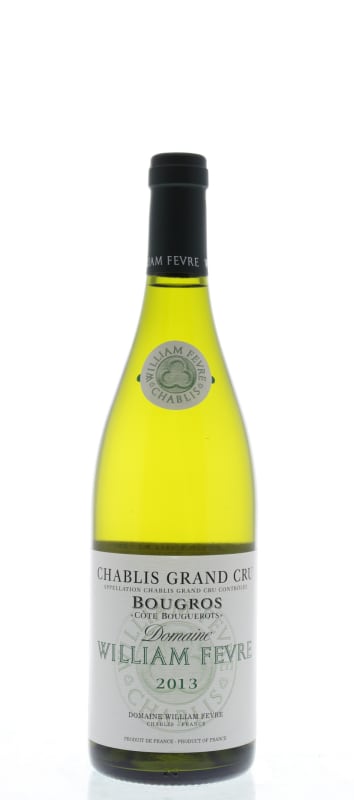


Winemaker Notes
Professional Ratings
-
Wine Enthusiast
Bougros produces rich wines, and this wine comes from the extra-ripe vineyard at the base of the slope. It is generous, giving a weighty character with the flavors plumbing the depths of richness. On top, a beautiful, almost sweet acidity leaves a fresh feeling in the mouth. Drink from 2019.
-
Wine & Spirits
Fèvre owns 15.39 acres of Bougros, almost half the total cru. They separate out a 5.2-acre parcel on the steepest slope for Clos Bouguerots, using the balance for this grand cru. About 60 percent of the wine ages in older French oak casks (averaging six years of age), which helps point up the savory structure of the wine, reading in pale umami notes of miso. The fruit of the wine is youthfully pale as well, powerful in its delivery of chamomile, dried hay and jasmine scents of white grapes. A mouthwatering young Chablis, this is built to age.
-
Wine Spectator
On the austere side, this white exhibits flavors of green apple, lemon and grass,with hints of stone. Racy and firm, with a mouthwatering essence. Best from 2018 through 2024.




Domaine William Fèvre is a historical and environmental pioneer in Chablis. The domaine covers a total of 78 hectares, including 15 hectares of Grand Cru vineyards as the largest Grand Cru landowner in Chablis. The domaine is also comprised of 16 hectares of Premiers Crus, including icons such as Vaulorent, Montmains, and Les Lys, among many others. William Fèvre has been committed to a strong environmental approach for more than 20 years, receiving their HVE3 certification in 2014. Domaine William Fèvre does everything possible to express the most subtle variations in Chablis' climats and to offer wines that give everyone, from novices to connoisseurs, the opportunity to enjoy an experience characterized by a superb expression of purity and minerality.

One of the most popular and versatile white wine grapes, Chardonnay offers a wide range of flavors and styles depending on where it is grown and how it is made. While it tends to flourish in most environments, Chardonnay from its Burgundian homeland produces some of the most remarkable and longest lived examples. California produces both oaky, buttery styles and leaner, European-inspired wines. Somm Secret—The Burgundian subregion of Chablis, while typically using older oak barrels, produces a bright style similar to the unoaked style. Anyone who doesn't like oaky Chardonnay would likely enjoy Chablis.

The source of the most racy, light and tactile, yet uniquely complex Chardonnay, Chablis, while considered part of Burgundy, actually reaches far past the most northern stretch of the Côte d’Or proper. Its vineyards cover hillsides surrounding the small village of Chablis about 100 miles north of Dijon, making it actually closer to Champagne than to Burgundy. Champagne and Chablis have a unique soil type in common called Kimmeridgian, which isn’t found anywhere else in the world except southern England. A 180 million year-old geologic formation of decomposed clay and limestone, containing tiny fossilized oyster shells, spans from the Dorset village of Kimmeridge in southern England all the way down through Champagne, and to the soils of Chablis. This soil type produces wines full of structure, austerity, minerality, salinity and finesse.
Chablis Grands Crus vineyards are all located at ideal elevations and exposition on the acclaimed Kimmeridgian soil, an ancient clay-limestone soil that lends intensity and finesse to its wines. The vineyards outside of Grands Crus are Premiers Crus, and outlying from those is Petit Chablis. Chablis Grand Cru, as well as most Premier Cru Chablis, can age for many years.