


Winemaker Notes
Ruby red in the glass, aromas of cherry pie, dried cranberry, cinnamon, fresh
boysenberry and graham cracker delight the nose. The palate carries flavors of
strawberry, Italian plums, crushed herbs and cedar. Vibrant tannins and acidity
lead to a lingering finish.
The Bernau Block craves savory and grilled meat pairings, including beef
Wellington, Oregon lamb chops, smoked salmon, crabcakes and dishes featuring
native Oregon truffles.
Professional Ratings
-
James Suckling
A light-bodied but layered and savory white that has plenty of concentration and wonderful, spicy overtones. Nutmeg, vanilla bean, toasted almonds, poached pears and golden apples on the palate. Drink now or hold.
-
Jeb Dunnuck
The 2023 Pinot Noir Bernau Block has a medium red hue and is another spicy wine with notes of leather, pine, baked red cherries, and toasted baking spices. Medium-bodied, it’s more savory on the palate, with ripe tannins and a sanguine iron note felt through the finish, with some of its grip building. Drink 2025-2032.
-
Wine Enthusiast
Bernau Block invites you to the dessert course with peach cake and lemon icing aromas. Things reverse course on the palate with piercing lemon zest and white grapefruit flavors encircling dollops of butter and marjoram. While light in body, this Chardonnay offers elevated acidity and a crisp texture.


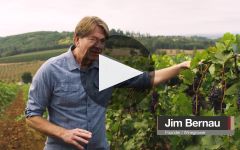



A combination of determination and extraordinary people has brought Willamette Valley Vineyards from a bold idea to one of the region's leading wineries, earning the title "One of America's Great Pinot Noir Producers," from Wine Enthusiast Magazine.
The “budwood” of Willamette Valley Vineyards began long before its founding in 1983 by vintner Jim Bernau. His Dad was hired by a California winemaker to secure the first winery license in Oregon since Prohibition. Jim’s Dad allowed him small tastes of Richard Sommer’s wine, lighting a path that led Jim from home winemaking to studies at UC Davis and eventually Beaune, France.
In 1983, Jim cleared away an old pioneer plum orchard in the Salem Hills and hand-watered his first plantings using 17 lengths of 75’ garden hose.
Jim's vision of organizing the support of wine enthusiasts to build a winery that would produce world-class wines through shared ownership has resulted in more than 16,000 owners. The winery's Common (WVVI) and Preferred (WVVIP) are traded on the NASDAQ.
The winery sources all of its barrel-aged Pinot Noir from its estate vineyards and practices environmentally sustainable farming. All of the vineyards have been certified sustainable through LIVE (Low Impact Viticulture and Enology) and Salmon-Safe programs since 1997.

Home of some of the planet’s most amazingly elegant and expressive Pinot noir, the Willamette Valley is a pastoral, mixed landscape of green, bucolic rolling hills, dramatic forestlands and small, independent, friendly wine growers. As a leader in environmental stewardship, the valley has some of the nation’s most protective land use policies, with two-thirds of its vineyards farmed sustainably and over half, organically. While the valley claims a cool, continental climate, and is heavily influenced by the cold, moist winds of the Pacific Ocean, its warm and dry summers allow for the steady, even ripening of Pinot noir.
The potential of Willamette Valley Pinot noir continues to attract the investment of serious growers and winemakers both locally and from abroad, as naturally the finished wines bring accolades from professionals and enthusiasts. With a range of styles from delicate dried cherry, raspberry and hibiscus to stronger notes of truffle, mocha, plum and spice, a fine Willamette Valley Pinot noir is a perfect expression of both character and grace.