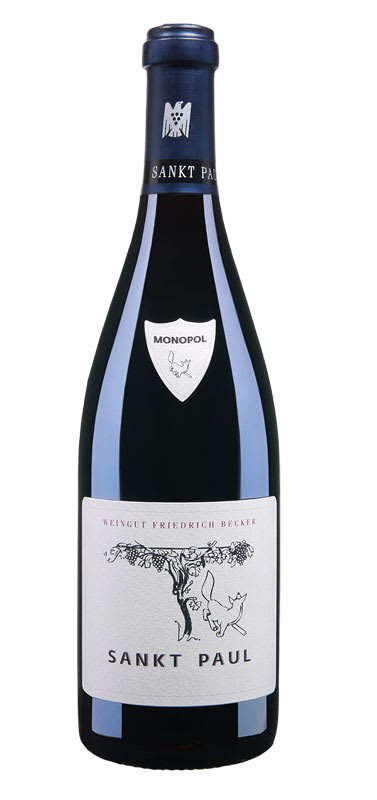


Winemaker Notes
The color is deep ruby red. On the nose aroma of licorice, wild berries, leather and tobacco, On the palate dense with good structure, elegant and juicy with length and well balanced tannins. Great aging potential.
Professional Ratings
-
Wine Enthusiast
More floral and transparent in fruit than the producer's more robust, earthier Kammerberg, the Sankt Paul offers bristling raspberry and red-plum flavors accented by hints of leather and forest floor. Sourced from a limestone outcrop on the Alsatian border, it's a fresh, invigorating red that drinks well now but should continue to improve through 2035.
Editors' Choice -
James Suckling
Bright violets and black raspberry essence come to the fore. The medium-bodied palate is vertical and edgy with racy acidity, yet plenty of supple, overt dark fruit. Steely tannins round off a robust wine.
-
Wine Spectator
Shows great purity to the ripe notes of pomegranate, cherry and damson plum, with a lovely chalky minerality underneath adding to the texture and structure. Tannins are still a bit dense, so give this time to open up.


Thin-skinned, finicky and temperamental, Pinot Noir is also one of the most rewarding grapes to grow and remains a labor of love for some of the greatest vignerons in Burgundy. Fairly adaptable but highly reflective of the environment in which it is grown, Pinot Noir prefers a cool climate and requires low yields to achieve high quality. Outside of France, outstanding examples come from in Oregon, California and throughout specific locations in wine-producing world. Somm Secret—André Tchelistcheff, California’s most influential post-Prohibition winemaker decidedly stayed away from the grape, claiming “God made Cabernet. The Devil made Pinot Noir.”

This sunny and relatively dry region served for many years as a German tourist mecca and was associated with low cost, cheerful wines. But since the 1980s, it has gained a reputation as one of Germany’s more innovative regions, which has led to increased international demand.