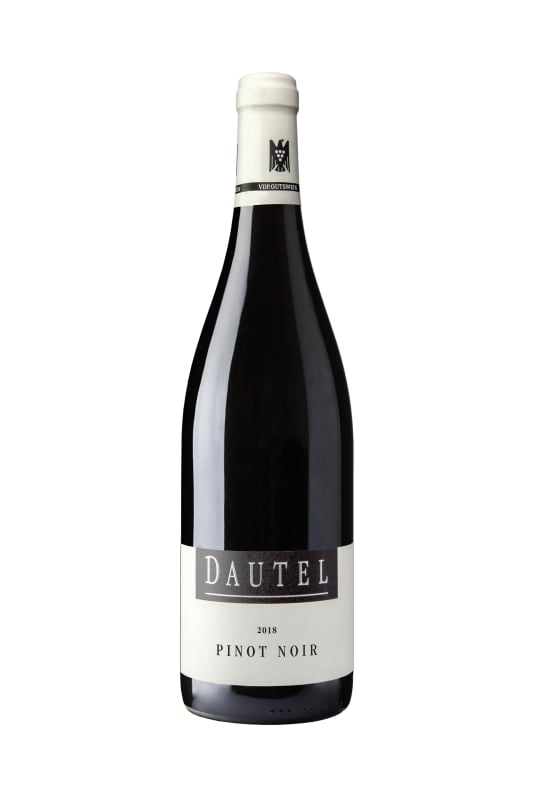


Winemaker Notes
Fruit is picked in the early morning, quite cool and mostly destemmed. For single vineyard wines, up to 30% whole cluster is used, but in the estate it is almost all destemmed. Christian wants only whole berries here (any crushed fruit is sorted out) and there is some carbonic fermentation in the open tank – a 3 week maceration and fermentation. The wine sees only remontage for the first part of fermentation; it is only after the ferment is really running that Christian employs pigage. The wine is pressed and racked into old 2500L and used barrique and is kept on the lees without lees stirring for 11 months before racking and bottling.
Professional Ratings
-
Robert Parker's Wine Advocate
The 2018 Spätburgunder trocken displays a dark cherry color and opens with a pure and refreshing, yet still reductive bouquet of blackcurrant, cherries, cassis, underwood, toast and iodine. Bottled with 13% alcohol this is a very charming, light-footed and refreshing Pinot with a silky-texture, stimulating acidity and phenolic grip. The wine is fine and intense, always fresh and tight on the finish, representing a great vintage for Pinot Noir—the finish is pure, long and intensely fruity yet without sweetness or any masking oaky, toasty notes. This is simply an impressive Pinot in the entry-level price class. Tasted from AP 31 19 in June 2020.


Germany is famous for spellbinding white wines, but a quiet revolution in red has been developing in recent decades. Pinot Noir leads the charge as the most widely planted red variety. Of the 13 German wine regions, five have notable plantings of Pinot Noir, which is locally called Spatburgunder.
Pinot Noir is the primary grape in the Ahr, a tiny region that is one of Germany’s northernmost. The rocky slopes store summer heat, which, together with light reflected off the Ahr Rive, aid in ripening. These German Pinot Noirs can be surprisingly rich and juicy. Baden is another warmer German region where Pinot Noir is number one in plantings. Many fine red examples come from here, as well as rosé versions, locally called Weissherbst. The Pfalz, protected by the Haardt Mountains, is sunny and dry enough to produce ripe Pinot Noir as well. The final two, Rheingau and Rheinhessen, benefit from Burgundian techniques like careful vineyard management and ageing in barrique.
While differences do exist from region to region, German Pinot Noirs typically show off a personality that is light, spicy and vivid. Flavors of cranberry, cherry, baking spice, along with a persistent stony minerality are common. These wines present a greater similarity to Alsatian and Burgundian Pinot Noir than to California examples.