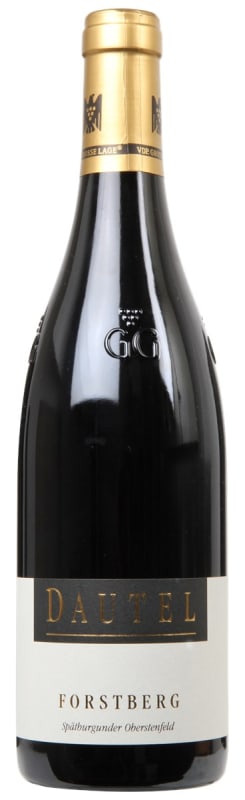


Winemaker Notes
A wonderfully polished, rich and sophisticated wine with serious dark energy and density, as well as notes of spice-box, griotte and red pepper roasted over an open flame.
Professional Ratings
-
Robert Parker's Wine Advocate
The 2016 Spätburgunder Forstberg GG offers a pure, bright, fresh and delicate Pinot bouquet with ripe red berry and lots of floral and spicy aromas. Lush and round on the palate, this is an intense and juicy, almost sweetish Pinot with concentrated fruit, fine tannins and a delicate and refreshing finish. Really juicy and ripe on the intensely fruity after taste. Still very young but promising. Tasted at the domain in November 2019.
-
Wine Spectator
Shows some density, with flavors of bilberry and violet, combining power and elegance. The tannins are there, but in harmony with the rest of the elements, while the acidity gives this liveliness and keeps the wine focused. Best from 2021 through 2029.


Germany is famous for spellbinding white wines, but a quiet revolution in red has been developing in recent decades. Pinot Noir leads the charge as the most widely planted red variety. Of the 13 German wine regions, five have notable plantings of Pinot Noir, which is locally called Spatburgunder.
Pinot Noir is the primary grape in the Ahr, a tiny region that is one of Germany’s northernmost. The rocky slopes store summer heat, which, together with light reflected off the Ahr Rive, aid in ripening. These German Pinot Noirs can be surprisingly rich and juicy. Baden is another warmer German region where Pinot Noir is number one in plantings. Many fine red examples come from here, as well as rosé versions, locally called Weissherbst. The Pfalz, protected by the Haardt Mountains, is sunny and dry enough to produce ripe Pinot Noir as well. The final two, Rheingau and Rheinhessen, benefit from Burgundian techniques like careful vineyard management and ageing in barrique.
While differences do exist from region to region, German Pinot Noirs typically show off a personality that is light, spicy and vivid. Flavors of cranberry, cherry, baking spice, along with a persistent stony minerality are common. These wines present a greater similarity to Alsatian and Burgundian Pinot Noir than to California examples.