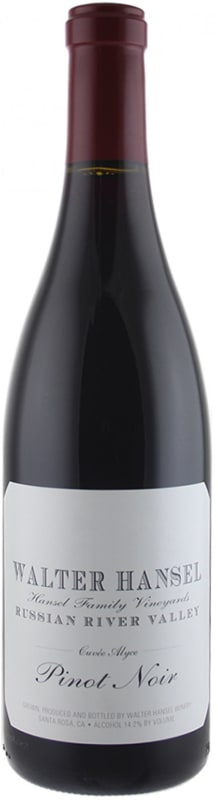


Winemaker Notes
There is a section of vineyard right in the middle of the North slope where the soils are very heavy adobe clay resulting in the vines struggling to produce a crop more than 1 ton to the acre. It is a field blend of clone 777 and 115. This minimal crop yield tends to produce wines that are big, rich, "over the top" flavors; perfect for "Alyce"
Professional Ratings
-
Robert Parker's Wine Advocate
Pale to medium ruby-purple in color, the 2016 Pinot Noir Cuvee Alyce leaps from the glass with gregarious black cherries, pomegranate and cranberry notes with touches of red roses, lavender and dried Provence herbs plus a waft of black soil. Medium to full-bodied with a firm frame of ripe, grainy tannins and great freshness, it is simply packed with taut fruit and finishes on a lingering mineral note.


While the Russian River Valley is a large appellation with multiple climate zones and soil types, it is best known for cool-climate varieties, with Pinot Noir as the most celebrated. The grapes benefit from a reliable late afternoon flow of Pacific Ocean fog through the Petaluma Gap and along the Russian River Valley that ensures slow and steady ripening and the preservation of grape acidity. Today many of California’s most highly regarded Pinot Noir vineyards are in the Russian River Valley, along with its sub-appellation, Green Valley.
Historically Russian River Valley Pinot Noirs had bright red fruit and delicate earthy, mineral notes. But changes in viticultural and winemaking practices have led to stylistic changes in some of the region’s wines. Adjustments to canopy management, among other techniques, have resulted in riper fruit and bolder wines as well. These show flavors of black cherry, blackberry, cola, spice and darker, loamy earth tones, accenting traditional Pinot Noir notes of strawberry, raspberry and light cherry.