


Winemaker Notes
The 2016 Wakefield St Andrews Cabernet Sauvignon is a deep, dark garnet color with a subtle purple hue to the edge. The wine has an enticing, lifted bouquet of violets, blackcurrants, blackberry and a hint of chocolate. The overall aroma is one of understated richness and elegance. On the palate it is a very well-balanced wine with ripe black fruit characters, coffee and chocolate interweaving harmoniously. There is an understated power to the wine, with layers of complexity building across the palate and then finishing elegantly with long, fine tannins. It is a generous wine yet retains poise and the elegance of great Cabernet Sauvignon.
Professional Ratings
-
Wine Enthusiast
Wakefield's premium Cab offers a heady combo of rather flashy oak, dried herbs, licorice, red currant and blackberry fruit. It's full-bodied but not overblown, silky-textured and laced with savory, grainy tannins and a streak of graphite. The oak, however, rears its head again quite prominently.


A noble variety bestowed with both power and concentration, Cabernet Sauvignon enjoys success all over the globe, its best examples showing potential to age beautifully for decades. Cabernet Sauvignon flourishes in Bordeaux's Medoc where it is often blended with Merlot and smaller amounts of some combination of Cabernet Franc, Malbecand Petit Verdot. In the Napa Valley, ‘Cab’ is responsible for some of the world’s most prestigious, age-worthy and sought-after “cult” wines. Somm Secret—DNA profiling in 1997 revealed that Cabernet Sauvignon was born from a spontaneous crossing of Cabernet Franc and Sauvignon Blanc in 17th century southwest France.
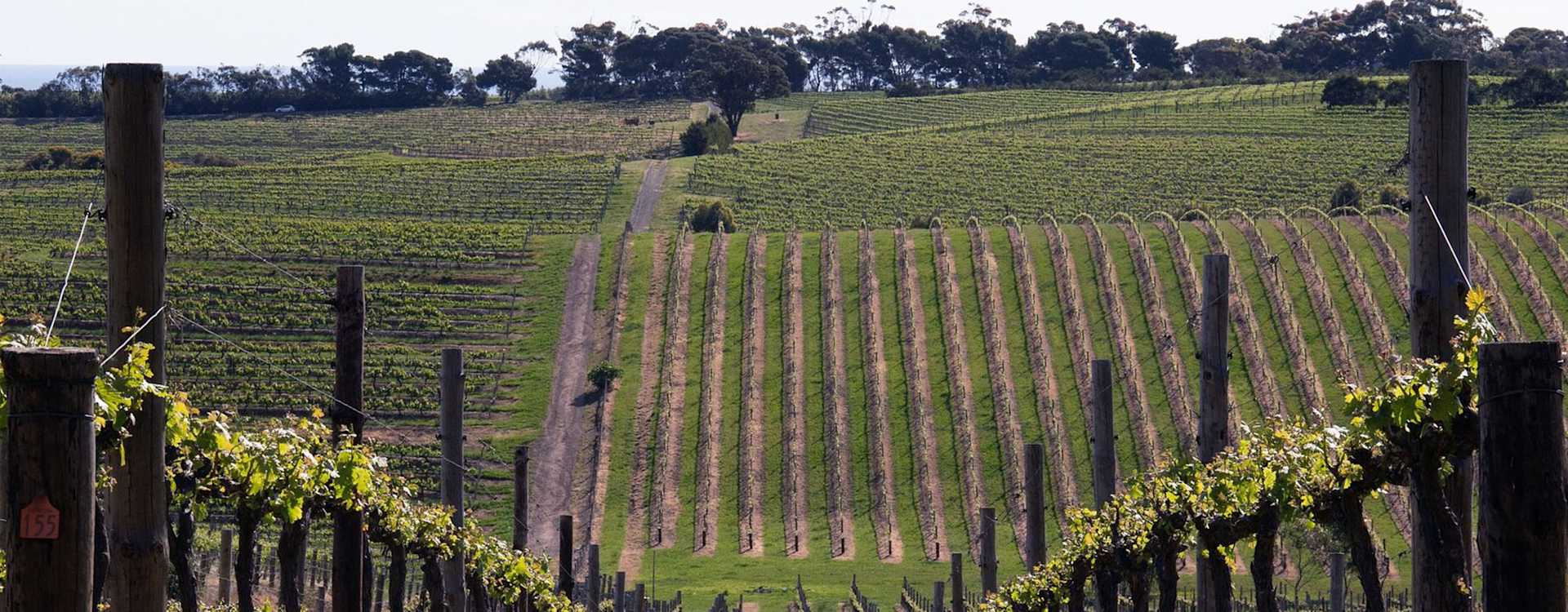
The Clare Valley is actually a series of narrow north to south valleys, each with a different soil type and slightly different weather patterns along their stretch. In the southern heartland between Watervale and Auburn, there is mainly a crumbled, red clay loam soil called terra rossa and cool breezes come in from Gulf St. Vincent. A few miles north, in Polish Hill, is soft, red loam over clay; westerlies blowing in from the Spencer Gulf influece this area's climate.
The differences in soil, elevation, degree of slope and weather enable the region to produce some of Australia’s finest, aromatic, spicy and lime-pithy Rieslings, as well as excellent Shiraz, Cabernet Sauvignon and Malbec with ripe plummy fruit, good acid and big structure.
Clare Valley is an isolated farming country with a continental climate known for its warm and sunny days, followed by cool nights—perfect for wine grapes’ development of sugar and phenolic ripeness in conjunction with notable acidity levels.