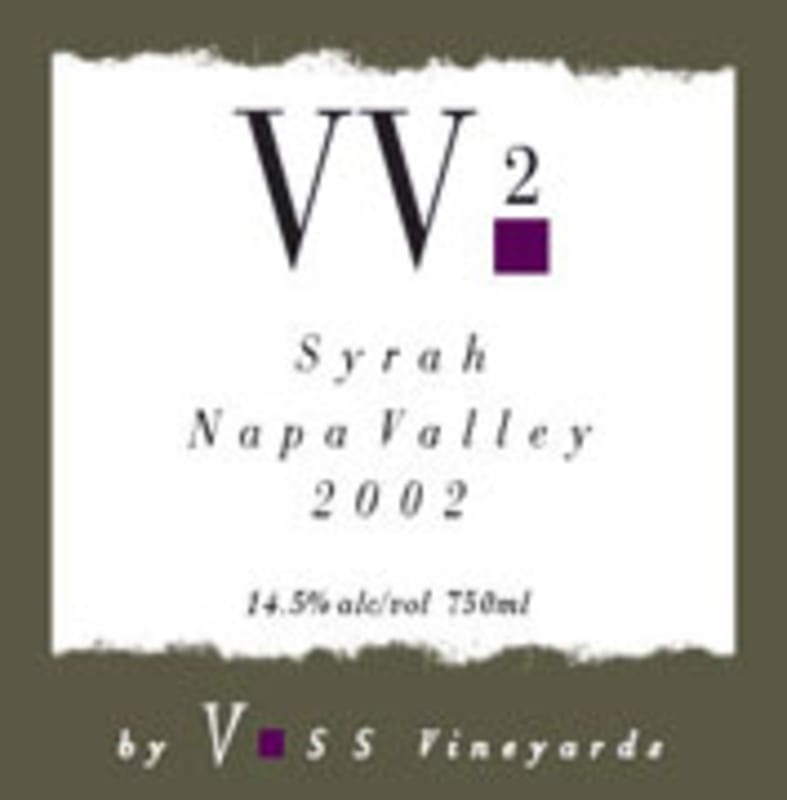

Winemaker Notes
The fruit for our VV2 Syrah is grown at our vineyard in Rutherford. The Voss Vineyard purchased in 1996 contains primarily clay loam soils, which encourage moderate vigor in the vines. When combined with an ideal climate of warm days and cool nites, this site gives Syrah rich in flavor and texture.
Vintage
The 2002 vintage began early with bud break occurring in mid March. March and most of April were warm, causing rapid vine growth. The end of April turned cold with several nights of frost. The weather warmed up in May with flowering in Syrah during the third week under partly cloudy skies. From June until August the weather was relatively cool, with daytime temperatures in the mid seventies to low eighties. This mild weather caused a slow ripening of the fruit, leading to a long "hang-time", which allows the flavor precursors to fully develop. September gave just enough heat to fully ripen the tannins before harvest.
Winemaking
After harvesting and crushing in the early morning, the Syrah fruit underwent a 3-day cold soak prior to fermentation. Cap management included both pump-overs and rack and returns to aerate the must and achieve full extraction. Just prior to dryness the tank was pressed to barrel to finish fermentation and spent 18 months in American oak.
Winemaker's Notes
The 2002 VV2 Syrah is deep red color and exhibits cherry, plum and mocha aromas. On the palate this wine offers bright berry flavours complemented by vanilla and toast notes. Supple tannins will allow this wine to age gracefully for the next 5 years.


Undoubtedly proving its merit over and over, Napa Valley is a now a leading force in the world of prestigious red wine regions. Though Cabernet Sauvignon dominates Napa Valley, other red varieties certainly thrive here. Important but often overlooked include Merlot and other Bordeaux varieties well-regarded on their own as well as for their blending capacities. Very old vine Zinfandel represents an important historical stronghold for the region and Pinot noir is produced in the cooler southern parts, close to the San Pablo Bay.
Perfectly situated running north to south, the valley acts as a corridor, pulling cool, moist air up from the San Pablo Bay in the evenings during the hot days of the growing season, which leads to even and slow grape ripening. Furthermore the valley claims over 100 soil variations including layers of volcanic, gravel, sand and silt—a combination excellent for world-class red wine production.