

Winemaker Notes
Professional Ratings
-
Robert Parker's Wine Advocate
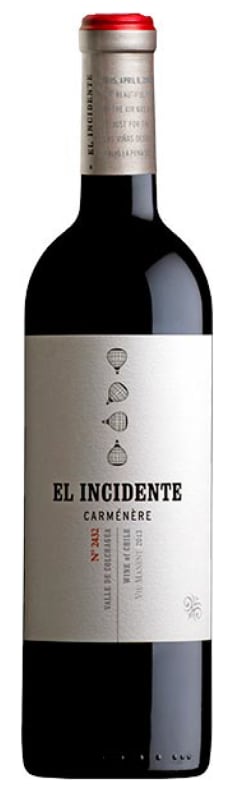
I find ripe aromas in the 2017 El Incidente Carménère, which matured in French oak barrels (40% new) for 19 months while 15% of the volume was kept in concrete eggs. Even if they have been lowering the oak (it used to be 100% new oak), the wine still shows influence from the élevage and has some oak to be integrated. But as it sat in the glass, it developed more and more focused Carmenere character of spices and herbs. Peppery and spicy. 10,405 bottles were filled in June 2016.
-
James Suckling
An attractively spicy edge here to the ripe blue fruit, as well as some savory, gun-smoke notes. Very plush, lithe and juicy feel with a smooth, fleshy resolve. Drink now.


Dark, full-bodied and herbaceous with a spicy kick, Carménère found great success with its move to Chile in the mid-19th century. However, the variety went a bit undercover until 1994 when many plantings previously thought to be Merlot, were profiled as Carménère. Somm Secret— Carménère is both a progeny and a great-grandchild of the similarly flavored Cabernet Franc.

Well-regarded for intense and exceptionally high quality red wines, the Colchagua Valley is situated in the southern part of Chile’s Rapel Valley, with many of the best vineyards lying in the foothills of the Coastal Range.
Heavy French investment and cutting-edge technology in both the vineyard and the winery has been a boon to the local viticultural industry, which already laid claim to ancient vines and a textbook Mediterranean climate.
The warm, dry growing season in the Colchagua Valley favors robust reds made from Cabernet Sauvignon, Carmenère, Malbec and Syrah—in fact, some of Chile’s very best are made here. A small amount of good white wine is produced from Chardonnay and Sauvignon Blanc.