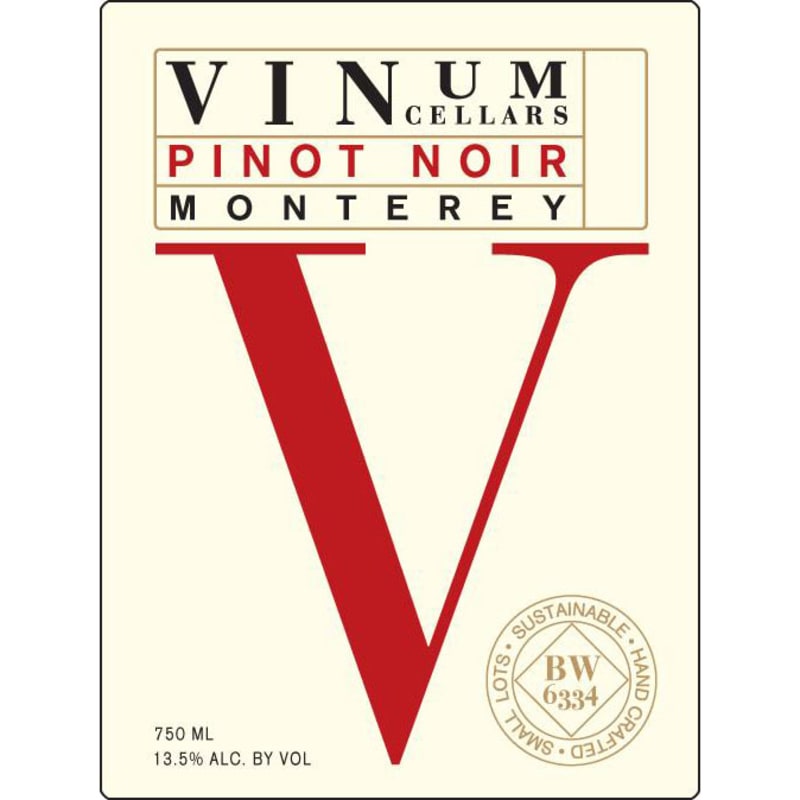

Winemaker Notes
This wine is an outstanding Pinot Noir that drinks best on its own or with exotic cheese platters including Morbier, aged white Cheddar, Stilton and/or a log of goat cheese;and don’t forget the roasted nuts and quince paste. The dishes that work best with this wine are seared Ahi Tuna or Tuna Poke, roasted duck breast and lamb chops with a chickpea pancake.
Professional Ratings
-
Wilfred Wong of Wine.com
A fine-drinking example of the grape variety, the lively 2015 Vinum Cellars Pinot Noir exhibits red and black fruit that stay steadfastly rich and layered on the palate. The wine's roundness pairs it well with a fruit compote accented leg of lamb. (Tasted: November 7, 2017, San Francisco, CA)


Thin-skinned, finicky and temperamental, Pinot Noir is also one of the most rewarding grapes to grow and remains a labor of love for some of the greatest vignerons in Burgundy. Fairly adaptable but highly reflective of the environment in which it is grown, Pinot Noir prefers a cool climate and requires low yields to achieve high quality. Outside of France, outstanding examples come from in Oregon, California and throughout specific locations in wine-producing world. Somm Secret—André Tchelistcheff, California’s most influential post-Prohibition winemaker decidedly stayed away from the grape, claiming “God made Cabernet. The Devil made Pinot Noir.”

A geographic and climatic paradise for grape vines, Monterey is a part of the greater Central Coast AVA and contains within it five smaller sub-appellations, including Arroyo Seco, San Lucas, San Bernabe, Hames Valley and the famous Santa Lucia Highlands. The climate is relatively warm but tempered by cool, coastal winds, allowing the regions in Monterey County an exceptionally long growing season. Bud break often happens two weeks sooner and harvest tends to be two weeks later compared to other surrounding regions.
Monterey’s coastal side, where the cooling ocean fog allows grapes to develop a perfect sugar-acid balance, excels in the production of Chardonnay, Pinot Noir and Riesling. Warmer, inland subzones are home to fleshy, concentrated and full-bodied reds like Cabernet Sauvignon, Merlot and Zinfandel.
Chardonnay, covering about 40% of vineyard acreage, is the most widely planted grape in all of Monterey County.