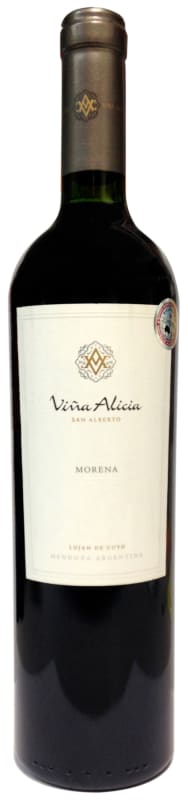


Winemaker Notes
Blend: 88% Cabernet Sauvignon, 12% Cabernet Franc
Professional Ratings
-
James Suckling
A beautiful and decadent red displaying aromas of mushrooms, dried flowers and hints of tar. Full-bodied with silky tannins and a medium intense nutty finish. A blend of 88% cabernet sauvignon with 12% cabernet franc from Las Compuertas in Luján de Cuyo. Drink now.
-
Robert Parker's Wine Advocate
The 2011 Morena is a blend of five Cabernet Sauvignon clones and two different clones of Cabernet Franc from they San Alberto estate vineyard in Luján de Cuyo, harvested and fermented separately. Malolactic was in new French oak barrels where the wine aged for six months separately and a further 12 months after the varieties were blended. The final version includes around 12% Cabernet Franc. This shows more freshness than the 2012s, but the fruit is still perfectly ripe, with some balsamic notes and an intense palate that is elegant, fresh and complex. This is a delicious Cabernet-blend with a special tastiness.


A noble variety bestowed with both power and concentration, Cabernet Sauvignon enjoys success all over the globe, its best examples showing potential to age beautifully for decades. Cabernet Sauvignon flourishes in Bordeaux's Medoc where it is often blended with Merlot and smaller amounts of some combination of Cabernet Franc, Malbecand Petit Verdot. In the Napa Valley, ‘Cab’ is responsible for some of the world’s most prestigious, age-worthy and sought-after “cult” wines. Somm Secret—DNA profiling in 1997 revealed that Cabernet Sauvignon was born from a spontaneous crossing of Cabernet Franc and Sauvignon Blanc in 17th century southwest France.

By far the largest and best-known winemaking province in Argentina, Mendoza is responsible for over 70% of the country’s enological output. Set in the eastern foothills of the Andes Mountains, the climate is dry and continental, presenting relatively few challenges for viticulturists during the growing season. Mendoza, divided into several distinctive sub-regions, including Luján de Cuyo and the Uco Valley, is the source of some of the country’s finest wines.
For many wine lovers, Mendoza is practically synonymous with Malbec. Originally a Bordelaise variety brought to Argentina by the French in the mid-1800s, here it found success and renown that it never knew in its homeland where a finicky climate gives mixed results. Cabernet Sauvignon, Syrah, Merlot and Pinot Noir are all widely planted here as well (and sometimes even blended with each other or Malbec). Mendoza's main white varieties include Chardonnay, Torrontés, Sauvignon Blanc and Sémillon.