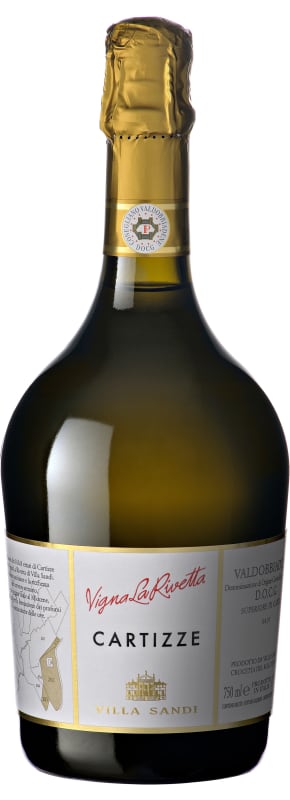


Winemaker Notes
The Cartizze microzone in the heart of the famous Valdobbiadane region provides the most sought after Glera vines in the DOCG. Tasting this wine, you can understand why. Showing an extraordinary perfume on the nose, with hints of soft and ripe pear and acacia flowers. The palate and mousse are bright, light and delicate and with pronounced fruit which is counter-balanced by the burst of natural acidity. At the same this rare Italian Prosecco is not remotely lacking in length or persistency. What also stands out is the purity of the floral fruit with a touch of chamomile and almond. A veritable treat for any occasion.
Professional Ratings
-
James Suckling
Lots of lemon-sorbet character on the nose with juice, zest and a touch of fresh cream. Typical Cartizze profile. Lively froth on the palate to start, then a relaxed, creamy finish. The flavors are delightful. Drink now.
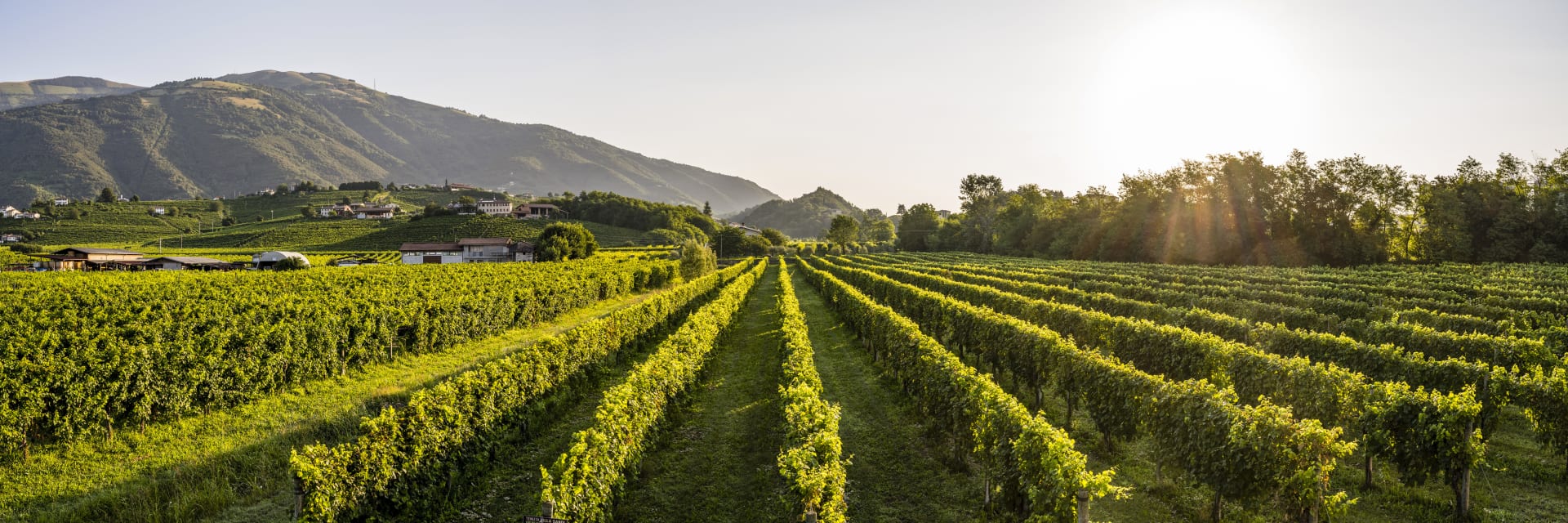



Headquartered in a historic Palladian villa, dating to 1622, Villa Sandi is a winery anchored in family and tradition. The Moretti Polegato family has grown grapes since the 1920s and has been the steward of the Villa Sandi estate since the late 1970s, preserving an icon of Italian wine culture. Currently the largest owner of estate vineyards in Conegliano-Valdobbiadene, Villa Sandi offers a portfolio of fresh and lively Proseccos from DOC Treviso, fruit-driven Prosecco Superiore from Valdobbiadene and Asolo DOCGs, and an elegant and refined offering from Cartizze DOCG, the highest designation of the region.
Villa Sandi showcases an extreme dedication to elevating the production of Prosecco by managing its estate vineyards with the utmost care. Exceptional wine quality and a true commitment to sustainability and biodiversity are hallmarks of Villa Sandi. Among its many sustainable practices, Villa Sandi primarily relies on its own hydroelectric power plant to supply clean energy and irrigate its vineyards. The winery’s dedication to preserving its legacy through protecting the environment is rooted in Villa Sandi’s family-run organization. Villa Sandi’s Proseccos routinely receive the highest praise from wine publications, and their Valdobbiadene Superiore di Cartizze DOCG La Rivetta, from a small 3.7-acre estate vineyard, has obtained the highest Tre Bicchieri award for 14 consecutive years from Gambero Rosso, Italy’s leading wine guide.
Diva Moretti Polegato is Villa Sandi’s Global Brand Ambassador in the UK and US and represents the third generation of the Moretti Polegato family leadership. As part of her sustainability initiatives, Diva established Strawberry Fields Onlus, an organization helping and supporting children, women and men in Ethiopia.

Representing the topmost expression of a Champagne house, a vintage Champagne is one made from the produce of a single, superior harvest year. Vintage Champagnes account for a mere 5% of total Champagne production and are produced about three times in a decade. Champagne is typically made as a blend of multiple years in order to preserve the house style; these will have non-vintage, or simply, NV on the label. The term, "vintage," as it applies to all wine, simply means a single harvest year.

The wines of Conegliano Valdobbiadene Prosecco Superiore DOCG represent Italy’s highest-quality designation in the Prosecco category. Situated approximately 30 miles north of Venice and 63 miles south of the Dolomites in the province of Treviso, Prosecco Superiore DOCG is defined by a limited geographic area that extends over 15 hillside towns, flanked by the municipalities of Conegliano to the east and Valdobbiadene to the west.
Hand harvesting and cultivation occur in the steep hillsides of Conegliano Valdobbiadene, the birthplace of Prosecco, and while incredibly labor-intensive, also drive quality grape selection and an artisanal approach throughout. To qualify as Prosecco Superiore DOCG, wines must contain at least 85% Glera. Other permitted varieties include Verdiso, Perera, and Bianchetta Trevigiana – but the aromatic Glera is the region’s star. Hardy and vigorous with hazelnut-colored shoots, Glera forms large, loose bunches of beautiful golden-yellow grapes that stand out against the bright green leaves of the vine.
Vines have been grown in Conegliano Valdobbiadene since ancient times. In 1876 Conegliano became home to the first enology school in Italy, an institution of learning and innovation. It fundamentally altered the future course of winemaking in the region, and indeed the entire country, by perfecting the Italian Method of sparkling wine production in autoclaves to preserve and enhance the aromas of the indigenous grape varieties. A Consortium of Conegliano Valdobbiadene producers was formed in 1963 and was instrumental in obtaining the very first Prosecco appellation in 1969. In 2009, Conegliano Valdobbiadene Prosecco was elevated to a DOCG, Italy’s highest wine category. Conegliano, home to the enology school and research center, is known as the area’s cultural capital, while Valdobbiadene, with its high altitudes, dramatically steep hillsides and twisting contours, is devoted mainly to production.
While the vast majority (95%) of Conegliano Valdobbiadene Prosecco is Spumante (sparkling or foamy), it is also made as a fizzy (Frizzante) wine, or even in a rare completely still version called Tranquillo. It comes in three different categories of residual sugar: “DRY,” with 17-32 grams of residual sugar per liter, is actually the sweetest; “Extra-Dry,” ranges from 12-17 grams; and Brut (0-12) is the driest category. Brut Nature or Zero Dossaggio Prosecco has less than 3 grams of residual sugar and Extra-Brut less than 6. Though most Prosecco is made in an autoclave, second fermentation in the bottle is still permitted under the DOCG guidelines, either in the traditional process known as Col Fondo (in which the sediment is left in the bottle) or Metodo Classico with sediment removed.
Due to the Conegliano Valdobbiadene’s complex geologic history, there is tremendous diversity of terroir between the eastern and western portions of the zone and even different sub zones and parcels within the same area. For this reason, in 2009 a sub-category called RIVE was created, which indicates a Prosecco made of grapes from one of 43 registered geographic areas. In order to qualify as a Rive, the grapes have an even lower maximum yield and the wine must be vintage dated. It is also possible to find Prosecco DOCGs made entirely from grapes of a single vineyard parcel.
Conegliano Valdobbiadene is currently shortlisted for inclusion as a UNESCO World Heritage Site.