


Winemaker Notes
Professional Ratings
-
Robert Parker's Wine Advocate
With recently expanded acquisitions in this vineyard cru, the 2010 Barolo Lazzarito shows an expansive personality with pretty tones of crushed rose and red berry fruit that give the wine a delicate, feminine approach. Like the other wines in Luca’s portfolio of new releases, this Barolo is years away from its prime drinking potential. The next ten years should see a steady evolution of aromas stemming from the spice, tar and licorice layers already on display despite the wine’s young age. The mouthfeel is fine and polished with a great sense of purity and balanced freshness. Drink: 2018-2035.
-
Wine Spectator
Tight and firm, with telltale tannins coating the cherry, plum, leather and tobacco flavors. Shows density and persistence, ending with a chalky sensation and lingering with fruit and spice notes. Built for the long haul. Best from 2018 through 2033. 500 cases made.
-
James Suckling
A subtle combination of dried-berry, tobacco and cedar character follows through to a full body with firm tannins and a fresh finish. Lovely layers.
-
Wine Enthusiast
Inviting aromas of black berry, spice, leather, truffle and a whiff of toasted oak lead the nose. The palate opens with flavors that include black cherry, baking spices, herbs, black pepper and espresso. Drying wood tannins give an astringent and abrupt finish.
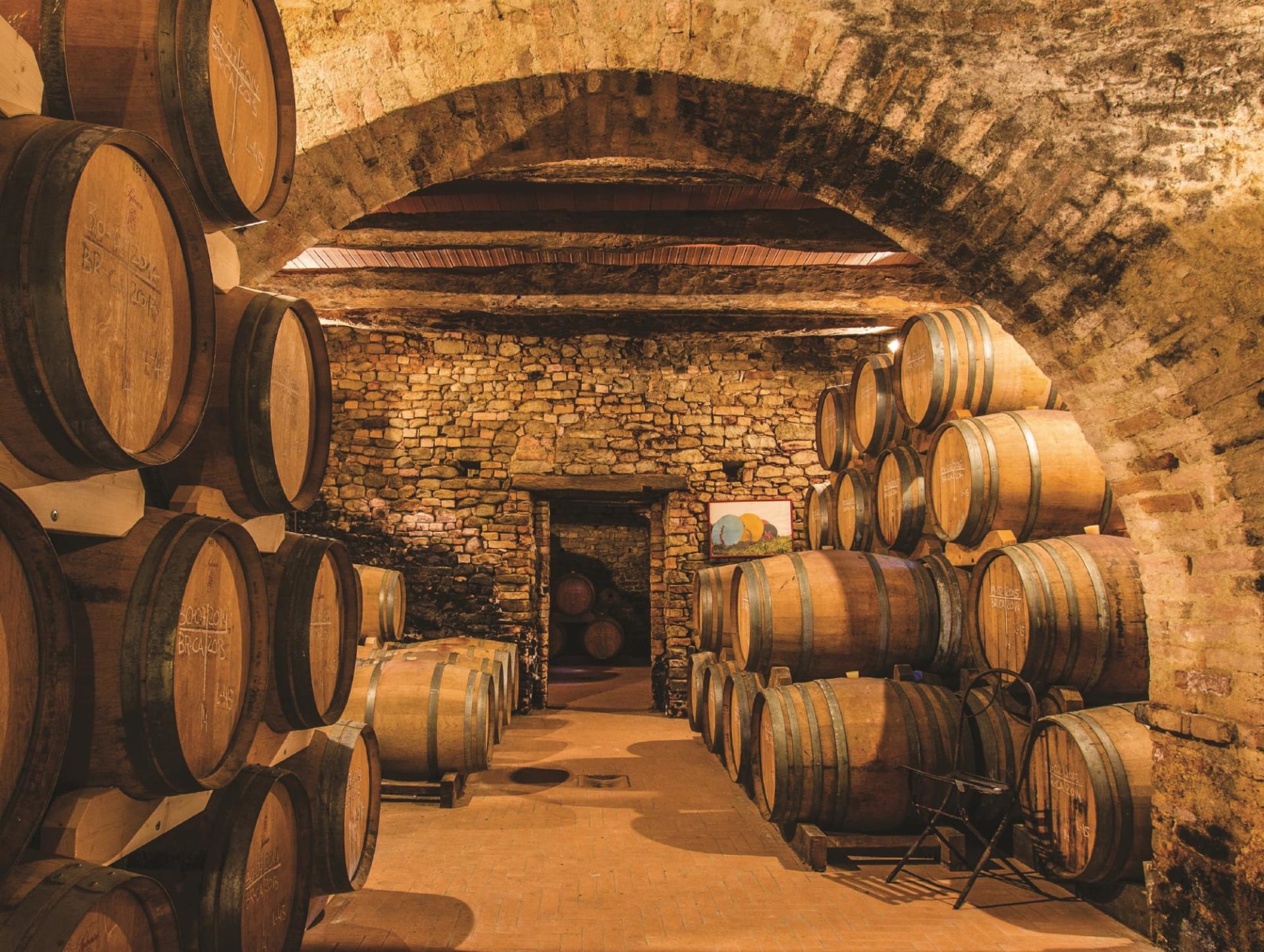


Located in the heart of the Langhe hills, at the top of the village of Castiglione Falletto, the Vietti wine cellar was founded in the late 1800's by Carlo Vietti. The estate has gradually grown over the course of time, and today the vineyards include some of the most highly prized terroirs within the Barolo and Barbaresco winegrowing areaS.
Although they have been making wine for four generations, the turning point came in the 1960's when Luciana Vietti married winemaker and art connoisseur Alfredo Currado, whose intuitions - from the production of one of the first Barolo crus (Rocche di Castiglione - 1961), through the single-varietal vinification of Arneis (1967) to the invention of Artist Labels (1974) - made him both symbol and architect of some of the most significant revolutions of the time.
Alfredo’s intellectual, professional, and prospective legacy was taken up by Luca Currado Vietti (Luciana and Alfredo’s son) and his wife Elena, who contributed greatly to the success of the Vietti brand before their departure in 2023. In 2016 the historic winery was acquired by Krause family. Over the last seven year, they have added a number of prized crus to the estate’s holdings. In 2022 the winery was named Winery of the Year by Antonio Galloni of Vinous.
Vietti is universally recognized today as being one of the very finest Italian wine labels - by continuing along the path of the pursuit of quality, considered experimentation and working for expansion and consolidation internationally.

Responsible for some of the most elegant and age-worthy wines in the world, Nebbiolo, named for the ubiquitous autumnal fog (called nebbia in Italian), is the star variety of northern Italy’s Piedmont region. Grown throughout the area, as well as in the neighboring Valle d’Aosta and Valtellina, it reaches its highest potential in the Piedmontese villages of Barolo, Barbaresco and Roero. Outside of Italy, growers are still very much in the experimentation stage but some success has been achieved in parts of California. Somm Secret—If you’re new to Nebbiolo, start with a charming, wallet-friendly, early-drinking Langhe Nebbiolo or Nebbiolo d'Alba.

The center of the production of the world’s most exclusive and age-worthy red wines made from Nebbiolo, the Barolo wine region includes five core townships: La Morra, Monforte d’Alba, Serralunga d’Alba, Castiglione Falletto and the Barolo village itself, as well as a few outlying villages. The landscape of Barolo, characterized by prominent and castle-topped hills, is full of history and romance centered on the Nebbiolo grape. Its wines, with the signature “tar and roses” aromas, have a deceptively light garnet color but full presence on the palate and plenty of tannins and acidity. In a well-made Barolo wine, one can expect to find complexity and good evolution with notes of, for example, strawberry, cherry, plum, leather, truffle, anise, fresh and dried herbs, tobacco and violets.
There are two predominant soil types here, which distinguish Barolo from the lesser surrounding areas. Compact and fertile Tortonian sandy marls define the vineyards farthest west and at higher elevations. Typically the Barolo wines coming from this side, from La Morra and Barolo, can be approachable relatively early on in their evolution and represent the “feminine” side of Barolo, often closer in style to Barbaresco with elegant perfume and fresh fruit.
On the eastern side of the Barolo wine region, Helvetian soils of compressed sandstone and chalks are less fertile, producing wines with intense body, power and structured tannins. This more “masculine” style comes from Monforte d’Alba and Serralunga d’Alba. The township of Castiglione Falletto covers a spine with both soil types.
The best Barolo wines need 10-15 years before they are ready to drink, and can further age for several decades.