


Winemaker Notes
Professional Ratings
-
Jeb Dunnuck
The estate bought this land in 2019, and the 2020 Barbaresco Riserva Rabaja comes from their second harvest. It has a medium red hue and is highly expressive with aromas of salted orange, crushed roses, oak spice, ripe peach, and cranberries. The palate offers fantastic energy, with an approachable feel as well, and it has refined tannins and a long finish.
-
Vinous
The 2020 Barbaresco Riserva Rabajà is magnificent. A wine of crystalline precision and nuance, the 2020 bristles with energy. Slate, crushed rocks, orange peel, mint, cinnamon and dried flowers all race across the palate. This intensely saline, taut Barbaresco needs a number of years in bottle to be at its best, even if it is pretty alluring right now.
-
Robert Parker's Wine Advocate
This plot was purchased in 2019, and this is therefore the second vintage made. The Vietti 2020 Barbaresco Riserva Rabajà is spicy, juicy and accessible with some sweetness on the tannins. The wine sports Mediterranean warmth from within with black cherry, spice and grilled rosemary. There is a saline-mineral touch as well that adds elegance, but all said in done, this wine is more immediate in delivery. The 2020 vintage is bookended by two superior vintages, the 2019 and 2021.
-
Wine Spectator
Rose hip, pomegranate, strawberry, hay and eucalyptus aromas and flavors mark this linear, almost tart red. Offset by firm tannins, while the terrific finish leaves layers of flavor and a mouthwatering impression. Approachable now with food but better in a few years.
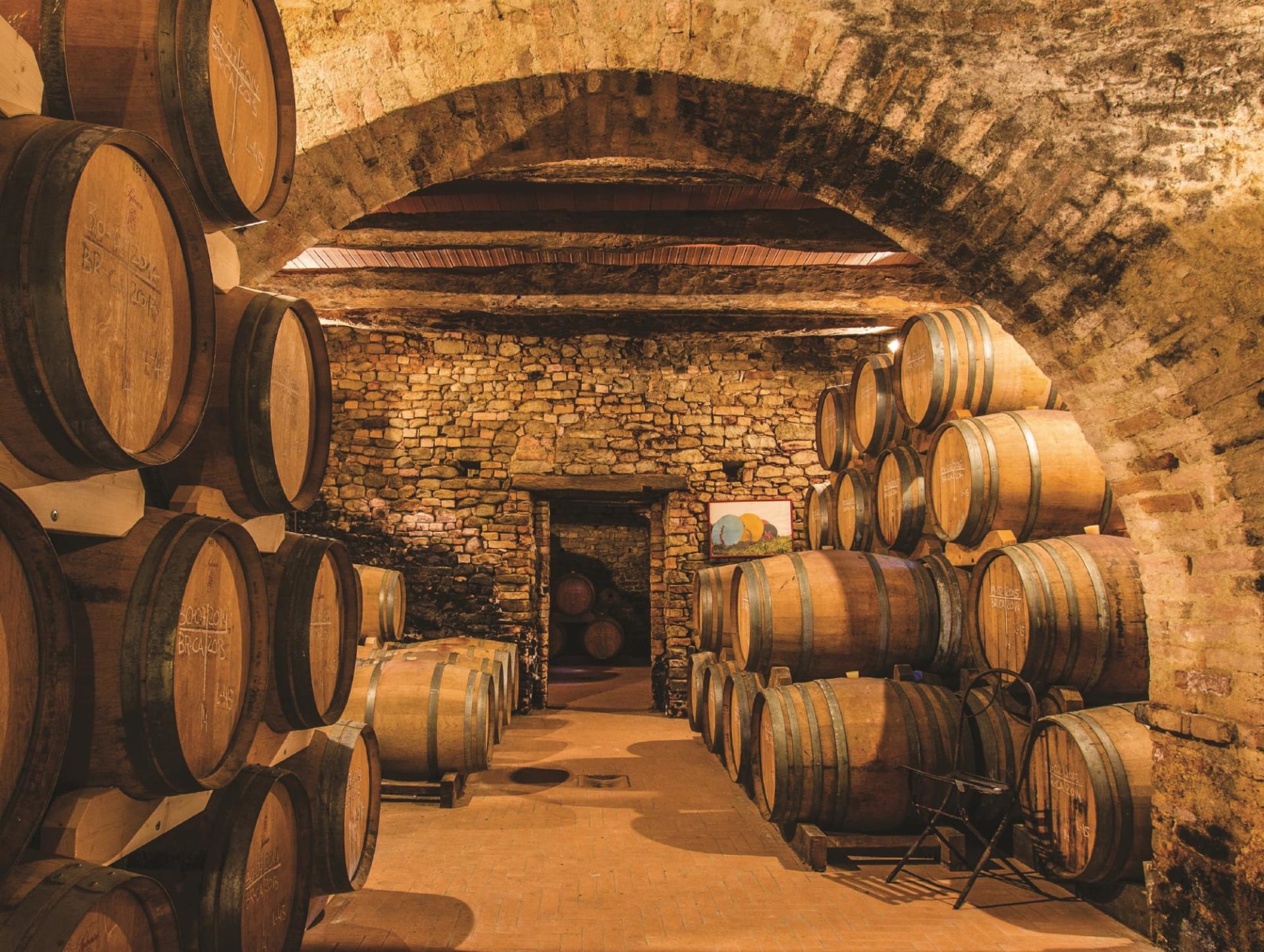



Located in the heart of the Langhe hills, at the top of the village of Castiglione Falletto, the Vietti wine cellar was founded in the late 1800's by Carlo Vietti. The estate has gradually grown over the course of time, and today the vineyards include some of the most highly prized terroirs within the Barolo and Barbaresco winegrowing areaS.
Although they have been making wine for four generations, the turning point came in the 1960's when Luciana Vietti married winemaker and art connoisseur Alfredo Currado, whose intuitions - from the production of one of the first Barolo crus (Rocche di Castiglione - 1961), through the single-varietal vinification of Arneis (1967) to the invention of Artist Labels (1974) - made him both symbol and architect of some of the most significant revolutions of the time.
Alfredo’s intellectual, professional, and prospective legacy was taken up by Luca Currado Vietti (Luciana and Alfredo’s son) and his wife Elena, who contributed greatly to the success of the Vietti brand before their departure in 2023. In 2016 the historic winery was acquired by Krause family. Over the last seven year, they have added a number of prized crus to the estate’s holdings. In 2022 the winery was named Winery of the Year by Antonio Galloni of Vinous.
Vietti is universally recognized today as being one of the very finest Italian wine labels - by continuing along the path of the pursuit of quality, considered experimentation and working for expansion and consolidation internationally.

Responsible for some of the most elegant and age-worthy wines in the world, Nebbiolo, named for the ubiquitous autumnal fog (called nebbia in Italian), is the star variety of northern Italy’s Piedmont region. Grown throughout the area, as well as in the neighboring Valle d’Aosta and Valtellina, it reaches its highest potential in the Piedmontese villages of Barolo, Barbaresco and Roero. Outside of Italy, growers are still very much in the experimentation stage but some success has been achieved in parts of California. Somm Secret—If you’re new to Nebbiolo, start with a charming, wallet-friendly, early-drinking Langhe Nebbiolo or Nebbiolo d'Alba.

A wine that most perfectly conveys the spirit and essence of its place, Barbaresco is true reflection of terroir. Its star grape, like that in the neighboring Barolo region, is Nebbiolo. Four townships within the Barbaresco zone can produce Barbaresco: the actual village of Barbaresco, as well as Neive, Treiso and San Rocco Seno d'Elvio.
Broadly speaking there are more similarities in the soils of Barbaresco and Barolo than there are differences. Barbaresco’s soils are approximately of the same two major soil types as Barolo: blue-grey marl of the Tortonion epoch, producing more fragile and aromatic characteristics, and Helvetian white yellow marl, which produces wines with more structure and tannins.
Nebbiolo ripens earlier in Barbaresco than in Barolo, primarily due to the vineyards’ proximity to the Tanaro River and lower elevations. While the wines here are still powerful, Barbaresco expresses a more feminine side of Nebbiolo, often with softer tannins, delicate fruit and an elegant perfume. Typical in a well-made Barbaresco are expressions of rose petal, cherry, strawberry, violets, smoke and spice. These wines need a few years before they reach their peak, the best of which need over a decade or longer. Bottle aging adds more savory characteristics, such as earth, iron and dried fruit.