


Winemaker Notes
Viberti's flagship Barolo is a blend of fruit from Viberti’s top vineyard sites. Buon Padre is a complex, full bodied wine that opens with notes of preserved fruit and spices, and is backed by nuances of earth, leather, and wild flowers.
Professional Ratings
-
James Suckling
Notes of dried cranberries, dried orange peel, licorice and raw mushrooms. Medium-bodied with chewy tannins. A little tight with a drying finish, yet it is polished and lingering. Try after 2025.
-
Robert Parker's Wine Advocate
This wine follows local tradition and is made with a blend from various parcels. We have fruit from these vineyard sites: Perno, Albarella, Terno, Bricco delle Viole, San Pietro, San Ponzio, La Volta, Fossati, Ravera and Monvigliero. The Giovanni Viberti 2019 Barolo Buon Padre (the "good father") opens to fine and ethereal aromas of blue flower, cassis and powdery licorice. The wine offers more substance and fiber to the palate thanks to a long-lasting silky finish. Put this wine aside for more aging.
-
Wine Spectator
An inviting red, delivering an appealing mix of lushness and vibrancy, with a tightly wound structure penetrated by cherry, raspberry, stony mineral and underbrush aromas and flavors. Stays long and complex on the finish. Best from 2026 through 2046.
-
Wine Enthusiast
Lifted and vibrant, this Barolo opens with aromas of crushed raspberries, drying roses and wild thyme. Elegant from the start, the fine tannins give a tension to the palate that allows the fruit to spring across the palate with tart red berry flavors fin-ishing with a dusty earth note.


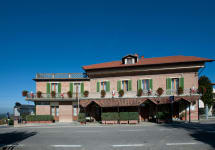
Viberti, located in the village of Barolo in the northern Italian region of Piedmont, was founded in the early 20th century by Antonio Viberti, an innkeeper and restauranteur. Wine was produced from the estate vineyards exclusively for the patrons of the family restaurant, Trattoria al Buon Padre.
In 1967, ata time when Barolo wines were gaining international notoriety, Antonio's son, Giovanni, joined the family business and realized the potential of the estate vineyards to produce superior quality, world-class Barolo. After selling wines to restaurant patrons, who came from far and wide to enjoy the local cuisine, the reputation of Viberti Barolo spread leading to demand beyond Piedmont.
One hundred years after the creation of the Viberti winery, the family's connection to their beloved land of Barolo and its fine red wines remains unbroken as the 3rd generations of the Viberti family, GianLuca and Claudio, joined their father at the winery. Today, under the direction of Claudio, the winery produces varietally accurate, elegantly structured wines with fresh fruit aromas, bold tannins, and vibrant acidity that are approachable upon release, yet reward extensive aging.

Responsible for some of the most elegant and age-worthy wines in the world, Nebbiolo, named for the ubiquitous autumnal fog (called nebbia in Italian), is the star variety of northern Italy’s Piedmont region. Grown throughout the area, as well as in the neighboring Valle d’Aosta and Valtellina, it reaches its highest potential in the Piedmontese villages of Barolo, Barbaresco and Roero. Outside of Italy, growers are still very much in the experimentation stage but some success has been achieved in parts of California. Somm Secret—If you’re new to Nebbiolo, start with a charming, wallet-friendly, early-drinking Langhe Nebbiolo or Nebbiolo d'Alba.

The center of the production of the world’s most exclusive and age-worthy red wines made from Nebbiolo, the Barolo wine region includes five core townships: La Morra, Monforte d’Alba, Serralunga d’Alba, Castiglione Falletto and the Barolo village itself, as well as a few outlying villages. The landscape of Barolo, characterized by prominent and castle-topped hills, is full of history and romance centered on the Nebbiolo grape. Its wines, with the signature “tar and roses” aromas, have a deceptively light garnet color but full presence on the palate and plenty of tannins and acidity. In a well-made Barolo wine, one can expect to find complexity and good evolution with notes of, for example, strawberry, cherry, plum, leather, truffle, anise, fresh and dried herbs, tobacco and violets.
There are two predominant soil types here, which distinguish Barolo from the lesser surrounding areas. Compact and fertile Tortonian sandy marls define the vineyards farthest west and at higher elevations. Typically the Barolo wines coming from this side, from La Morra and Barolo, can be approachable relatively early on in their evolution and represent the “feminine” side of Barolo, often closer in style to Barbaresco with elegant perfume and fresh fruit.
On the eastern side of the Barolo wine region, Helvetian soils of compressed sandstone and chalks are less fertile, producing wines with intense body, power and structured tannins. This more “masculine” style comes from Monforte d’Alba and Serralunga d’Alba. The township of Castiglione Falletto covers a spine with both soil types.
The best Barolo wines need 10-15 years before they are ready to drink, and can further age for several decades.