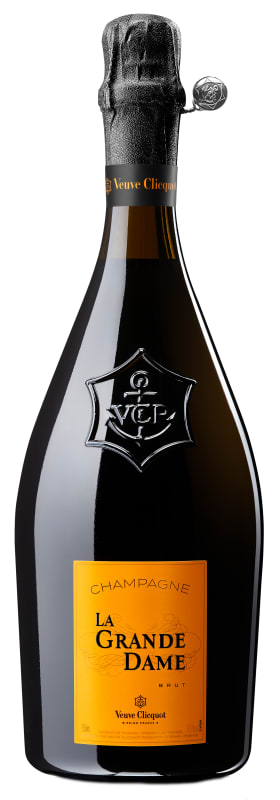


Winemaker Notes
Initial notes of white flowers on the nose, such as jasmine, honeysuckle and vine flowers can be felt and then opens with fruitier nuances of apple, pear and peach. A few notes of fresh almond and frangipane complete the bouquet. In the mouth, the cuvée reveals more complex aromas: dried apricot, hazelnuts, honey and sugar candy. Silky textures give the wine its personality, elegance and character. The aging has imparted particular depth and power to the wine.
Blend: 90% Pinot Noir, 10% Chardonnay
Professional Ratings
-
Tasting Panel
Grace Kelly comes to mind: For all its regal bearing, this famed wine's essence is one of intrigue. In the 2012 vin- tage, a blend of 90% Pinot Noir and 10% Chardon- nay, almost demure scents of melon, pink blossoms (sweet pea, peony), and brioche are met by bolder notes of salinity and slight tar. On the sculptural, chiseled palate, mean- while, a singular mix of green strawberry, gooseberry, and cranberry underscored by tangy acidity comes to mingle with a hint of mushroom, fines herbes, and smoke on the chalk-dusted finish. In a word: arresting
-
Decanter
A generous golden colour betrays the dominance of Pinot Noir in the blend; this theme thereafter maintained by aromatics of fig, wild strawberries and Mirabelle plums; behind that, jasmine, red apples and a distant whiff of woodsmoke. Engaging already, in other words. One’s impressions are confirmed and amplified on the palate, with the aspiration voiced by both chef de caves Dominique and Didier, to allow the ‘cooler’ Pinot Noir sites full rein. This is eloquently evidenced by a subtle and deftly textured structure, the primary fruit notes of nectarine and citrus peel underscored by a richer, still somewhat reticent, core, darker and more savoury of intent and oh, so subtle at the moment. I have every confidence that this characteristic will come into its own over the longer term and mark the 2012 as one of the more successful outings for this outstanding cuvée.
-
Wine Enthusiast
With a slight preponderance of Pinot Noir in the blend, this wine is rich and impressive. It is still young, with a crisp edge that makes the fruit shine. Apple and citrus flavors are integrated into a mineral vein.
Cellar Selection -
Jasper Morris
A similar assemblage to the 2008 with 90% Pinot Noir with a Northern Montagne focus, and 10% Chardonnay from Le-Mesnil, a dosage of 6g/l. Former Veuve Clicquot winemaker Dominique Demarville has achieved a remarkable house style consistency with this prestige cuvee. The biscuity Pinot fruit (finely dusted with notes of Almond) is present and correct, the vintage provides extra structure versus the 2008. The minerality of Verzenay and Verzy adds a beautiful spicy acidity to the finish.
-
Wine Spectator
Fine and graceful, this dances across the palate with its bright, well-defined freshness and detailed flavors of Mandarin orange, toast point, crème de cassis and minerally oyster shell. Subtle in its intensity, with all the pieces seamlessly knit into an elegant whole.


Representing the topmost expression of a Champagne house, a vintage Champagne is one made from the produce of a single, superior harvest year. Vintage Champagnes account for a mere 5% of total Champagne production and are produced about three times in a decade. Champagne is typically made as a blend of multiple years in order to preserve the house style; these will have non-vintage, or simply, NV on the label. The term, "vintage," as it applies to all wine, simply means a single harvest year.

Associated with luxury, celebration, and romance, the region, Champagne, is home to the world’s most prized sparkling wine. In order to bear the label, ‘Champagne’, a sparkling wine must originate from this northeastern region of France—called Champagne—and adhere to strict quality standards. Made up of the three towns Reims, Épernay, and Aÿ, it was here that the traditional method of sparkling wine production was both invented and perfected, birthing a winemaking technique as well as a flavor profile that is now emulated worldwide.
Well-drained, limestone and chalky soil defines much of the region, which lend a mineral component to its wines. Champagne’s cold, continental climate promotes ample acidity in its grapes but weather differences from year to year can create significant variation between vintages. While vintage Champagnes are produced in exceptional years, non-vintage cuvées are produced annually from a blend of several years in order to produce Champagnes that maintain a consistent house style.
With nearly negligible exceptions, . These can be blended together or bottled as individual varietal Champagnes, depending on the final style of wine desired. Chardonnay, the only white variety, contributes freshness, elegance, lively acidity and notes of citrus, orchard fruit and white flowers. Pinot Noir and its relative Pinot Meunier, provide the backbone to many blends, adding structure, body and supple red fruit flavors. Wines with a large proportion of Pinot Meunier will be ready to drink earlier, while Pinot Noir contributes to longevity. Whether it is white or rosé, most Champagne is made from a blend of red and white grapes—and uniquely, rosé is often produce by blending together red and white wine. A Champagne made exclusively from Chardonnay will be labeled as ‘blanc de blancs,’ while ones comprised of only red grapes are called ‘blanc de noirs.’