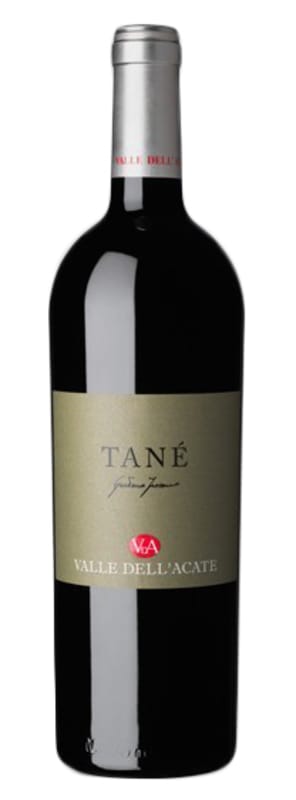


Winemaker Notes
Deep garnet red. Broad and complex, small ripe black fruits, vanilla, spices, chocolate, and mahogany. Full body, with soft and round tannins and a long finish. Pair with red meats, roasts and game stews, game, and cheeses.
Professional Ratings
-
Robert Parker's Wine Advocate
A pure expression of Nero d'Avola, the Valle dell'Acate 2014 Sicilia Vittoria Tané sees its fruit sourced from the estate's oldest vines planted in loose, sandy soils. Tané is a local institution and one of the first full-bodied reds that put the Vittoria subregion on the map of Sicilian wines. This late-release expression has held up impressively over the past seven years. Regular readers will know that although 2014 was an extremely difficult vintage in most of Italy, better results were achieved in Sicily, where warm winds washed gently over the island. This edition of 6,000 bottles walks us back in time. The wine brings forth bright fruit that remains vivid and fresh. You get dark cherry and plum with varietal tones of scorched earth and tobacco. This Tané is, as usual, full-bodied and generous but never too heavy. I am delighted by these elegant results.
-
James Suckling
This is quite a ripe Nero d’Avola, offering redcurrants and dried cranberries, but the freshness still shows through with rose petals and hibiscus. Full-bodied, ripe and round on the palate. Fruit-forward finish.


Boldly opulent and robust, Nero d’Avola is Sicily’s most widely planted red grape. Nero d’Avola performs well both as a single varietal bottling and in blends. It loves hot, arid climates and Sicily's old vines are aptly head-trained close to the ground, making them resistant to strong winds. A few pioneering producers in California as well as Australia farm Nero d’Avola in the same way. Somm Secret—Nero d’Avola's other name, Calabrese, suggests origins from the mainland region of Calabria.

A large, geographically and climatically diverse island, just off the toe of Italy, Sicily has long been recognized for its fortified Marsala wines. But it is also a wonderful source of diverse, high quality red and white wines. Steadily increasing in popularity over the past few decades, Italy’s fourth largest wine-producing region is finally receiving the accolades it deserves and shining in today's global market.
Though most think of the climate here as simply hot and dry, variations on this sun-drenched island range from cool Mediterranean along the coastlines to more extreme in its inland zones. Of particular note are the various microclimates of Europe's largest volcano, Mount Etna, where vineyards grow on drastically steep hillsides and varying aspects to the Ionian Sea. The more noteworthy red and white Sicilian wines that come from the volcanic soils of Mount Etna include Nerello Mascalese and Nerello Cappuccio (reds) and Carricante (whites). All share a racy streak of minerality and, at their best, bear resemblance to their respective red and white Burgundies.
Nero d’Avola is the most widely planted red variety, and is great either as single varietal bottling or in blends with other indigenous varieties or even with international ones. For example, Nero d'Avola is blended with the lighter and floral, Frappato grape, to create the elegant, Cerasuolo di Vittoria, one of the more traditional and respected Sicilian wines of the island.
Grillo and Inzolia, the grapes of Marsala, are also used to produce aromatic, crisp dry Sicilian white. Pantelleria, a subtropical island belonging to the province of Sicily, specializes in Moscato di Pantelleria, made from the variety locally known as Zibibbo.