
Winemaker Notes
Professional Ratings
-
Robert Parker's Wine Advocate
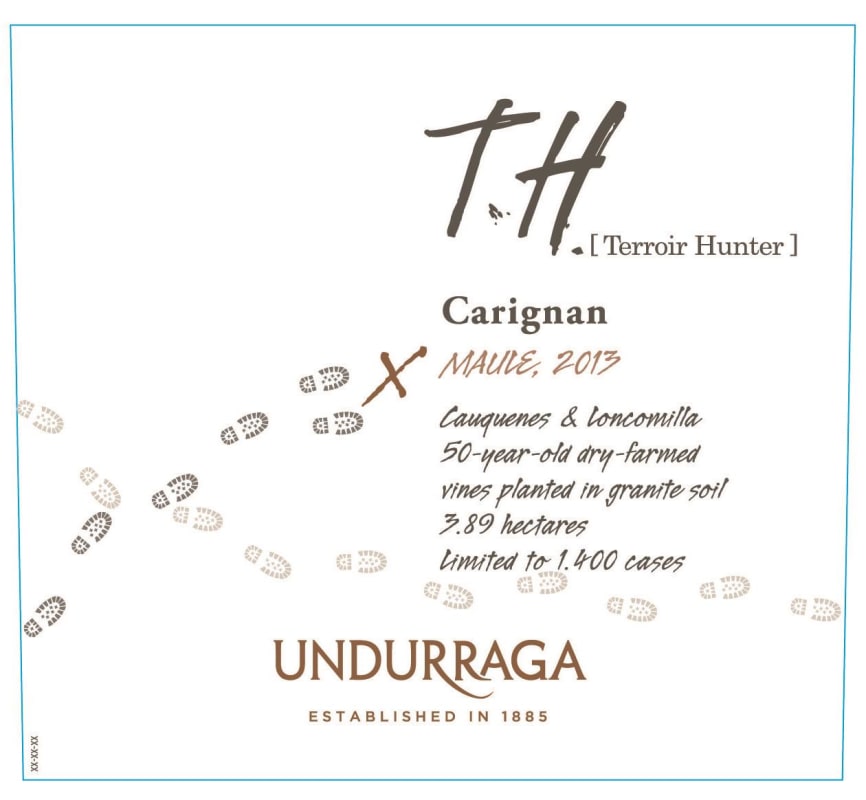
It's always interesting to compare the different bottlings of the same variety, and the 2013 TH Carignan was tasted next to the Vigno. 2013 was one of the coolest recent vintages in the dry-farmed area of Maule where these grapes are grown, 35% of them in Cauquenes and the rest in Loncomilla (Melozal). The bunches were sorted, destemmed and the individual grains sorted again to eliminate under-ripe or over-ripe grapes. It fermented with indigenous yeasts in stainless steel and matured in French barriques, 25% of them new, for 15 months. There is a little more power and concentration, more structure here than in the Vigno, influenced by the grapes from Loncomilla. It's also a little more rustic but has plenty of character, and I think this should age nicely in bottle. I think they have the same quality level after all... As a comparison, I tasted the 2009, which is the second vintage ever produced and is from a warm, ripe vintage; the wine is developing nicely, even if it was produced in another era with a different mindset and showing more the varietal character. Rating: 93(+) Points.


Responsible for some of the most stunning old vine red wine on the planet, Carignan has an amazing capacity to survive dry, arid climates and still produce lovely, mouthwatering wine. In Spain it goes by the name of Mazuelo or Cariñena and while it may have originated there in the province of Aragón, its popularity lies elsewhere, particularly in Languedoc-Roussillon. Somm Secret—Historically Carignan did not enjoy the respect that it does today. In the mid 20th century, Carignan covered nearly 140,000 ha in Algeria, where it was made into low quality bulk and blending wine to supply mass-market demand.

Maule is the Central Valley’s most southern and coolest zone, reaching a southern latitude of 35°S, yet it is still warmer and drier than Bío-Bío to its south. The Maule Valley enjoys success with a unique set of grapes.
It lays claim to the local variety, Pais (synonymous with Tinta Pais, which is actually Tempranillo), which has dominated much of the region’s area under vine until the recent past. Now many growers, not confined by the tradition and regulations of the Old World, also successfully grow Cabernet Sauvignon.
While Maule’s total area under vine remains relatively static, its old Carignan vineyards are undergoing a great revival. The VIGNO (Vignadores del Carignan Vintners) group, an association in charge of promoting this long-forgotten variety, is getting fantastic results from the old vines in its dry-farmed coastal zones.
The Maule includes the subregions of Talca, San Clemente, San Javier, Parral, Linares and Cauquenes.