


Winemaker Notes
"Ekato" in Greek means one hundred. One hundred days of skin contact produces this Moschofilero wine. Intensively floral on the nose with notes of rose pedals and ginger coming forward followed by a quince jam flavor. Slightly tannic taste with balanced acidity.
Its complex and full palate makes this wine capable of accompanying a wide range of foods like pasta with tomato sauce, grilled squid or even grilled beef steak.
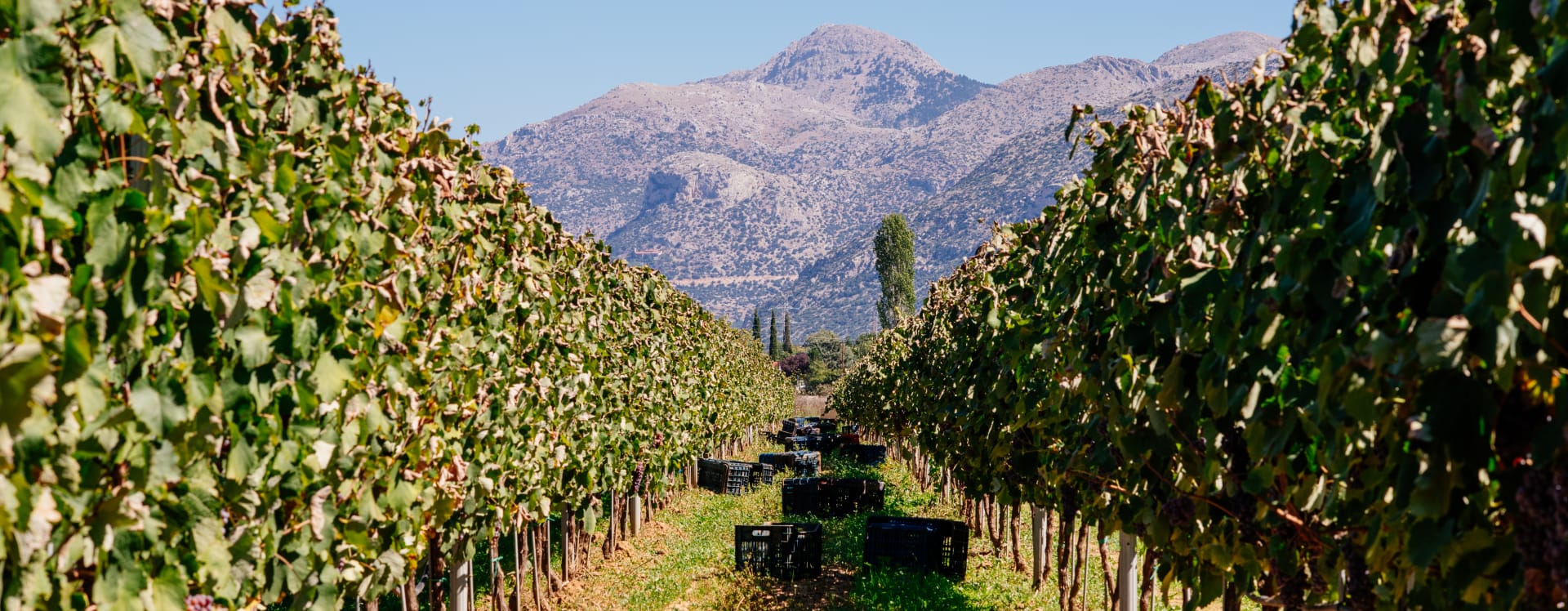



The Troupis family has a long history of work in agronomy dating back to the ’70s where vines, fruit baring trees and flowers have been grown and sold from their nursery in Mantinia. As with other traditional Greek families who make wine for their own table, their efforts in the cultivation of vines naturally grew into the desire to share their passion with others.
Troupis Winery is located in the heart of Mantinia at an altitude of 700 meters in the region of Fteri or “fern”. Tasos Troupis, supported by his children, has created a production and wine-making facility by putting to good use the experience and love he has for the vine. It is a modern family business of small capacity, as they produce and bottle wine exclusively from their estate vineyards totaling approximately 16 acres.
In the high altitudes of the central Peloponnese, the noble Moschofilero grape is cultivated producing the eponymously named AOC wine, Mantinia. The continental climate together with the soils of the high Mantinia plain, which are a well drained and clay-rocky lead to the production of exciting, aromatic white wines.
Troupis’ crisp Moschofilero is fermented in stainless steel tank and displays the slight perfumes of the surrounding Arcadian underbrush and bramble. Rose, violets, spices and citrus fruit are wrapped in the intense acidity with which Moschofilero has become synonymous. Additonally, Agiorgitiko is sourced from the nearby Nemea region to make their fresh and lively red wines.

Whether it’s playful and fun or savory and serious, most rosé today is not your grandmother’s White Zinfandel, though that category remains strong. Pink wine has recently become quite trendy, and this time around it’s commonly quite dry. Since the pigment in red wines comes from keeping fermenting juice in contact with the grape skins for an extended period, it follows that a pink wine can be made using just a brief period of skin contact—usually just a couple of days. The resulting color depends on grape variety and winemaking style, ranging from pale salmon to deep magenta.

A large southern region of Greece, the Peloponnese contains the famous appellations of Nemea and Mantineia. While connected to the mainland by a tiny strip of land, essentially the region is a large Mediterranean island and excels in the production of red wine from Agiorghitiko, white from Moscofilero and sweet wine from the Mavrodaphne grape.