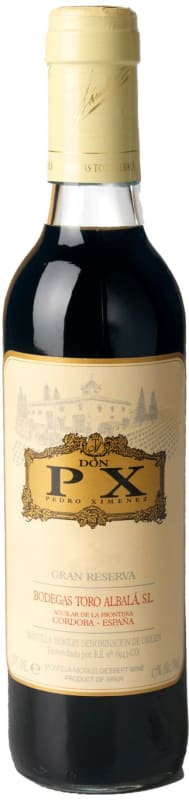


Winemaker Notes
May be stored indefinitely, improving with age including when opened. Store in a cool, dry place.
Excellent accompaniment to blue cheese, desserts and chocolate cake.
Wine produced from select Pedro Ximénez grapes, using traditional dessication and production techniques, an artisan, handcrafted, comprehensive and unique process. Aged in American oak casks.
Professional Ratings
-
Decanter
Heady, enticing treacly nose, notes of molasses, dried banana, coffee, figs and walnuts. Immensely concentrated palate, buttery toffee, spice, aniseed and refreshing acidity on leafy long finish.
-
Robert Parker's Wine Advocate
Each year they select a number of single vintage, sweet PX wines to be bottled, the first of which (besides the young wine) is the 1987 Don Px Gran Reserva in 2016 - a wine aged in American oak casks for some 28 years. These wines are almost indestructible, so the drinking windows are mostly academic. This showcases the classical aromas and palate of an old PX from Montilla, strong notes of dark chocolate, dried figs and plums, raisins and sweet spices; the dense, thick and persistent palate where the 380 grams of unfermented sugar are not noticeable, as they are balanced by good acidity that also gets concentrated by age. This is probably the densest of all the wines I tasted today, and there is a distinct, perfumed, almost floral note here (is it violet pastille?), which makes it extremely attractive. It's also the most drinkable of all these old vintages, very balanced within its sweet profile, with marked flavors (also licorice and black olives) that stay in your mouth for one minute. Exotic and exuberant. This is incredibly young and lively, and very good value for the age and quality it delivers.
-
James Suckling
This is very fresh and dense with dried orange peel, toffee and caramel aromas and flavors. Medium to full body, very sweet and flavorful. Maple syrup aftertaste. Fascinating sweet wine.


Apart from the classics, we find many regional gems of different styles.
Late harvest wines are probably the easiest to understand. Grapes are picked so late that the sugars build up and residual sugar remains after the fermentation process. Ice wine, a style founded in Germany and there referred to as eiswein, is an extreme late harvest wine, produced from grapes frozen on the vine, and pressed while still frozen, resulting in a higher concentration of sugar. It is becoming a specialty of Canada as well, where it takes on the English name of ice wine.
Vin Santo, literally “holy wine,” is a Tuscan sweet wine made from drying the local white grapes Trebbiano Toscano and Malvasia in the winery and not pressing until somewhere between November and March.
Rutherglen is an historic wine region in northeast Victoria, Australia, famous for its fortified Topaque and Muscat with complex tawny characteristics.

Montilla-Moriles is a DO wine zone in Andalucia, in southern Spain, just south of Córdoba city but inland from the coast. Historically the wines of Montilla-Moriles made their way into the sherries made in Jerez. But once it was awarded DO status in 1945, Montilla-Moriles began to establish its own identity. The chalky and sandy soils combined with extremely hot temperatures are best to produce Pedro Ximénez, which accounts for nearly three quarters of the region’s production, some of which is still legally sold to Jerez and Málaga producers. The unique conditions of Montilla-Moriles allow for Pedro Ximénez to be bottled also in the Vinos Dulces Naturales (naturally sweet) style, a non-fortified style for which the region is recognized.
Muscat and Lairén are also produced for blending. Palomino is not suited to the extreme conditions of the area.
The basic types of Montilla-Moriles DO wines include young fruity wines, aged (crianza) wines, and generosos, which are aged in a solera system similar to those in Jerez. The resulting styles of generosos, simply known as, Montilla, while similar to sherry, perhaps display a bit less finesse given they are aged away from the cooling effects of the Atlantic.