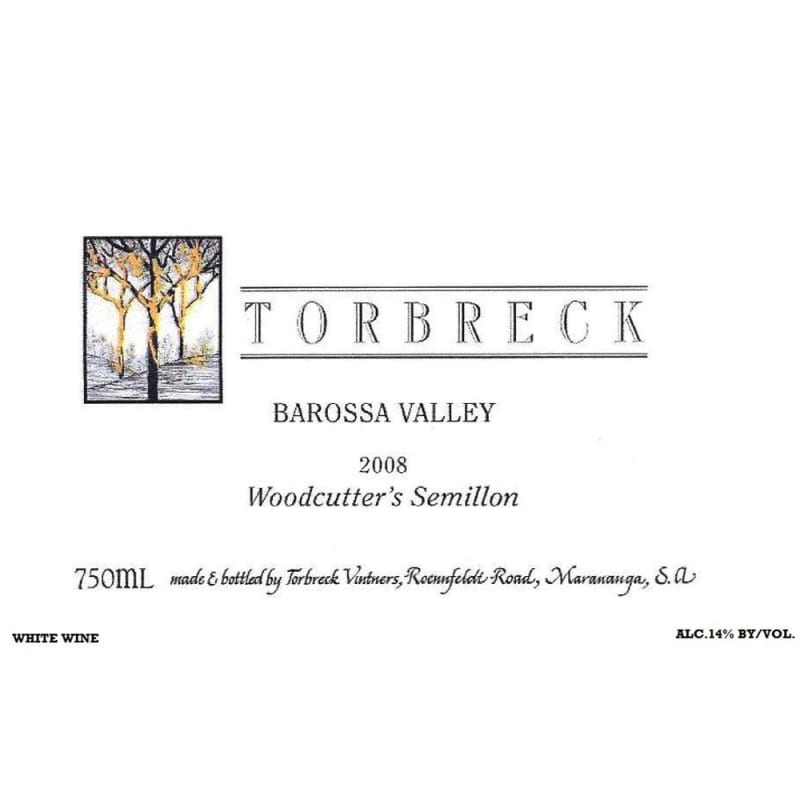

Winemaker Notes
Medium bodied with a pristine lemon hue this youthful Semillon offers delicate scents of calamansi, limestone, candle wax, and toasted brioche. The copper-pink skins of this robust, age-old ‘Madeira Clone' flesh out the palate, lending notes of almond kernels, soft pineapple, roasted cashew and white peach. Underlying notes of citrus oil and minerals maintain the wines freshness whilst a crisp spine of razor-like acidity neatly lace together the finish.
Although beautifully enjoyable in its youth with sashimi and fresh shellfish this wine will continue to increase in complexity with time and should provide compelling drinking over the coming years.
Professional Ratings
-
Robert Parker's Wine Advocate
The current collection includes three white wines beginning with the 2008 Woodcutter's Semillon. It displays an excellent nose of wax, lanolin, mineral, and melon that jumps from the glass. Smooth textured, concentrated, vibrant, and savory, this well-balanced effort will drink well for another 3-4 years.


Sémillon has the power to create wines with considerable structure, depth and length that will improve for several decades. It is the perfect partner to the vivdly aromatic Sauvignon Blanc. Sémillon especially shines in the Bordeaux region of Sauternes, which produces some of the world’s greatest sweet wines. Somm Secret—Sémillon was so common in South Africa in the 1820s, covering 93% of the country’s vineyard area, it was simply referred to as Wyndruif, or “wine grape.”

Historically and presently the most important wine-producing region of Australia, the Barossa Valley is set in the Barossa zone of South Australia, where more than half of the country’s wine is made. Because the climate is very hot and dry, vineyard managers work diligently to ensure grapes reach the perfect levels of phenolic ripeness.
The intense heat is ideal for plush, bold reds, particularly Shiraz on its own or Rhône Blends. Often Shiraz and Cabernet partner up for plump and powerful reds.
While much less prevalent, light-skinned varieties such as Riesling, Viognier or Semillon produce vibrant Barossa Valley whites.
Most of Australia’s largest wine producers are based here and Shiraz plantings date back as far as the 1850s or before. Many of them are dry farmed and bush trained, still offering less than one ton per acre of inky, intense, purple juice.