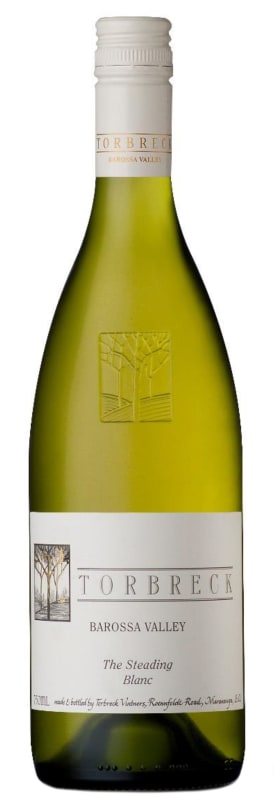


Winemaker Notes
Fragrant aromas of white flowers, summer stone fruits, kaffir lime, passionfruit skin and guava, balanced with underlying hints of bee's wax and spices such as lemongrass and ginger root. Medium bodied with mid palate texture to the opulent fruit, and a lively line of acid along a long, spicy and mineral strewn finish.
The Steading Blanc is an exotic wine that is perfectly matched with anything from the sea.
Professional Ratings
-
James Suckling
There’s a waxy, dried apple and pear character with light cedar. It’s medium-bodied with creamy texture and a flavorful finish. Balanced and lightly oily, but remains vivid. Wild ferment. Roussanne, marsanne and viognier
-
Robert Parker's Wine Advocate
Like the Cuvée Juvenile Blanc, this 2022 The Steading Blanc is Roussanne-led (50%), followed by Marsanne (43%) and Viognier (7%). While the Roussanne went straight to tank (i.e., no oak), the Marsanne and Viognier were fermented and matured in seasoned French oak. That is undoubtedly what brings the softness to the middle palate, while the Roussanne contributes white flowers and chalk to the perimeters. There is also green apple (skin), loquat, lychee, white plum and nashi pear. This is lovely, complex, plush and laden with white pepper through the finish. The phenolics have a firmness to them—very attractive in a white wine.


Full-bodied and flavorful, white Rhône blends originate from France’s Rhône Valley. Today these blends are also becoming popular in other regions. Typically some combination of Grenache Blanc, Marsanne, Roussanne and Viognier form the basis of a white Rhône blend with varying degrees of flexibility depending on the exact appellation. Somm Secret—In the Northern Rhône, blends of Marsanne and Roussanne are common but the south retains more variety. Marsanne, Roussanne as well as Bourboulenc, Clairette, Picpoul and Ugni Blanc are typical.

Historically and presently the most important wine-producing region of Australia, the Barossa Valley is set in the Barossa zone of South Australia, where more than half of the country’s wine is made. Because the climate is very hot and dry, vineyard managers work diligently to ensure grapes reach the perfect levels of phenolic ripeness.
The intense heat is ideal for plush, bold reds, particularly Shiraz on its own or Rhône Blends. Often Shiraz and Cabernet partner up for plump and powerful reds.
While much less prevalent, light-skinned varieties such as Riesling, Viognier or Semillon produce vibrant Barossa Valley whites.
Most of Australia’s largest wine producers are based here and Shiraz plantings date back as far as the 1850s or before. Many of them are dry farmed and bush trained, still offering less than one ton per acre of inky, intense, purple juice.