
Winemaker Notes
Blend: 92% Shiraz & 8% Viognier
Professional Ratings
-
Wine Spectator
This is like biting into a perfect slice of warm blueberry or huckleberry pie, down to the buttery crust, with a hint of cinnamon and vanilla bean. The tannins are thick but velvety and polished, showing magnificent persistence. Shiraz and Viognier. Drink now through 2026.
-
Wine & Spirits
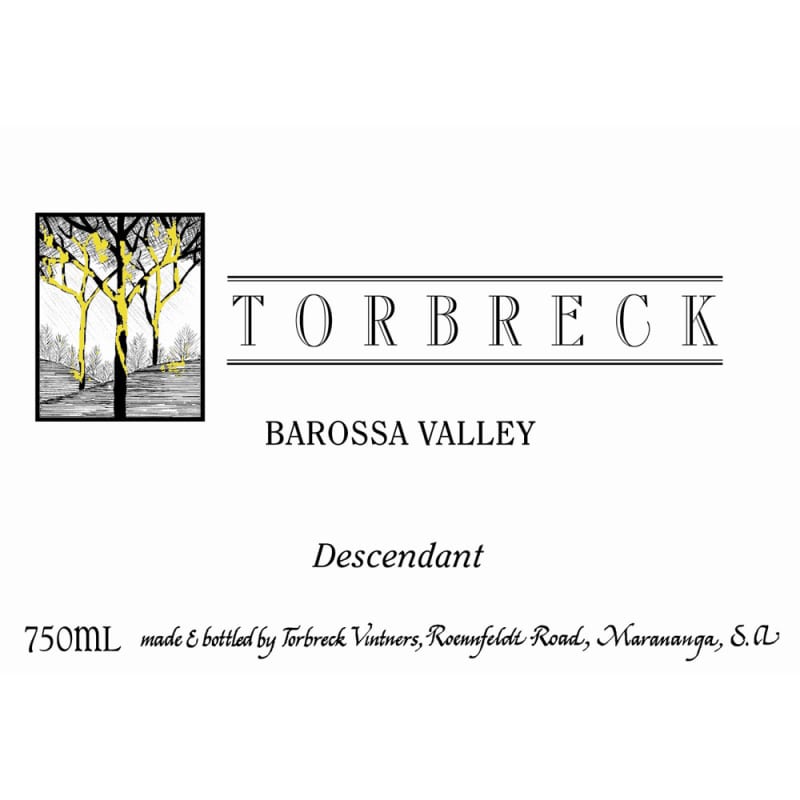
This shiraz vineyard on Roennfeldt Road was planted in 1994 with cuttings from ancient vines used for Torbreck’s RunRig. Cofermented with viognier that has been lightly pressed for RunRig, the blend ages in older barrels, from RunRig. So it’s a descendant in several ways. Tasted side by side with its ancestor, the Descendant is not a heavy wine, but it’s no less intense. It feels floral and cool in its bright red currant flavors, juicy rather than jammy, sleek, structured and firm.


Marked by an unmistakable deep purple hue and savory aromatics, Syrah makes an intense, powerful and often age-worthy red. Native to the Northern Rhône, Syrah achieves its maximum potential in the steep village of Hermitage and plays an important component in the Red Rhône Blends of the south, adding color and structure to Grenache and Mourvèdre. Syrah is the most widely planted grape of Australia and is important in California and Washington. Sommelier Secret—Such a synergy these three create together, the Grenache, Syrah, Mourvedre trio often takes on the shorthand term, “GSM.”

Historically and presently the most important wine-producing region of Australia, the Barossa Valley is set in the Barossa zone of South Australia, where more than half of the country’s wine is made. Because the climate is very hot and dry, vineyard managers work diligently to ensure grapes reach the perfect levels of phenolic ripeness.
The intense heat is ideal for plush, bold reds, particularly Shiraz on its own or Rhône Blends. Often Shiraz and Cabernet partner up for plump and powerful reds.
While much less prevalent, light-skinned varieties such as Riesling, Viognier or Semillon produce vibrant Barossa Valley whites.
Most of Australia’s largest wine producers are based here and Shiraz plantings date back as far as the 1850s or before. Many of them are dry farmed and bush trained, still offering less than one ton per acre of inky, intense, purple juice.