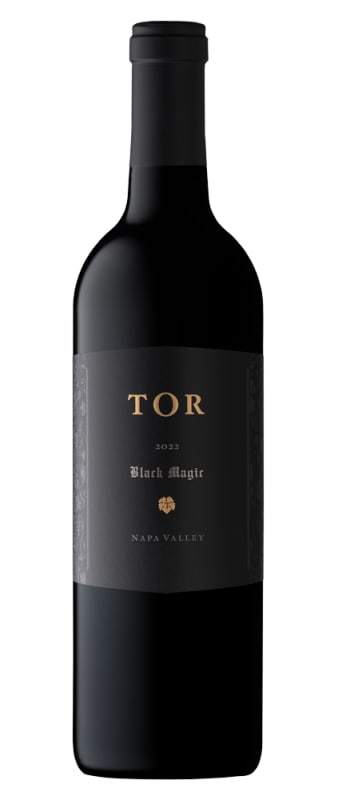


Winemaker Notes
The 2022 Black Magic is always the most intense and dark/tension filled wine of TOR's when young, this year‘s Black Magic is no different. Showing loads of roasted meats, Christmas baking spices, black currant and anise on the initial taste and beginning of the palate. This has copious black tea and graphite notes on the mid palate, which just exudes power and richness, before it slowly tapers off to a finish that just doesn’t seem to quit for minutes on end.
Professional Ratings
-
James Suckling
Powerful, polished and impressive, showing great concentration and depth. A good portion of petit verdot adds even darker fruit to the majority of cabernet sauvignon. This offers dried blueberries, crushed blackberries, cocoa, graphite, minerals and dusky plums on muscular tannins that will carry it for decades. Full-bodied.
-
Robert Parker's Wine Advocate
Tor's 2022 Black Magic—a barrel selection that pulls from a couple of the single vineyards represented in the portfolio—features an exciting array of red and black cherries, deep loamy notes and a hint of black olives on the nose. It's full-bodied, rich and concentrated on the palate, with a long, velvety-textured finish.
-
Vinous
The 2022 Black Magic is a selection of the best barrels in the cellar. Ripe and flamboyant to the core, it offers up copious inky dark fruit, crème de cassis, chocolate, leather, menthol and cloves. Dense, jammy fruit and noticeable new oak feel pushed to the edge here, it not a bit past.




Undoubtedly proving its merit over and over, Napa Valley is a now a leading force in the world of prestigious red wine regions. Though Cabernet Sauvignon dominates Napa Valley, other red varieties certainly thrive here. Important but often overlooked include Merlot and other Bordeaux varieties well-regarded on their own as well as for their blending capacities. Very old vine Zinfandel represents an important historical stronghold for the region and Pinot noir is produced in the cooler southern parts, close to the San Pablo Bay.
Perfectly situated running north to south, the valley acts as a corridor, pulling cool, moist air up from the San Pablo Bay in the evenings during the hot days of the growing season, which leads to even and slow grape ripening. Furthermore the valley claims over 100 soil variations including layers of volcanic, gravel, sand and silt—a combination excellent for world-class red wine production.