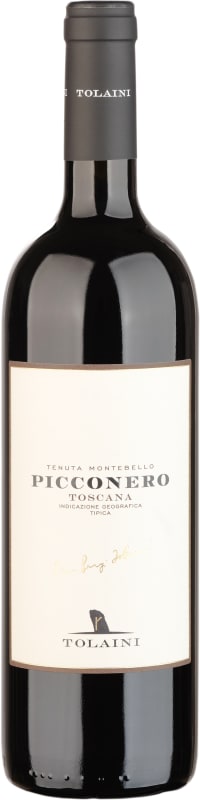


Winemaker Notes
Rich, concentrated and muscular, yet wonderfully balanced with big tannins and deep tiers of cherry, plums and wild berries, and nuances of spice, vanilla and licorice. A long flavorful aftertaste echoes with juicy fruit and mouthwatering tannins for minutes afterwards. Sensual and young, this wine promises a long life in the bottle.
Professional Ratings
-
James Suckling
A medium-bodied red with dark plum, berry and cherry aromas and flavors. Fine tannins. Vivid and fresh. It shows a real focus and tension with length and excellence. Unfiltered. Better in two or three years but can age for a long time. Try after 2026.
-
Robert Parker's Wine Advocate
This is a rich and hearty wine made with 100% Merlot. The Tolaini 2019 Picconero Tenuta Montebello (in a heavy glass bottle) shows an inky dark appearance with brooding aromas of blackberry preserves, spice, tobacco and hints of balsam or medicinal herb. Those minty notes tend to appear in the more concentrated and powerful vintages like 2019. This wine closes with a high 15% alcohol content, but the finish is super rich and soft.
-
Vinous
The 2019 Picconero, 100% Merlot vinified and aged in French oak. As such, it shows the older style here, an approach with a lot of concentration and plenty of oak. Dark fruit, leather, mocha and torrefaction are all amplified. It's a very good wine, but one that clearly belongs to a prior era in the estate's history.
-
Wine Enthusiast
The nose is powerfully earthy and stony, but also floral and tart with aromas of violets, black cherries, blueberries and blackberries. The fruit becomes more decadent on the palate, but a dusting of wild herbs and a pinch of salt on top maintain balance.
-
Wine Spectator
This red is alluring for the ripe black cherry and blackberry fruit, gaining complexity from a mineral undercurrent, vanilla and toasty new oak. Firms up on the finish, displaying the vintage's austerity, with a lingering aftertaste of fruit, mineral and spices. Best from 2025 through 2036. 330 cases made, 200 cases imported.





Pierluigi Tolaini, a native of Tuscany, immigrated to Canada in 1956. He planned to work a few years, make some money, then go back home, buy a farm, marry his high school sweetheart and make some good wine... and not with his feet this time! It took Pierluigi 45 years before he returned with a clear vision of the high quality wine he wanted to make: one of Italy's best, no less. In 1998 he returned to his native land and purchased some of the best land in the region of Chianti Classico in the noted commune of Castelnuovo Berardenga. He constructed, from the roots up, this state-of-the-art winery and brought together the best technology and winemakers to bring to light wines that would be a true expression of this significant region. Pierluigi hired famed enologist Michel Rolland and Tuscan agronomist Andrea Paoletti, who put together a team that share Pierluigi's vision - to make the best wines possible with one vitally unique ingredient - the terroir of Chianti Classico's southern most commune: Castelnuovo Berardenga . A true marriage of tradition and modern technology. The belief in the "best fruit produces the best wine" is the fundamental principal of the Tolaini estate. High density planting per hectare and low yield per plant is a proven strategy worldwide in producing excellent quality fruit. With up to 11,500 plants per hectare in the less hilly vineyards, drip irrigation for each plant, and two green harvests to pre-select the healthiest and most promising bunches on the vine, the Tolaini property produces fruit of unsurpassable quality. This fruit is evident in every mouthful of the estate's four incredible red wines.
Ruggero Mazzilli is Tolaini's consulting agronomist and is based in Gaiole in Chianti where he is the owner and founder of SPEVIS (The Experimental Station for Sustainable Viticulture). Under Ruggero's supervision Panzano in Chianti became the first Bio-Distretto (Organic District) in the world, immediately followed by San Gimignano and Gaiole in Chianti. SPEVIS works with the best scientific research institutes to find new solutions to practical vineyard issues by following the principles of organic agriculture and respectful environmental practices. With Ruggero as part of the team, Tolaini will continue to cultivate the maximum expression of Chianti Classico terroir while farming organically and sustainably.
Like the vineyards surrounding it, the winery at Tolaini Estate is an expression of both old and new. An optical sorter guarantees that only the healthy whole grapes make it into the fermentation vats. The best grapes from each harvest are fermented in open-top fermenters made of French Allier oak (12 units of 4500 liter capacity), a time-proven touch that increases the complexity in the wines. The generous array of tank sizes allows for individual parcels of grapes to be fermented and stored separately. These batches are kept apart through subsequent barrel aging in new French oak before blending. Today Luca D'Attoma is the consulting oenologist and his hand is apparent starting with the 2015 vintage of Tolaini.
Tolaini wines are known internationally for their impeccable quality and incredible taste. With each new vintage they continue to innovate and impress.

Legendary in Italy for its Renaissance art and striking landscape, Tuscany is also home to many of the country’s best red wines. Sangiovese reigns supreme here, as either the single varietal, or a dominant player, in almost all of Tuscany’s best.
A remarkable Chianti, named for its region of origin, will have a bright acidity, supple tannins and plenty of cherry fruit character. From the hills and valleys surrounding the medieval village of Montalcino, come the distinguished and age-worthy wines based on Brunello (Sangiovese). Earning global acclaim since the 1970s, the Tuscan Blends are composed solely of international grape varieties or a mix of international and Sangiovese. The wine called Vine Nobile di Montepulciano, composed of Prognolo Gentile (Sangiovese) and is recognized both for finesse and power.