
Winemaker Notes
A beautiful match for game meats, North African lamb and charcuterie.
Professional Ratings
-
Wine & Spirits
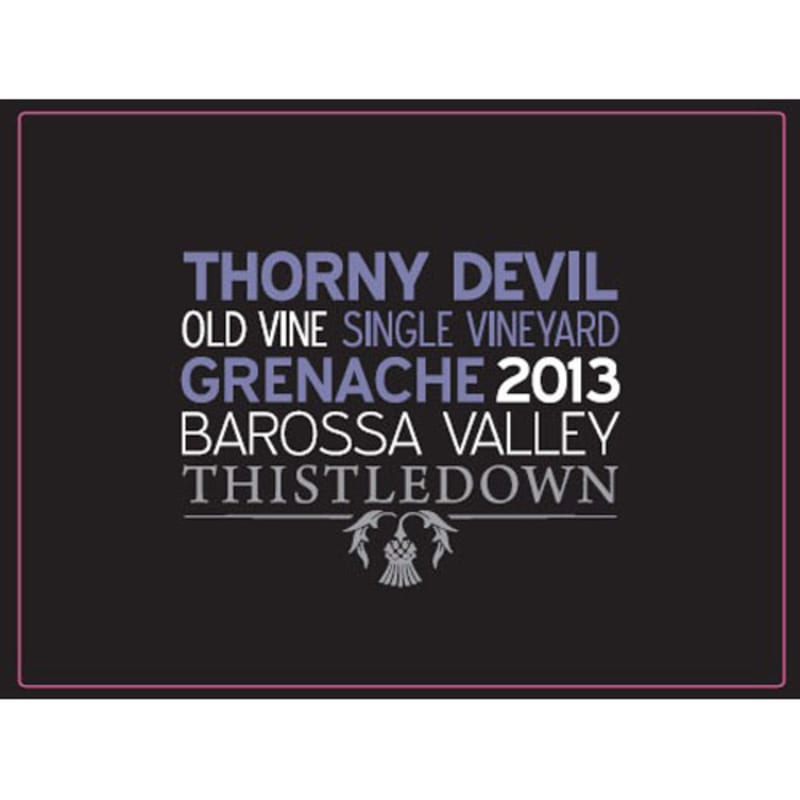
Two MWs—Giles Cooke and Fergal Tynan—founded this Adelaide Hills winery in 2010, joining forces with winemaker Peter Leske of Revenir. This is their first vintage of Thorny Devil, from an old-vine, dry-grown vineyard in Barossa, which they ferment as mostly whole berries without added yeast, then age in old oak barrels. It’s a wine with serious structure, the tarry tannins carrying fresh cherry and cranberry flavors without any sense of excess alcohol. There’s old-vine complexity in the finish, which lasts, clean and savory.
-
Robert Parker's Wine Advocate
Pale garnet with a hint of purple, the 2013 Thorny Devil Grenache offers a tantalizing nose of kirsch, red plum preserves and raspberry coulis with nuances of baking spices and lavender. Unashamedly full, rich and packed with red berry and spice flavors, it has lovely silky tannins and great freshness throughout the long finish.
-
Wine Spectator
Vivid and juicy, offering a mouthful of currant, dried cherry and red raspberry flavors that are bold and bright, with a hint of orange peel and black tea on the finish. Drink now through 2022.


Grenache thrives in any warm, Mediterranean climate where ample sunlight allows its clusters to achieve full phenolic ripeness. While Grenache's birthplace is Spain (there called Garnacha), today it is more recognized as the key player in the red blends of the Southern Rhône, namely Châteauneuf-du-Pape, Côtes du Rhône and its villages. Somm Secret—The Italian island of Sardinia produces bold, rustic, single varietal Grenache (there called Cannonau). California, Washington and Australia have achieved found success with Grenache, both flying solo and in blends.

Historically and presently the most important wine-producing region of Australia, the Barossa Valley is set in the Barossa zone of South Australia, where more than half of the country’s wine is made. Because the climate is very hot and dry, vineyard managers work diligently to ensure grapes reach the perfect levels of phenolic ripeness.
The intense heat is ideal for plush, bold reds, particularly Shiraz on its own or Rhône Blends. Often Shiraz and Cabernet partner up for plump and powerful reds.
While much less prevalent, light-skinned varieties such as Riesling, Viognier or Semillon produce vibrant Barossa Valley whites.
Most of Australia’s largest wine producers are based here and Shiraz plantings date back as far as the 1850s or before. Many of them are dry farmed and bush trained, still offering less than one ton per acre of inky, intense, purple juice.