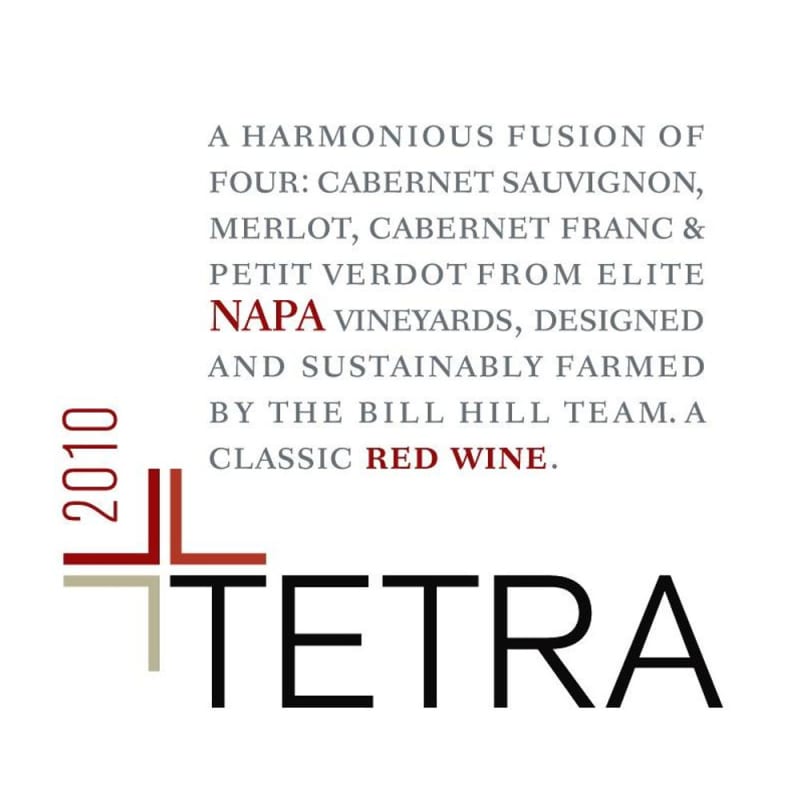

Winemaker Notes
Blend: 65% Cabernet Sauvignon, 22% Merlot, 11% Petit Verdot and 2% Cabernet Franc
Professional Ratings
-
Wine Enthusiast
The tannins on this Cabernet Sauvignon-based blend are strong. They numb the mouth, but not so much that you can’t enjoy the ripe black currant, cassis and smoky oak flavors. With its inherent balance, the wine should have no trouble aging, so give it eight years in the cellar. Cellar Selection.
-
Robert Parker's Wine Advocate
The 2010 Proprietary Red Tetra (65% Cabernet Sauvignon, 22% Merlot, 11% Petit Verdot and 2% Cabernet Franc) offers attractive notes of black fruits, licorice, blueberries and spice. This medium to full-bodied, nicely textured wine builds incrementally in the mouth. There is a lot going on in this impressive 2010 that should age nicely for 10-15 years. Rating: 90+


Undoubtedly proving its merit over and over, Napa Valley is a now a leading force in the world of prestigious red wine regions. Though Cabernet Sauvignon dominates Napa Valley, other red varieties certainly thrive here. Important but often overlooked include Merlot and other Bordeaux varieties well-regarded on their own as well as for their blending capacities. Very old vine Zinfandel represents an important historical stronghold for the region and Pinot noir is produced in the cooler southern parts, close to the San Pablo Bay.
Perfectly situated running north to south, the valley acts as a corridor, pulling cool, moist air up from the San Pablo Bay in the evenings during the hot days of the growing season, which leads to even and slow grape ripening. Furthermore the valley claims over 100 soil variations including layers of volcanic, gravel, sand and silt—a combination excellent for world-class red wine production.