

Winemaker Notes
"Concha y Toro's Terrunyo Carmenere gets my vote as the finest Carmenere produced in Chile. The 2004 Carmenere is other-worldly. Opaque purple in color, it has a sexy perfume of smoky oak, blueberry jam, and blackberry liqueur. This is followed by an ultra-rich, unique wine with sensational depth, concentration and tons of flavor. It can be enjoyed now and over the next 20+ years. The winery also presented a vertical tasting of other Terrunyo Carmeneres. Among them were the 1999 (93 points), 2001 (94 points), 2003 (95 points) and a barrel sample of the 2005 (92-94 points)... among the greatest values in red wine anywhere."
-Wine Advocate
Deep, intense and ruby-red in color, with shades of leather and chocolate skillfully intermingled with dark fruits. Great character and finesse. This wine is mainly defined by its great elegance and sophistication.
This wine is an excellent accompaniment to leg of lamb with spicy sauces, blue cheese, Gruyere and Emmentaler.
Professional Ratings
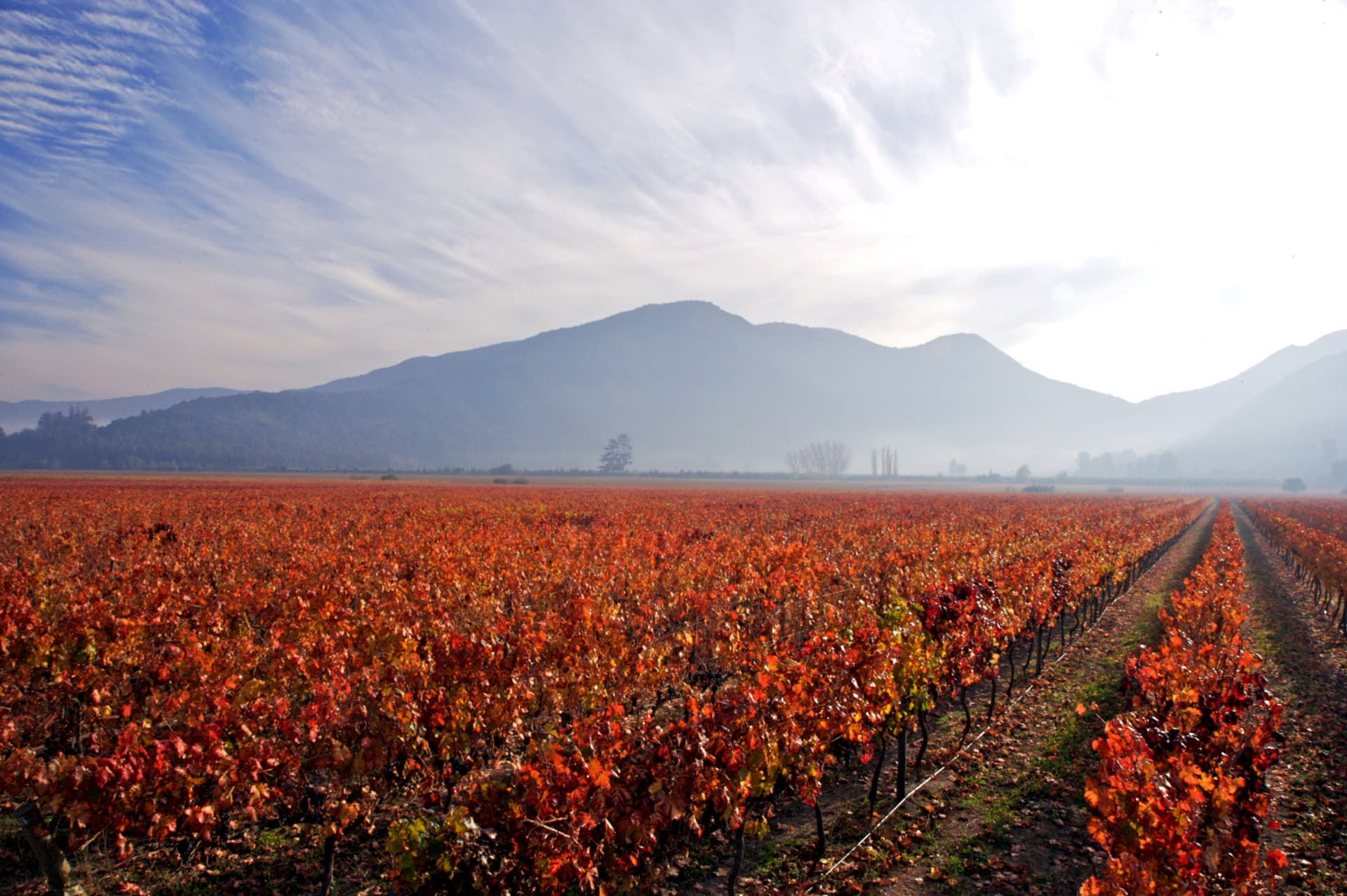




Dark, full-bodied and herbaceous with a spicy kick, Carménère found great success with its move to Chile in the mid-19th century. However, the variety went a bit undercover until 1994 when many plantings previously thought to be Merlot, were profiled as Carménère. Somm Secret— Carménère is both a progeny and a great-grandchild of the similarly flavored Cabernet Franc.

Touching the Pacific in the west and stretching up into the Andes on its eastern side, the Rapel Valley is one of the more substantial fine red wine producing regions of Chile and contains both the Colchagua Valley in its south and west and the Cachapoal in its north and east. While it is recognized for its exceptional warm-climate reds, the region does produce some fine Pinot noir and Sauvignon blanc on its coastal side.
Some of the country’s finest Cabernet Sauvignon comes from the Rapel’s Andean foothills—with significant individualized smaller zones already identified. Soils here are mixtures of loam, clay, and sand; Cabernet Sauvignon, Carmenère, and Merlot are the most prolific varieties throughout the region.