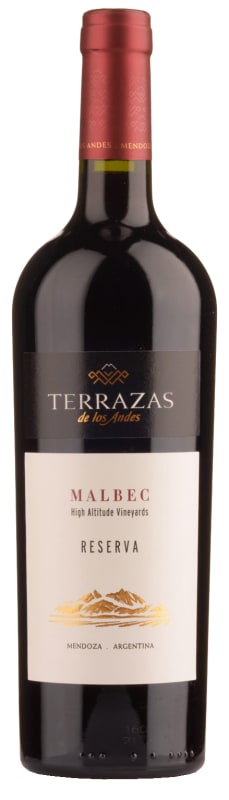


Winemaker Notes
Bright red color with purple shades. Intense floral and fruity notes. Presence of violets, ripe black cherry and plum aromas. Reveals a toasty and spicy character of black pepper and chocolate. Its sweet and juicy mouthfeel delivers finesse, delicate tannins and an elegant finish of black fruits.
Professional Ratings
-
James Suckling
This is very reserved and polished with blackberries, smoke and sesame. Medium body. Delicious, soft finish. Nice transition from the 2017. Drink or hold.
-
Decanter
A blend of fruit from several Uco Valley vineyards yields a fresh, fruit-driven Malbec with a heady mix of plum and black cherry, smoke and spice, and engaging layers of earth and herb. Fuller-bodied with well-woven tannins, this is defined and focused with an extended spicy mocha-laced finish.
-
Wine Enthusiast
Plum, cherry and raspberry aromas are a touch wiry and piquant, but after airing, the nose softens and smooths out. High acidity makes for a bright mouthfeel, with bold plum and raspberry flavors to balance.





At the end of the 1950s, the famous French Champagne house, Moët & Chandon, realized there was an enormous potential for growth in South America. They sent their wine analyst, Renaud Poirier, to study the possibility of expansion. Monsieur Poirier finally proved that Luján de Cuyo, a region within the province of Mendoza, was the best place for the birth of fine wines. In 1960, Chandon Argentina was established, the first subsidiary of Moët & Chandon outside France.
To make the Terrazas de los Andes wines, Chandon Argentina took the initiative to restore this building, located in the heart of Perdriel and at the foot of the imposing Cordón del Plata (a section of the Andes Mountain Range).
In the past, Chandon Argentina made only sparkling and generic still wines, however at the beginning of the '90s fueled by a political system more orientated towards an international market, a varietal wines project was born, to which Terrazas has now become the reality. Situated in Perdriel there is an old Spanish style winery that was used by Pedro Domecq to create his brandy. Renaud Poirier asked Domecq if he could use his equipment to make the first experimental vintages, between 1957 and 1959. Thirty years later Terrazas de los Andes was born, a tributary of Chandon Argentina dedicated exclusively to the production of varietal wines.

Celebrated for its bold flavors and supple texture, Malbec has enjoyed runaway success in Argentina since the late 20th century. The grape originated in Bordeaux, France, where it historically contributed color and tannin to blends. A French agronomist, who saw great potential for the variety in Mendoza’s hot, high-altitude landscape, brought Malbec to Argentina in 1868. Somm Secret—If you’re trying to please a crowd, Malbec is generally a safe bet with its combination of dense fruit and soft tannins.

By far the largest and best-known winemaking province in Argentina, Mendoza is responsible for over 70% of the country’s enological output. Set in the eastern foothills of the Andes Mountains, the climate is dry and continental, presenting relatively few challenges for viticulturists during the growing season. Mendoza, divided into several distinctive sub-regions, including Luján de Cuyo and the Uco Valley, is the source of some of the country’s finest wines.
For many wine lovers, Mendoza is practically synonymous with Malbec. Originally a Bordelaise variety brought to Argentina by the French in the mid-1800s, here it found success and renown that it never knew in its homeland where a finicky climate gives mixed results. Cabernet Sauvignon, Syrah, Merlot and Pinot Noir are all widely planted here as well (and sometimes even blended with each other or Malbec). Mendoza's main white varieties include Chardonnay, Torrontés, Sauvignon Blanc and Sémillon.