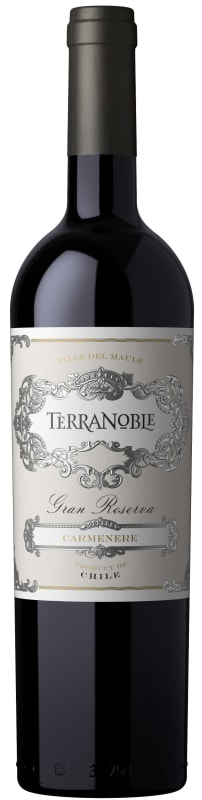


Winemaker Notes
The wine shows a purple-red color with bluish shadings. Highly complex on the nose, it stands out for its ripe black fruits, spicy notes and soft touches of bitter chocolate. It feels concentrated on the palate, with sweet and round tannins, a balanced acidity tension and a touch of chocolate in its ending, which comes from its aging process in French oak barrels.
This wine is especially pleasant when paired with thick ribs,risotto or spicy food.
Professional Ratings
-
Wine Spectator
There's a zesty punch to the crunchy green herbal notes, which flank concentrated cherry tart and crushed red plum flavors. Peppery accents on the pure, minerally finish.


Dark, full-bodied and herbaceous with a spicy kick, Carménère found great success with its move to Chile in the mid-19th century. However, the variety went a bit undercover until 1994 when many plantings previously thought to be Merlot, were profiled as Carménère. Somm Secret— Carménère is both a progeny and a great-grandchild of the similarly flavored Cabernet Franc.

Maule is the Central Valley’s most southern and coolest zone, reaching a southern latitude of 35°S, yet it is still warmer and drier than Bío-Bío to its south. The Maule Valley enjoys success with a unique set of grapes.
It lays claim to the local variety, Pais (synonymous with Tinta Pais, which is actually Tempranillo), which has dominated much of the region’s area under vine until the recent past. Now many growers, not confined by the tradition and regulations of the Old World, also successfully grow Cabernet Sauvignon.
While Maule’s total area under vine remains relatively static, its old Carignan vineyards are undergoing a great revival. The VIGNO (Vignadores del Carignan Vintners) group, an association in charge of promoting this long-forgotten variety, is getting fantastic results from the old vines in its dry-farmed coastal zones.
The Maule includes the subregions of Talca, San Clemente, San Javier, Parral, Linares and Cauquenes.