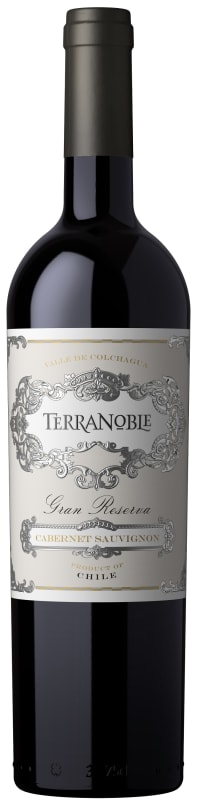


Winemaker Notes
Of deep ruby-red color, this wine is intense, elegant and very complex on the nose, with accents of fresh red fruits, such as plums and cherries, complemented by spices and notes of herbs. On the palate it feels structured, fresh, with a good volume, velvety tannins, and a long, persistent ending.
Blend: 90% Cabernet Sauvignon, 10% Syrah
Professional Ratings
-
James Suckling
Lots of tobacco, currants and tree bark that show cabernet character. Some dusty plums and spices, too. A smoothly rendered palate that shows focus and nice grip at the end. Juicy finish.


A noble variety bestowed with both power and concentration, Cabernet Sauvignon enjoys success all over the globe, its best examples showing potential to age beautifully for decades. Cabernet Sauvignon flourishes in Bordeaux's Medoc where it is often blended with Merlot and smaller amounts of some combination of Cabernet Franc, Malbecand Petit Verdot. In the Napa Valley, ‘Cab’ is responsible for some of the world’s most prestigious, age-worthy and sought-after “cult” wines. Somm Secret—DNA profiling in 1997 revealed that Cabernet Sauvignon was born from a spontaneous crossing of Cabernet Franc and Sauvignon Blanc in 17th century southwest France.

Well-regarded for intense and exceptionally high quality red wines, the Colchagua Valley is situated in the southern part of Chile’s Rapel Valley, with many of the best vineyards lying in the foothills of the Coastal Range.
Heavy French investment and cutting-edge technology in both the vineyard and the winery has been a boon to the local viticultural industry, which already laid claim to ancient vines and a textbook Mediterranean climate.
The warm, dry growing season in the Colchagua Valley favors robust reds made from Cabernet Sauvignon, Carmenère, Malbec and Syrah—in fact, some of Chile’s very best are made here. A small amount of good white wine is produced from Chardonnay and Sauvignon Blanc.