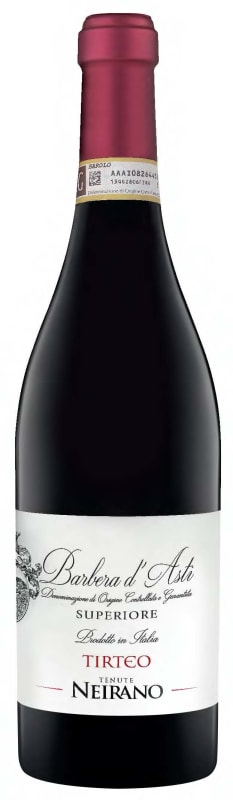


Winemaker Notes
Tirteo Barbera d'Asti Superiore is an exquisite dry red wine made from Barbera grapes grown in the vineyards of the company in the province of Asti. Harvesting is carried out on reaching the berries of the optimum level of maturity. Then the grapes are delivered to the winery, where it is gently pressed. Traditional vinification is carried out at a controlled temperature. The wine is aged for at least one year in small oak barrels and another 6 months in bottles.
The wine combines perfectly with the rack of lamb, steak, sausages, grilled pork and fragrant cheeses.
Professional Ratings
-
Wilfred Wong of Wine.com
The 2023 Tenute Neirano Barbera d’Asti Superiore displays a medium garnet hue and opens with aromas of dried herbs and subtle earth tones. On the palate, it reveals elegant notes of sandalwood and dried red berries, framed by a supple texture and balanced acidity. This wine’s savory and nuanced character makes it an ideal companion to a classic Piedmontese lamb dish such as Agnello al Barbera—braised lamb simmered in Barbera wine with aromatic herbs and root vegetables. (Tasted: November 10, 2025, San Francisco, CA)
-
James Suckling
Plums, cloves and chocolate orange on the nose, followed by a juicy and medium-bodied palate with powdery tannins.


Friendly and approachable, Barbera produces wines in a wide range of styles, from youthful, fresh and fruity to serious, structured and age-worthy. Piedmont is the most famous source of Barbera; those from Asti and Alba garner the most praise. Barbera actually can adapt to many climates and enjoys success in some New World regions. Somm Secret—In the past it wasn’t common or even accepted to age Barbera in oak but today both styles—oaked and unoaked—abound and in fact most Piedmontese producers today produce both styles.

Recognized as the source of the best Barbera in all of Italy, Asti is a province (as well as major city) in Piedmont, consisting of a gentle, rolling landscape with vineyards, farmland and forests alternating throughout.
Barbera d’Asti can be made in an array of styles from relatively straightforward, fruity and ready for consumption early, to the more concentrated, oak aged version with an ability to cellar impressively for 10-15 years and beyond. Some of the very best sites for Barbera in Asti are concentrated in the subzone of Nizza Monferrato. Other red varieties grown here include Freisa, Grignolino and Dolcetto, which can be bottled varietally or blended into Barbera.
Historically consumers commonly associated the Asti region with Asti Spumante and Moscato d’Asti, both playful, aromatic, sparkling wines made from the Muscat grape. Asti Spumante is less sweet, fully fizzy and more alcoholic (yet still clocking in at only around 9% alcohol) while Moscato d’Asti is sweeter, gently sparkling (“frizzante”) and closer to 5 or 6% alcohol. Each is produced in stainless steel tanks to preserve the fresh and fruity flavors of the grape, often including peach, apricot, lychee and rose petal. Asti is also the spot for the pink-hued Brachetto d'Acqui, a slightly sparkling wine ready to charm with its raspberry and rose flavors and aromas.