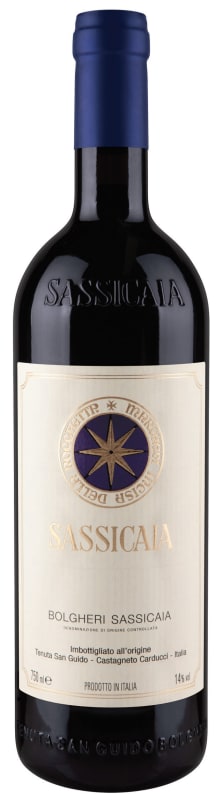


Winemaker Notes
The wine is complex on the nose with fresh, minty lavender hints but also citrus notes mixed with sweet spices. Although already pleasant at a young age, after 4-5 years of aging, in glass the wine will have the maturity and richness that characterize this vintage.
Blend: 87% Cabernet Sauvignon, 13% Cabernet Franc
Professional Ratings
-
Robert Parker's Wine Advocate
Very few vintages of this legendary Tuscan wine deliver the immediate joy, richness and complexity found in the Tenuta San Guido 2023 Bolgheri Sassicaia. Tasted both before and after its January 2026 bottling, this is a wine that feels uncannily open and generous in its youth, a rare trait for Sassicaia, which is famously inscrutable at this stage. The 2023 vintage was marked by a cold winter and above-average rainfall followed by a severe outbreak of downy mildew that damaged leaves, forcing brutal fruit selection and resulting in a 20% reduction in yields. Only the estates willing to make these sacrifices succeeded, and the best wines rank among the most compelling and elusive of recent years.
The blend includes 13% to 14% Cabernet Franc alongside Cabernet Sauvignon, with the Franc playing a decisive phenolic role that reinforces elegance, linearity and brightness. Aromas unfold with wild sage, rosemary and dark fruit before moving into crushed stone minerality, rose petal and a finely spiced spectrum of pink peppercorn, nutmeg, anise, cardamom, bergamot and blood orange, joined by a delicate note of mentuccia romana, sweeter and gentler than classic mint. The palate shows beautiful softness framed by chalky tannins and mineral tension. Its acidity shines bright and guarantees long cellar aging potential. The wine remains fluid and flexible in the glass as different facets of the bouquet emerge. Like the legendary 1985, 2023 was a difficult and stressful vintage shaped by a cold winter, yet it stands as proof that great pressure can indeed give birth to diamonds.
-
James Suckling
Very cool, complex and pretty aromas of black currants, fresh herbs such as sage and rosemary, with lavender and violet undertones. Medium- to full-bodied with crunchy and layered fruit delivering currant, plum, spice, cedar and bark flavors as well as polished and velvety tannins. A very clear and distinctive Sassicaia with true character of the estate. Drink in two or three years and beyond.
-
Decanter
Sassicaia 2023 will divide drinkers. While its quality is without question, it takes the idea of finesse and elegance to another level. In truth, this is more a reflection of the vintage conditions than a winemaking decision – but that's what all great wineries aim to show in the glass, isn't it? For some, this will be too light, too floral, and too far removed from ‘classic’ Bolgheri. For others, especially those who have been following this estate for several years, it's a dream come true; a true-to-life model for the future of Italian reds. Me? I'm on the fence. It almost pales in comparison to the depth of fruit and chewy tannins of 2022, while the 2019 tasted alongside emphasises juiciness and silkiness. Supple, lifted and fragrant, 2023's pure, crunchy bramble fruits, succulent, sapid mid-palate and prolonged freshness make you think differently...in a very good way. 87% Cabernet Sauvignon and 13% Cabernet Franc.


One of the world’s most classic and popular styles of red wine, Bordeaux-inspired blends have spread from their homeland in France to nearly every corner of the New World. Typically based on either Cabernet Sauvignon or Merlot and supported by Cabernet Franc, Malbec and Petit Verdot, the best of these are densely hued, fragrant, full of fruit and boast a structure that begs for cellar time. Somm Secret—Blends from Bordeaux are generally earthier compared to those from the New World, which tend to be fruit-dominant.

An outstanding wine region made famous by Marchese Mario Incisa della Rocchetta, who planted Cabernet Sauvignon vines for his own consumption in 1940s on his San Guido estate, and called the resulting wine, Sassicaia. Today the region’s Tuscan reds are based on Cabernet Sauvignon and Merlot, which can be made as single varietal wines or blends. The local Sangiovese can make up no more than 50% of the blends. Today Sassicaia has its own DOC designation within the Bogheri DOC appellation.