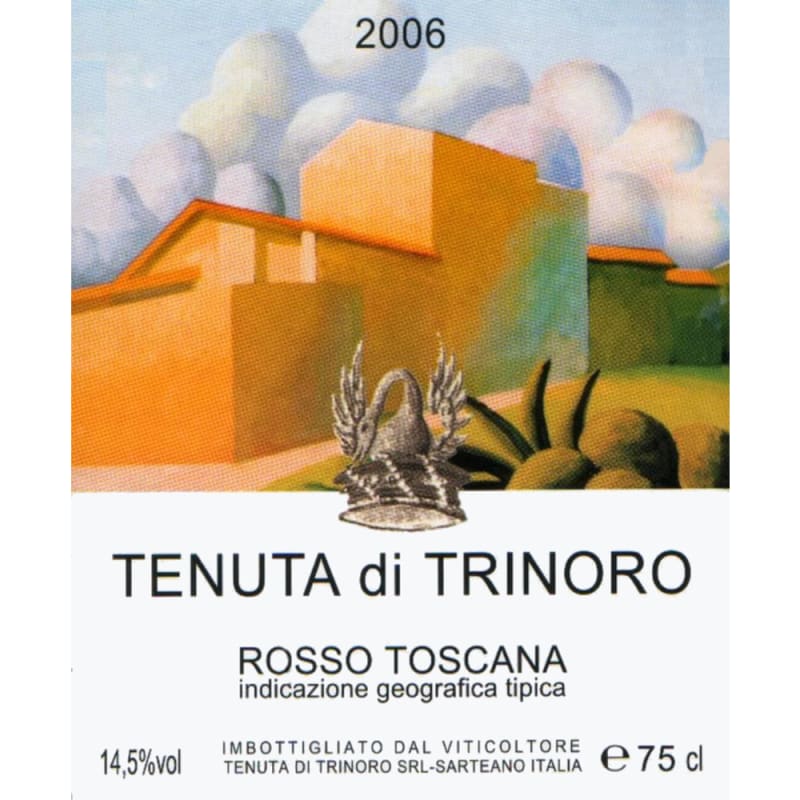

Winemaker Notes
Tenuta di Trinoro is pretty high up at between 500 and 700 meters at sea level, facing west- south- west, protected from the sea by the Monte Amiata on the very south east of Tuscany. In 1991 Andrea Franchetti had his inspiration in Bordeaux and indeed his high density, low training vines are more reminiscent of Saint Emilion and Pomerol than the rest of Tuscany. The very particular nature of the his vineyard means that Andrea is still hand picking parcel by parcel, waiting for optimum ripeness, pushing harvest till November. The proportions of the various cepages can vary greatly from year to year and often bear little relation to he proportion of the vines planted. Andrea makes wine by taste and not recipe. The main varieties planted are Cabernet Farnc, Merlot , Cabertnet Sauvignon and Petit Verdot. Upon their debut, Andrea's wines instantly got the role of "cult wines, " for the small quantity of wines initially produced, the extremely high quality and the successful exhibit. Trinoro now produces 80,000 bottles from 30 hectares of land. What is unique to this higher volume industry is the quality of his production.
Professional Ratings


Legendary in Italy for its Renaissance art and striking landscape, Tuscany is also home to many of the country’s best red wines. Sangiovese reigns supreme here, as either the single varietal, or a dominant player, in almost all of Tuscany’s best.
A remarkable Chianti, named for its region of origin, will have a bright acidity, supple tannins and plenty of cherry fruit character. From the hills and valleys surrounding the medieval village of Montalcino, come the distinguished and age-worthy wines based on Brunello (Sangiovese). Earning global acclaim since the 1970s, the Tuscan Blends are composed solely of international grape varieties or a mix of international and Sangiovese. The wine called Vine Nobile di Montepulciano, composed of Prognolo Gentile (Sangiovese) and is recognized both for finesse and power.