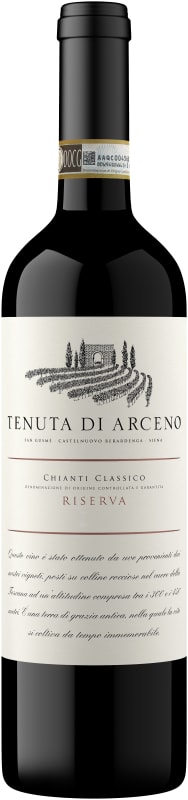


Winemaker Notes
The 2021 Chianti Classico Riserva expresses ripe, intense aromas of blackberry, lavender, and notes of forest floor. The palate is rich and full of flavors of juicy plums, black cherry and white pepper spice, underscored by fine tannins. The lingering f inish expresses notes of dark chocolate complemented by citrus flavors of Sicilian blood red oranges. A wine of elegance and power, the 2021 Chianti Classico Riserva has great aging potential.
Blend: 90% Sangiovese, 10% Cabernet Sauvignon
Professional Ratings
-
Jeb Dunnuck
A magenta/ruby color, the 2021 Chianti Classico Riserva kicks it up a notch on the nose, with layered notes of Mediterranean herbs, sweet mixed berries, violets, and fresh leather. The palate is very well-balanced, and I’m impressed with this wine for both its integration and purity. It has refined tannins, wonderful purity of ripe fruit, and even acidity. It is a lovely wine already but should age gracefully over the coming 12-15 years.
-
Wine Spectator
Rich, deep and saturated with cherry, raspberry, pomegranate, rose, iron and Mediterranean herb flavors, this red is both complex and intense. Driven by vivid acidity, with dense tannins lending support. There’s youthful harmony, and this resonates on the aftertaste. Sangiovese and Merlot. Best from 2027 through 2045.
-
James Suckling
A well-balanced, velvety and harmonious riserva. Aromas of plums, spiced cherries and violets dominate on the nose, following through to a medium body with fine tannins. Subtle and juicy, with a vivid stream of berries at the center and a flavorful, lively finish. Drink or hold.
-
Decanter
Lightly spicy with a hint of tomato puree and fresh turned earth, this is a rich and vibrant Riserva with plenty of acidity allied to quite firm, fine tannins and some black cherry fruit. The mid-palate is abit pinched but this has nice fruit and freshness about it for the vintage, and should soften up in the bottle.


Among Italy's elite red grape varieties, Sangiovese has the perfect intersection of bright red fruit and savory earthiness and is responsible for the best red wines of Tuscany. While it is best known as the chief component of Chianti, it is also the main grape in Vino Nobile di Montepulciano and reaches the height of its power and intensity in the complex, long-lived Brunello di Montalcino. Somm Secret—Sangiovese doubles under the alias, Nielluccio, on the French island of Corsica where it produces distinctly floral and refreshing reds and rosés.

One of the first wine regions anywhere to be officially recognized and delimited, Chianti Classico is today what was originally defined simply as Chianti. Already identified by the early 18th century as a superior zone, the official name of Chianti was proclaimed upon the area surrounding the townships of Castellina, Radda and Gaiole, just north of Siena, by Cosimo III, Grand Duke of Tuscany in an official decree in 1716.
However, by the 1930s the Italian government had appended this historic zone with additonal land in order to capitalize on the Chianti name. It wasn’t until 1996 that Chianti Classico became autonomous once again when the government granted a separate DOCG (Denominazione di Origine Controllata e Garantita) to its borders. Ever since, Chianti Classico considers itself no longer a subzone of Chianti.
Many Classicos are today made of 100% Sangiovese but can include up to 20% of other approved varieties grown within the Classico borders. The best Classicos will have a bright acidity, supple tannins and be full-bodied with plenty of ripe fruit (plums, black cherry, blackberry). Also common among the best Classicos are expressive notes of cedar, dried herbs, fennel, balsamic or tobacco.