

Winemaker Notes
Professional Ratings
-
Decanter
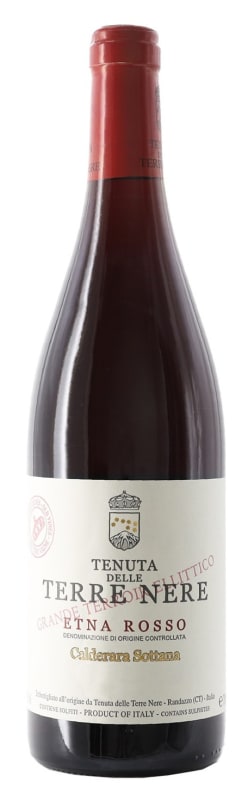
Another of Terre Nere's ‘Grande Terroir Ellittico’ wines, Calderara Sottana is from stonier, rockier volcanic soil than even San Lorenzo to the west. Vinified and aged in the same way – as are all of Marco De Grazia's contrada reds – it offers a deep, full aroma of pure red and black fruits with some violet, spice, balsam and cocoa overtones. Fleshy, succulent and sapid, this is an incredibly beautiful Nerello Mascalese, with purity of red fruits underlined by some spice and stoniness, a hint of salinity and a long, silky, creamy finish. So inviting.
-
James Suckling
This is more vibrant with red berries, blood oranges, light spices and hints of terra-cotta. Medium-bodied, juicy and fruit-forward with tangy acidity and dusty tannins. Hints of bitter orange at the end. Long and chalky yet very attractive and enjoyable now. Drink or hold.
-
Vinous
From the moment the glass is tilted, the 2021 Etna Rosso Calderara Sottana Vineyard shines through as crushed stones, ash and sweet smoke give way to vivid black cherries and autumnal spice. The 2021 Etna Rosso is elegant, silky and deeply textural, with salty mineral tones and gobs of red and black fruits, all perfectly maintained by a core of vibrant acidity. This is complex yet full of energy and sultry depths, tapering off saline and structured with grippy tannins that frame a lasting resonance of licorice and plums. These old vines handled the drought of the vintage beautifully, showing only in the grit of its tannins. Otherwise, the 2021 is pure magic.
-
Wine Spectator
A fragrant, lively red, with an overtone of dried flowers and sandalwood, this is well-knit and light- to medium-bodied, layering taut tannins with ripe cherry, pureed strawberry, fresh earth and a hint of red licorice. Drink now through 2031. 750 cases made, 100 cases imported.


Extending across the variable volcanic soils of the slopes of Mt. Etna at some of the highest vineyard altitudes in all of Europe—up to 3,300 feet—Nerello Mascalese is one of Sicily’s most noble red varieties. It makes a beautifully aromatic, firm, cellar-worthy but pale-hued red often comparable to a fine Burgundy or Barbaresco. Somm Secret—Nerello Mascalese takes its name from the black color of its grapes, nerello, and the Mascali plain between Mt. Etna and the coast where it is believed to have originated.

A large, geographically and climatically diverse island, just off the toe of Italy, Sicily has long been recognized for its fortified Marsala wines. But it is also a wonderful source of diverse, high quality red and white wines. Steadily increasing in popularity over the past few decades, Italy’s fourth largest wine-producing region is finally receiving the accolades it deserves and shining in today's global market.
Though most think of the climate here as simply hot and dry, variations on this sun-drenched island range from cool Mediterranean along the coastlines to more extreme in its inland zones. Of particular note are the various microclimates of Europe's largest volcano, Mount Etna, where vineyards grow on drastically steep hillsides and varying aspects to the Ionian Sea. The more noteworthy red and white Sicilian wines that come from the volcanic soils of Mount Etna include Nerello Mascalese and Nerello Cappuccio (reds) and Carricante (whites). All share a racy streak of minerality and, at their best, bear resemblance to their respective red and white Burgundies.
Nero d’Avola is the most widely planted red variety, and is great either as single varietal bottling or in blends with other indigenous varieties or even with international ones. For example, Nero d'Avola is blended with the lighter and floral, Frappato grape, to create the elegant, Cerasuolo di Vittoria, one of the more traditional and respected Sicilian wines of the island.
Grillo and Inzolia, the grapes of Marsala, are also used to produce aromatic, crisp dry Sicilian white. Pantelleria, a subtropical island belonging to the province of Sicily, specializes in Moscato di Pantelleria, made from the variety locally known as Zibibbo.