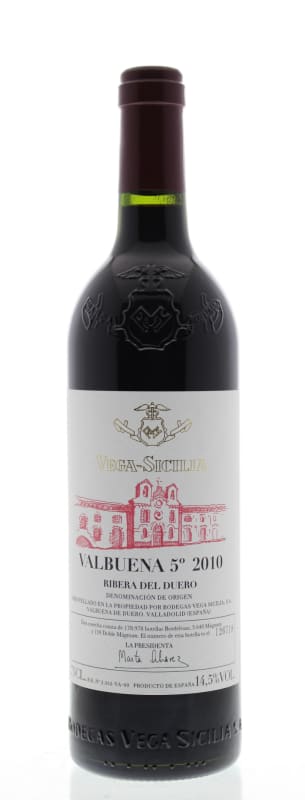


Winemaker Notes
Professional Ratings
-
James Suckling
The oak makes plenty of impact on the nose with some tarry notes across ripe-blue-plum, ccassis and chocolate aromas. Tannins are assertive. An essay in tannin structure and power, this has balance with impressive core strength. Flavors are in the purple-cherry, cassis and blackberry zone. Needs time. Great wine. Best from 2020.
-
Robert Parker's Wine Advocate
It has the Burgundian philosophy of terroir, with all plots fermented and aged separately, giving each vineyard what it needs in terms of vinification and elevage resulting in something like 40 separate lots to blend. This wine has gained in precision and sharpness, and is very pure with delineated aromas and flavors. It is a world-class wine, possibly the best Valbuena ever.
-
Wine Enthusiast
Smoky aromas of black plum, wild berry and clove precede a rich, layered, saturated palate that's creamy in the long run. Woody, spicy flavors of clove, pepper, chocolate and plum finish similarly, meaning this superb blend of Tempranillo, Merlot and Cabernet Sauvignon is still in a youthful phase. Drink from 2018–2030.


Notoriously food-friendly, long-lasting and Spain’s most widely planted grape, Tempranillo is the star variety of red wines from Rioja and Ribera del Duero. The Rioja terms Joven, Crianza, Reserva and Gran Reserva indicate both barrel and bottle time before release. Traditionally blended in Rioja with Garnacha, plus a bit of Mazuelo (Carignan) and Graciano, the Tempranillo in Ribera del Duero typically stands alone. Somm Secret—Tempranillo claims many different names depending on location. In Penedès, it is called Ull de Llebre and in Valdepeñas, goes by Cencibel. Known as Tinta Roriz in Portugal, Tempranillo plays an important role in Port wine.

Ribera del Duero, Spanish wine region, is located in northen Spain’s Castilla y León region, just a 2-hour drive from Madrid. While winemaking in this area goes back more than 2000 years, it was in the 1980s that 9 wineries applied for and were granted Denominación de Origen (D.O.) status. Today, more than 300 wineries call Ribera del Duero home, including some of Spain’s most iconic names.
Notable Facts Ribera’s main grape variety, Tempranillo, locally know as Tinto Fino, is perfectly suited to the extreme climate of the region, where it must survive scorching summers and frigid winters. Low yields resulting from conscientious tending to old vines planted in Ribera’s diverse soils types, give Ribera wines a distinctive depth and complexity not found in other Tempranillos. Rich and full-bodied, the spice, dark fruit and smoky flavors in a bold Ribera del Duero will pair well with roasted and grilled meats, Mexican food and tomato-based sauces.