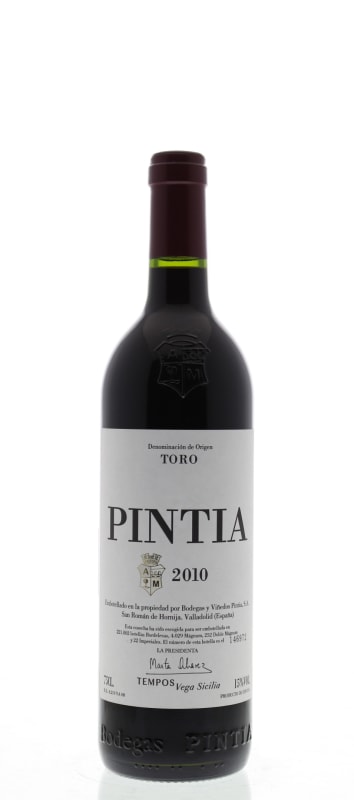


Winemaker Notes
Professional Ratings
-
Robert Parker's Wine Advocate
The 2010 Pintia had already been bottled when I tasted it, although not released. The bouquet is very Bordeaux-like with black rather than red fruit, fine minerality and touches of graphite and cedar. The palate is medium-bodied with plump, rounded tannins, a firm structure and great precision on the finish. This is what you might call a "classic" Pintia that already demonstrates great breeding and sophistication toward the finish.
-
Wine Enthusiast
Gritty, charred aromas rest on top of core blackberry and cassis scents. This is a blocky, stout number with firm tannins and serious structure. Charred blackberry and dark chocolate are the lead flavors, while this big-boned Toro tastes of toast and mocha on the finish, which is drying and tannic. Drink through 2027.


Notoriously food-friendly, long-lasting and Spain’s most widely planted grape, Tempranillo is the star variety of red wines from Rioja and Ribera del Duero. The Rioja terms Joven, Crianza, Reserva and Gran Reserva indicate both barrel and bottle time before release. Traditionally blended in Rioja with Garnacha, plus a bit of Mazuelo (Carignan) and Graciano, the Tempranillo in Ribera del Duero typically stands alone. Somm Secret—Tempranillo claims many different names depending on location. In Penedès, it is called Ull de Llebre and in Valdepeñas, goes by Cencibel. Known as Tinta Roriz in Portugal, Tempranillo plays an important role in Port wine.

Spain's remote, high elevation Spanish wine zone between the regions of Bierzo and Ribera del Duero produces intense, full-bodied reds made from Tempranillo, locally called Tinta de Toro. This local variant has adapted to the region’s climatic extremes and recognizing its potential, top producers from Ribera del Duero and Rioja have invested heavily in its vineyards.