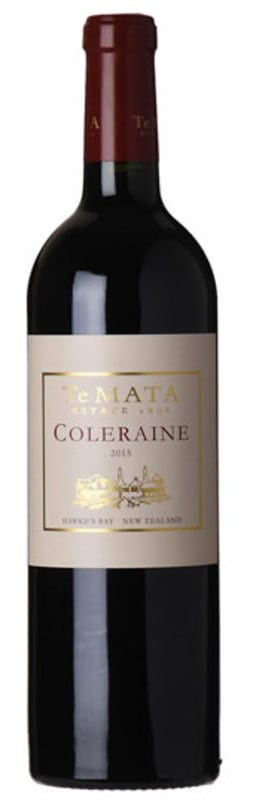


Winemaker Notes
Blend: 54% Cabernet Sauvignon, 36% Merlot, 10% Cabernet Franc
Professional Ratings
-
James Suckling
Aromas of sweet pipe tobacco, rich blueberry, mulberry and blueberry fruits as well as nicely played oak influence adding spicy allure, some stony nuances too. Smells deep and rich. The palate plays a very supple and smooth textural game with impressive richness of dark cherry and berry flavour leading into a bright, lively and upbeat finish that has tinges of cocoa powder flavour. Smooth resolve, all class. Balanced now but there's more to come. This will fill out nicely. Best from 2020.
-
Decanter
The oak is a little obvious on both nose and palate now, but there is plenty of concentration and depth to the dark-fruit character. Rich and intense with some great spicy notes, there is enough acidity and depth for this to develop for a number of years.
-
Robert Parker's Wine Advocate
The 2015 Coleraine is a blend of 54% Cabernet Sauvignon, 36% Merlot and 10% Cabernet Franc. Fragrant as always, hinting at violets, tobacco and cassis, it's also a broad-shouldered vintage, with substantial power and tannin. The oak is beautifully integrated into the wine already, appearing as classy Pauillac-like pencil shavings on the lengthy finish.
-
Vinous
The 2015 Coleraine has another intense and concentrated bouquet that is cut from a similar cloth to the '09. Black cherries, cassis and violets, just a hint of potpourri. The palate is medium-bodied with finely spun tannins. Perfectly judged acidity, very cohesive, there is a patina of oak to be subsumed towards the finish, yet it possesses the sleekness and finesse of the 2013, if not quite the same level of complexity and mineralité.
-
Wine Enthusiast
Te Mata's most renowned wine takes some time to open in glass. When it does, its many subtleties start to shine and it shows both its muscularity and its delicacy. Trademark florals lead the pack, closely followed by notes of black currant and blackberry jam, graphite, tobacco and hot stones. The palate leads with tart fruit but quickly blends with the savory notes of oak and chewy, pencil lead tannins. It finishes on the oaky side right now, but will age for many years. Drink now–2027.
Cellar Selection




One of the world’s most classic and popular styles of red wine, Bordeaux-inspired blends have spread from their homeland in France to nearly every corner of the New World. Typically based on either Cabernet Sauvignon or Merlot and supported by Cabernet Franc, Malbec and Petit Verdot, the best of these are densely hued, fragrant, full of fruit and boast a structure that begs for cellar time. Somm Secret—Blends from Bordeaux are generally earthier compared to those from the New World, which tend to be fruit-dominant.

An eclectic region on the east coast of the North Island, Hawkes Bay extends from wide, fertile, coastal plains, inland, to the coast range, whose peaks reach as high as 5,300 feet. While the flatter areas were historically more popular because they are easier to cultivate, their alluvial soils can be too fertile for vines. In the late 20th century, the drive for quality led growers to the hills where soils are free-draining, limestone-rich and more suited to producing high quality wines.
Over the passing of time, the old Ngaruroro River laid down deep, gravelly beds, which were subsequently exposed after a huge flood in the 1860’s. In the 1980s growers identified this stretch, which continues for approximately 800 ha, and named it the Gimblett Gravels. The zone has proven to be ideal for the production of excellent red wines, particularly Cabernet Sauvignon, Merlot and Syrah.
Today the area takes well-earned recognition for its Bordeaux blends and other reds. Expressive of intense stewed red and black berry with gentle herbaceous characters, Gimblett Gravels wines are suggestive of their cool climate origin, and on par with other top-notch Bordeaux blends around the globe.
Chardonnay is the top white grape in Hawkes Bay, making elegant wines, strong in stone fruit character. Sauvignon blanc comes in close behind, notable for its tropical, fruit forward qualities.