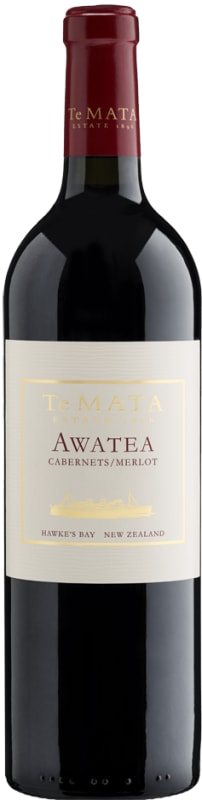


Winemaker Notes
Dark and bright, Awatea Cabernets-Merlot 2018 is an inky purple with an electric crimson edge. From a warm and dry vintage, Awatea 2018 shows ripe blackberry and blackcurrant aromatics with elements of vanilla creme and sandalwood. On the palate there’s a banquet of plum, raspberry, dried herbs and lingering dark cherry, set out across cedar and cocoa powder tannins. Classical in structure, with fine balance and length, Awatea Cabernets-Merlot 2018 is resplendent in its purity and detail.
Professional Ratings
-
Wine Enthusiast
This is an excellent bottling of Awatea, the younger brother of Te Mata’s top red, Coleraine. From a long, warm growing season, this feels like a complete wine. Winter warming notes of plump plums, dark cherries and chocolate are complemented by a bounty of dried herbs, spices and graphite. The palate is similarly dense and structured but with elegance and balance. Tannins are powdery and fine, winding through dark, tangy fruit and herbs. Like many of Te Mata’s wines, it has an old school Bordeaux vibe that will appeal more to some than to others.
-
James Suckling
There’s a very attractive, cedary edge to this with red cherries, redcurrants and blueberries, as well as darker plum and cocoa notes. The palate is so composed and fresh and has a vivid, detailed and neatly layered feel. Drinks well now, as it will for the next six to eight years.
-
Robert Parker's Wine Advocate
The 2018 Awatea Cabernets Merlot carries on the theme of the 2015, 2016 and 2017 Awateas: balanced, chewy and spicy. The thread of fruit laces through all four vintages, sometimes red, sometimes black and always succulent.




One of the world’s most classic and popular styles of red wine, Bordeaux-inspired blends have spread from their homeland in France to nearly every corner of the New World. Typically based on either Cabernet Sauvignon or Merlot and supported by Cabernet Franc, Malbec and Petit Verdot, the best of these are densely hued, fragrant, full of fruit and boast a structure that begs for cellar time. Somm Secret—Blends from Bordeaux are generally earthier compared to those from the New World, which tend to be fruit-dominant.

An eclectic region on the east coast of the North Island, Hawkes Bay extends from wide, fertile, coastal plains, inland, to the coast range, whose peaks reach as high as 5,300 feet. While the flatter areas were historically more popular because they are easier to cultivate, their alluvial soils can be too fertile for vines. In the late 20th century, the drive for quality led growers to the hills where soils are free-draining, limestone-rich and more suited to producing high quality wines.
Over the passing of time, the old Ngaruroro River laid down deep, gravelly beds, which were subsequently exposed after a huge flood in the 1860’s. In the 1980s growers identified this stretch, which continues for approximately 800 ha, and named it the Gimblett Gravels. The zone has proven to be ideal for the production of excellent red wines, particularly Cabernet Sauvignon, Merlot and Syrah.
Today the area takes well-earned recognition for its Bordeaux blends and other reds. Expressive of intense stewed red and black berry with gentle herbaceous characters, Gimblett Gravels wines are suggestive of their cool climate origin, and on par with other top-notch Bordeaux blends around the globe.
Chardonnay is the top white grape in Hawkes Bay, making elegant wines, strong in stone fruit character. Sauvignon blanc comes in close behind, notable for its tropical, fruit forward qualities.