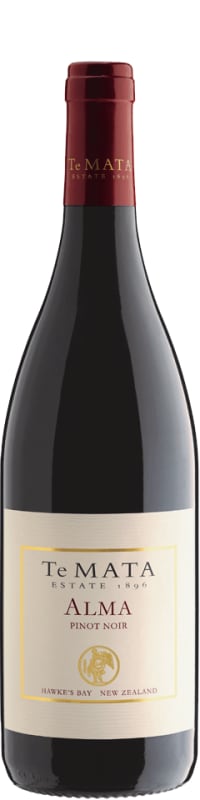


Winemaker Notes
Brilliant crimson with a royal purple edge, Alma Pinot Noir 2020 has an entrancing nose of wild strawberry and cherry syrup, oriental spice, sea salt and woodsmoke. The complex palate deepens into five spice, truffle and earth notes, with just the slightest fragrance of Earl Grey tea. Bright red fruit sparkles among a filigree of tannin. Alma Pinot Noir 2020 has presence and persistence throughout, with prettiness at its heart.
Professional Ratings
-
Robert Parker's Wine Advocate
The 2020 Alma Pinot Noir was tasted six months apart from the 2021, but the notes were entered in the same place, and the similarities between the two are stark. The 2020 is more open-weave and approachable than the complex 2021, but both are excellent representations of the variety. The tannins here are silky, sweet and polished; the fruit has brilliant presence and gravitas; and the density and length of flavor are impressive. It's a beautiful wine. Pomegranate, red cherry, bay leaf, wild thyme and poached strawberry define the fruit characters, while the tannins are a seamless affair. Very good!
-
Wine Enthusiast
2020 is proving a rich vintage, with many wines poised for the long haul. Alma is a great example of this. With time in glass, it reveals a prism of aromas and flavors: baked plum, blueberry, mocha, licorice and baking spice. The palate is on the fuller end of the Pinot spectrum, with powerful but fine tannins, but with supple, juicy fruit and a polish that suggests its best is yet to come. Drink 2023–2032.




Thin-skinned, finicky and temperamental, Pinot Noir is also one of the most rewarding grapes to grow and remains a labor of love for some of the greatest vignerons in Burgundy. Fairly adaptable but highly reflective of the environment in which it is grown, Pinot Noir prefers a cool climate and requires low yields to achieve high quality. Outside of France, outstanding examples come from in Oregon, California and throughout specific locations in wine-producing world. Somm Secret—André Tchelistcheff, California’s most influential post-Prohibition winemaker decidedly stayed away from the grape, claiming “God made Cabernet. The Devil made Pinot Noir.”

An eclectic region on the east coast of the North Island, Hawkes Bay extends from wide, fertile, coastal plains, inland, to the coast range, whose peaks reach as high as 5,300 feet. While the flatter areas were historically more popular because they are easier to cultivate, their alluvial soils can be too fertile for vines. In the late 20th century, the drive for quality led growers to the hills where soils are free-draining, limestone-rich and more suited to producing high quality wines.
Over the passing of time, the old Ngaruroro River laid down deep, gravelly beds, which were subsequently exposed after a huge flood in the 1860’s. In the 1980s growers identified this stretch, which continues for approximately 800 ha, and named it the Gimblett Gravels. The zone has proven to be ideal for the production of excellent red wines, particularly Cabernet Sauvignon, Merlot and Syrah.
Today the area takes well-earned recognition for its Bordeaux blends and other reds. Expressive of intense stewed red and black berry with gentle herbaceous characters, Gimblett Gravels wines are suggestive of their cool climate origin, and on par with other top-notch Bordeaux blends around the globe.
Chardonnay is the top white grape in Hawkes Bay, making elegant wines, strong in stone fruit character. Sauvignon blanc comes in close behind, notable for its tropical, fruit forward qualities.