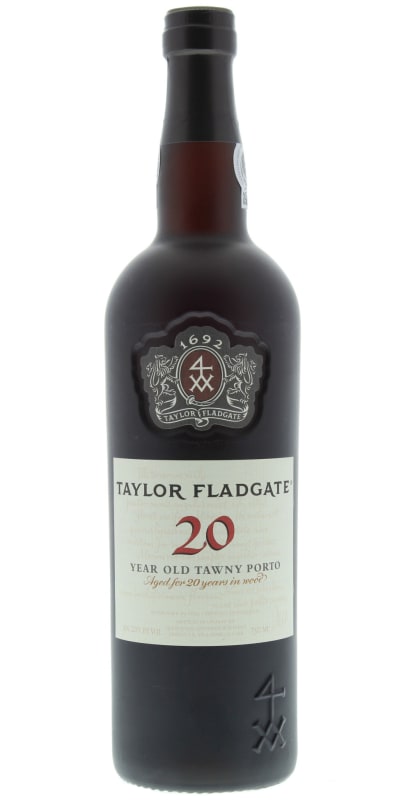


Winemaker Notes
#76 Wine Spectator Top 100 of 2023
Another magnificent and finely-balanced old tawny blend of outstanding richness and complexity. This rare Port is traditionally enjoyed as a dessert wine or at the end of the meal. Ideal for summer drinking, Taylor's 20 Year Old Tawny may be served cool.
Professional Ratings
-
Tasting Panel
Silky smooth and toasty with nuts, spice and firm acidity; elegant and complex; long and perfectly balanced; bright and exquisite.
-
Wine Spectator
Offers a supple-edged feel -- think burnished leather -- while notes of dried peach and cherry, cinnamon, graham cracker and toasted pecan meld steadily through the lengthy finish.
-
Wine Enthusiast
A complex, wood aged wine, this 20-year-old has a perfumed, dry style. Walnut and spice flavors blend together with the spirit and mature acidity. It’s rich, with just the right amount of age.
-
Wilfred Wong of Wine.com
The Taylor Fladgate® 20 YEAR OLD TAWNY PORTO appears with a delicate tawny color accented by orange edges. Endearing aromas of crushed almonds and dried prunes rise gracefully from the glass. Enticingly sweet on the palate, this Porto offers pleasing richness and maturity before thrilling the finish with notes of dried apricots and lingering prune nuances. This wine would pair beautifully with a fine walnut bread pudding topped with crème fraîche and caramelized figs, where the Porto’s nutty depth and dried fruit character would shine effortlessly.
-
Decanter
A linear, delicate yet seamless style, with nutty and spicy aromas leading to dried apricot flavours encircled by tertiary leather notes. Rounded and characterful.
-
Robert Parker's Wine Advocate
If the bottle of 10-year-old Tawny was odd, then the NV 20 Year Old Tawny Port is hitting it on all cylinders. It is open, expressive, aromatic and nuanced, with clarity and precision. The back label didn't show the bottling year, but I suspect it must have been quite recent. This wine is made from different harvests blended with an average of 20 years of aging in oak casks. It has 20% alcohol and 120 grams of residual sugar, reflecting the slightly sweeter style that is typical of Taylor's.
-
Wine & Spirits
Luscious with butterscotch, fig and golden honey flavors, this is a gragrant, jasmine-scented Porto. The finish is a rush of yellow fruit sweetness, soft and nutty, classical in its balance of freshness and age.


Port is a sweet, fortified wine with numerous styles: Ruby, Tawny, Vintage, Late Bottled Vintage (LBV), White, Colheita, and a few unusual others. It is blended from from the most important red grapes of the Douro Valley, based primarily on Touriga Nacional with over 80 other varieties approved for use. Most Ports are best served slightly chilled at around 55-65°F. To learn more, see our full Port Wine Guide

The home of Port—perhaps the most internationally acclaimed beverage—the Douro region of Portugal is one of the world’s oldest delimited wine regions, established in 1756. The vineyards of the Douro, set on the slopes surrounding the Douro River (known as the Duero in Spain), are incredibly steep, necessitating the use of terracing and thus, manual vineyard management as well as harvesting. The Douro's best sites, rare outcroppings of Cambrian schist, are reserved for vineyards that yield high quality Port.
While more than 100 indigenous varieties are approved for wine production in the Douro, there are five primary grapes that make up most Port and the region's excellent, though less known, red table wines. Touriga Nacional is the finest of these, prized for its deep color, tannins and floral aromatics. Tinta Roriz (Spain's Tempranillo) adds bright acidity and red fruit flavors. Touriga Franca shows great persistence of fruit and Tinta Barroca helps round out the blend with its supple texture. Tinta Cão, a fine but low-yielding variety, is now rarely planted but still highly valued for its ability to produce excellent, complex wines.
White wines, generally crisp, mineral-driven blends of Arinto, Viosinho, Gouveio, Malvasia Fina and an assortment of other rare but local varieties, are produced in small quantities but worth noting.
With hot summers and cool, wet winters, the Duoro has a maritime climate.