


Winemaker Notes
A typical Etnean vineyard composed of 99 terraces with Nerello Mascalese vines. The ventilation, exposure, and particular altitude cause a slow ripening cycle with harvest time around the first ten days of November. Vinification takes place in stainless steel tank, followed by aging in 25 hl Slavonian oak barrels.
Professional Ratings
-
James Suckling
A polished, spicy wine focused on restrained fruit with a leafy touch and spicy depth. Juicy on the palate, this has a ripe and smooth attack, velvety tannins and a slightly leafy finish. Well-balanced. Drink or hold.
-
Vinous
The 2021 Etna Rosso Contrada Pianodario lifts from the glass with a mentholated freshness, mixing wild strawberries and herbs with pine shavings and chalk dust. It sweeps across the palate with ease, silken and serene, with cooling acidity and a tactile edge. A coating of grippy tannins, nuances of licorice and a touch of spice linger on as this finishes with lovely perfume.


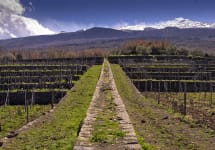
Tasca d’Almerita, one of Sicily’s preeminent wine families, began their adventure in Etna in 2007 with the purchase of two vineyards in the communes of Castiglione di Sicilia and Randazzo on the north face of the volcano. The northern exposure is a cool-climate area, due to the combination of elevation and less direct sun, which helps to retain acidity in the wines. The estate name, Tenuta Tascante, was formed by combining Tasca with Etna spelled backwards.
Today, the Tasca family currently owns four parcels, located in the contrade of Pianodario and Sciaranova in Randazzo, and Rampante and Grasà in Castiglione. (A contrada is a small subdivision of a commune, based on various defining criteria such as elevation, cultural/historical significance, or past lava flows.) The vineyards are mostly at elevations of 2,450 to 2,600 feet (750–800 meters) on the 11,000-foot mountain. All are certified as sustainable under SOStain, a Sicilian-based program that rates wineries and vineyards based on their impact on the environment, in conjunction with the Italian Ministry of the Environment’s VIVA indicators of sustainability.
In 2016 they complete the winery in Contrada Marchesa in Passopisciaro and began working with Stefano Masciarelli as winemaker. The Tasca family, is currently headed by Count Lucio Tasca and his sons Giuseppe and Alberto. In 2019 they were named European Winery of the Year by Wine Enthusiast

Extending across the variable volcanic soils of the slopes of Mt. Etna at some of the highest vineyard altitudes in all of Europe—up to 3,300 feet—Nerello Mascalese is one of Sicily’s most noble red varieties. It makes a beautifully aromatic, firm, cellar-worthy but pale-hued red often comparable to a fine Burgundy or Barbaresco. Somm Secret—Nerello Mascalese takes its name from the black color of its grapes, nerello, and the Mascali plain between Mt. Etna and the coast where it is believed to have originated.

A large, geographically and climatically diverse island, just off the toe of Italy, Sicily has long been recognized for its fortified Marsala wines. But it is also a wonderful source of diverse, high quality red and white wines. Steadily increasing in popularity over the past few decades, Italy’s fourth largest wine-producing region is finally receiving the accolades it deserves and shining in today's global market.
Though most think of the climate here as simply hot and dry, variations on this sun-drenched island range from cool Mediterranean along the coastlines to more extreme in its inland zones. Of particular note are the various microclimates of Europe's largest volcano, Mount Etna, where vineyards grow on drastically steep hillsides and varying aspects to the Ionian Sea. The more noteworthy red and white Sicilian wines that come from the volcanic soils of Mount Etna include Nerello Mascalese and Nerello Cappuccio (reds) and Carricante (whites). All share a racy streak of minerality and, at their best, bear resemblance to their respective red and white Burgundies.
Nero d’Avola is the most widely planted red variety, and is great either as single varietal bottling or in blends with other indigenous varieties or even with international ones. For example, Nero d'Avola is blended with the lighter and floral, Frappato grape, to create the elegant, Cerasuolo di Vittoria, one of the more traditional and respected Sicilian wines of the island.
Grillo and Inzolia, the grapes of Marsala, are also used to produce aromatic, crisp dry Sicilian white. Pantelleria, a subtropical island belonging to the province of Sicily, specializes in Moscato di Pantelleria, made from the variety locally known as Zibibbo.