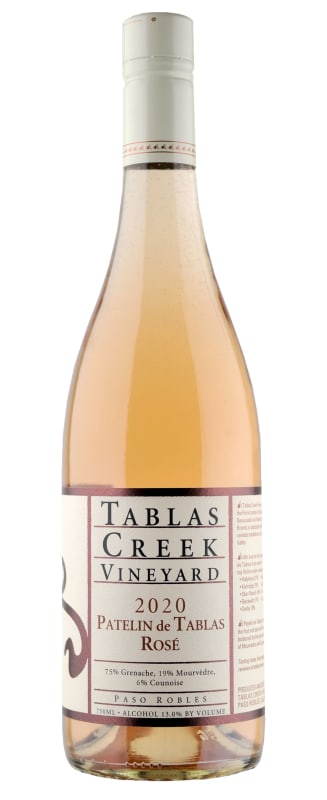


Winemaker Notes
The 2020 Patelin de Tablas Rosé is a vibrant light peach color. On the nose are spicy aromatics of nectarine, mandarin pith, sea spray, and crushed rock. The mouth is bright with flavors of yellow raspberry and blood orange, with mouthwatering acidity giving focus to a long finish with flavors of pink grapefruit, briny mineral, and a citrus blossom florality.
Professional Ratings
-
Wine Enthusiast
Brisk aromas of strawberry and rainy cement converge on the nose of this pink blend of 75% Grenache, 19% Mourvèdre and 6% Counoise. The palate is extremely mineral driven, showing chalk and wet rocks as well as lingering tangerine and nectarine flavors.
-
Tasting Panel
Pale salmon color, a blend of Rhone varieties makes this round, smooth Rose that is dry and lush.
-
Wilfred Wong of Wine.com
COMMENTARY: The 2020 Tablas Creek Vineyard Patelin de Tablas Rosé is light in color and abundant in flavors. TASTING NOTES: This wine brings a combination of sandalwood, savory spices, dried fruit, earth, and chalk onto the palate. Enjoy it with smoked ham hocks, al dente cabbage, and brown rice. (Tasted: March 4, 2021, San Francisco, CA)
-
Jeb Dunnuck
Made in a more Provençal style, the Grenache-dominated 2020 Patelin De Tablas Rose reveals a light pink hue as well as clean, crisp notes of white peach and melon as well as crushed stone and floral nuances. This clean, medium-bodied, refreshing rosé does everything right and is ideal for enjoying over the coming summer months.


Whether it’s playful and fun or savory and serious, most rosé today is not your grandmother’s White Zinfandel, though that category remains strong. Pink wine has recently become quite trendy, and this time around it’s commonly quite dry. Since the pigment in red wines comes from keeping fermenting juice in contact with the grape skins for an extended period, it follows that a pink wine can be made using just a brief period of skin contact—usually just a couple of days. The resulting color depends on grape variety and winemaking style, ranging from pale salmon to deep magenta.

Paso Robles has made a name for itself as a source of supple, powerful, fruit-driven Central Coast wines. But with eleven smaller sub-AVAs, there is actually quite a bit of diversity to be found in this inland portion of California’s Central Coast.
Just east over the Santa Lucia Mountains from the chilly Pacific Ocean, lie the coolest in the region: Adelaida, Templeton Gap and (Paso Robles) Willow Creek Districts, as well as York Mountain AVA and Santa Margarita Ranch. These all experience more ocean fog, wind and precipitation compared to the rest of the Paso sub-appellations. The San Miguel, (Paso Robles) Estrella, (Paso Robles) Geneso, (Paso Robles) Highlands, El Pomar and Creston Districts, along with San Juan Creek, are the hotter, more western appellations of the greater Paso Robles AVA.
This is mostly red wine country, with Cabernet Sauvignon and Zinfandel standing out as the star performers. Other popular varieties include Merlot, Petite Sirah, Petit Verdot, Syrah, Grenache and Rhône blends, both red and white. There is a fairly uniform tendency here towards wines that are unapologetically bold and opulently fruit-driven, albeit with a surprising amount of acidity thanks to the region’s chilly nighttime temperatures.