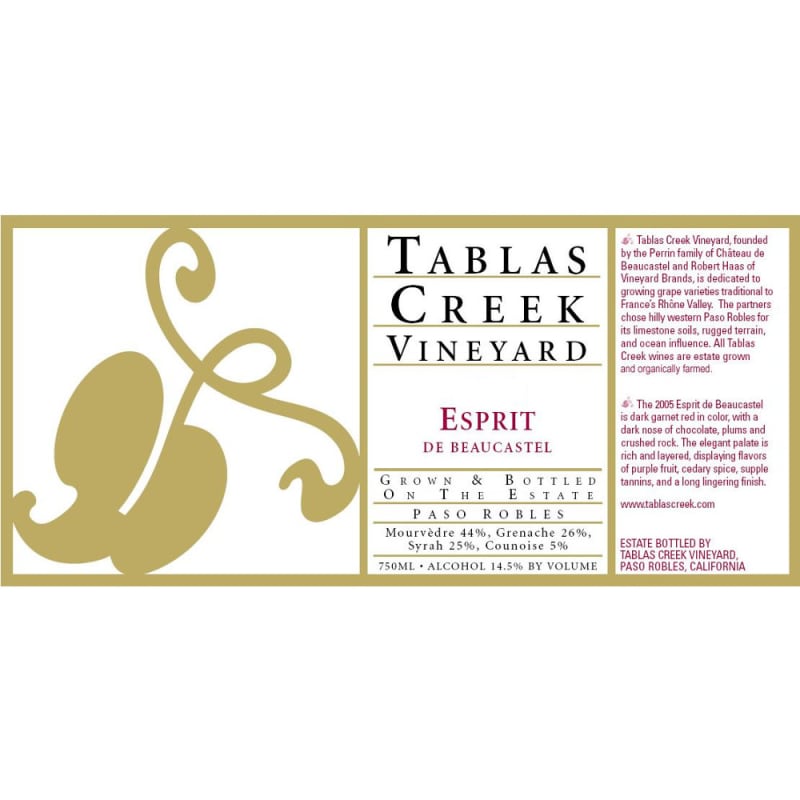

Winemaker Notes
The 2007 vintage was the best vintage we've yet seen at Tablas Creek. Yields were very low (down between 15% and 30%, depending on variety) due to a cold and very dry winter, which produced small berries and small clusters. A moderate summer without any significant heat spikes followed, allowing gradual ripening, and producing red wines with tremendous intensity, excellent freshness and a lushness to the fruit which cloaks tannins that should allow the wines to age gracefully. Syrah began the harvest of our reds between September 5th and October 3rd, followed by Grenache between September 25th and October 22nd, the Counoise between October 11th and 30th and the Mourvedre throughout October and completing the harvest on October 30th.
As with all our wines, the grapes for our Esprit de Beaucastel were grown on our 120-acre certified organic estate vineyard.
Professional Ratings
-
Robert Parker's Wine Advocate
The profound 2007 Esprit de Beaucastel (a 4,200-case blend of 44% Mourvedre, 29% Grenache, 21% Syrah, and 6% Counoise) boasts a glorious perfume of roasted herbs, Peking duck, soy, blueberries, blackberries, and bouquet garni. This elegant yet powerful, dense, multilayered wine saturates the palate, possesses multiple dimensions, beautiful nuances, and a stunningly long finish that lasts over 40 seconds. It should provide plenty of pleasure over the next 10-15 years. 94-97
-
Jeb Dunnuck
A blend of 46% Mourvèdre, 31% Syrah, 18% Grenache and 5% Counoise, the 2007 Esprit de Beaucastel has a truly sensational bouquet of black cherries, saddle leather, pepper and wild herbs (thyme, rosemary). Gorgeous on the palate, with full-bodied richness, and a silky, elegant texture, it's a killer wine that readers will be lucky to have in the cellar.
-
Wine Spectator
Rich, dry and full-bodied, with loamy earth, dried berry, mineral, anise and black licorice flavors that run deep and persistent, layered and concentrated, ending with a long, tight finish. Mourvèdre, Grenache, Syrah and Counoise. Drink now through 2017.
-
Vinous
Darkly floral and brooding in the glass, the 2007 Esprit de Beaucastel wafts up with a mix of savory herbs, dried flowers, soy nuances and dusty earth. It opens with a burst of zesty acidity, a tinge of CO2 and a reverberation of tension as ripe red berry fruits swirl under an air of violet inner florals. Hints of spice mix with blood orange as the 2007 finishes a bit short and still lightly tannic. The 2007 has sporadically shown Brettanomyces over the years, reflected in the effervescence found in most bottles. With that said, decanting or opening the wine well ahead of consumption should help.
-
Wine Enthusiast
This is one of the richer Rhône-style reds coming out of Paso Robles. It's potent in blackberry and cherry pie filling, blueberry, anise, dark chocolate and smoky cedar flavors. The richness is balanced with fine, silky tannins.
-
Wine & Spirits
There's a graphite-like mineral character that frames fresh blueberry fruit in this juicy red. A cool note of acidity keeps the flavors lively and fresh through the finish. Serve it with slow-roasted pork shoulder.


With bold fruit flavors and accents of sweet spice, Grenache, Syrah and Mourvèdre form the base of the classic Rhône Red Blend, while Carignan, Cinsault and Counoise often come in to play. Though they originated from France’s southern Rhône Valley, with some creative interpretation, Rhône blends have also become popular in other countries. Somm Secret—Putting their own local spin on the Rhône Red Blend, those from Priorat often include Merlot and Cabernet Sauvignon. In California, it is not uncommon to see Petite Sirah make an appearance.
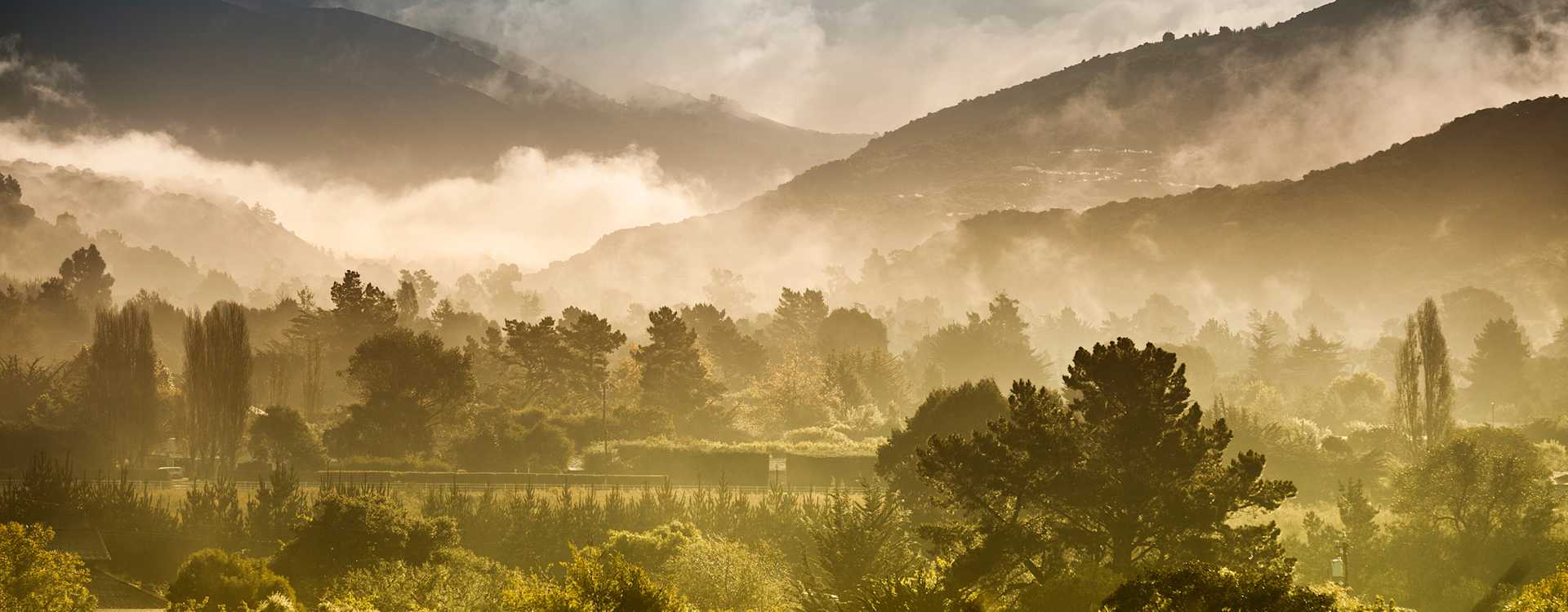
The largest and perhaps most varied of California’s wine-growing regions, the Central Coast produces a good majority of the state's wine. This vast California wine district stretches from San Francisco all the way to Santa Barbara along the coast, and reaches inland nearly all the way to the Central Valley.
Encompassing an extremely diverse array of climates, soil types and wine styles, it contains many smaller sub-AVAs, including San Francisco Bay, Monterey, the Santa Cruz Mountains, Paso Robles, Edna Valley, Santa Ynez Valley and Santa Maria Valley.
While the Central Coast California wine region could probably support almost any major grape varietiy, it is famous for a few Central Coast reds and whites. Pinot Noir, Chardonnay, Cabernet Sauvignon and Zinfandel are among the major ones. The Central Coast is home to many of the state's small, artisanal wineries crafting unique, high-quality wines, as well as larger producers also making exceptional wines.